

Cold evenings call for a bowl of Loaded Baked Potato Soup that feels familiar and satisfying. This potato soup combines tender russet potatoes with bacon, cheddar and a creamy base that turns simple ingredients into a filling meal. If you are looking for a potato soup recipe that tastes like a baked potato in a bowl, this version brings those flavors together.
I love making this soup when the family wants something warm without a long cooking process. The toppings create a fun finish, and it pairs well with other comforting dishes like Crockpot Mac and Cheese Velveeta when you are planning a larger meal. The best part of this recipe is how each ingredient keeps its role.

The potatoes build the body, the bacon adds a salty bite and the cheese melts into the broth. This creamy potato soup is simple enough for a weeknight but special enough to share.
Why This Recipe Works
This Loaded Baked Potato Soup works because the russet potatoes release starch during a slow simmer at 300°F, which naturally thickens the broth. Partially mashing the potatoes keeps a creamy texture while leaving hearty pieces.
The cheese melts best with gentle heat around 200°F, so it blends without becoming grainy. For another comforting meal idea, try Crockpot Mac and Cheese with a similar focus on creamy textures.
Ingredients
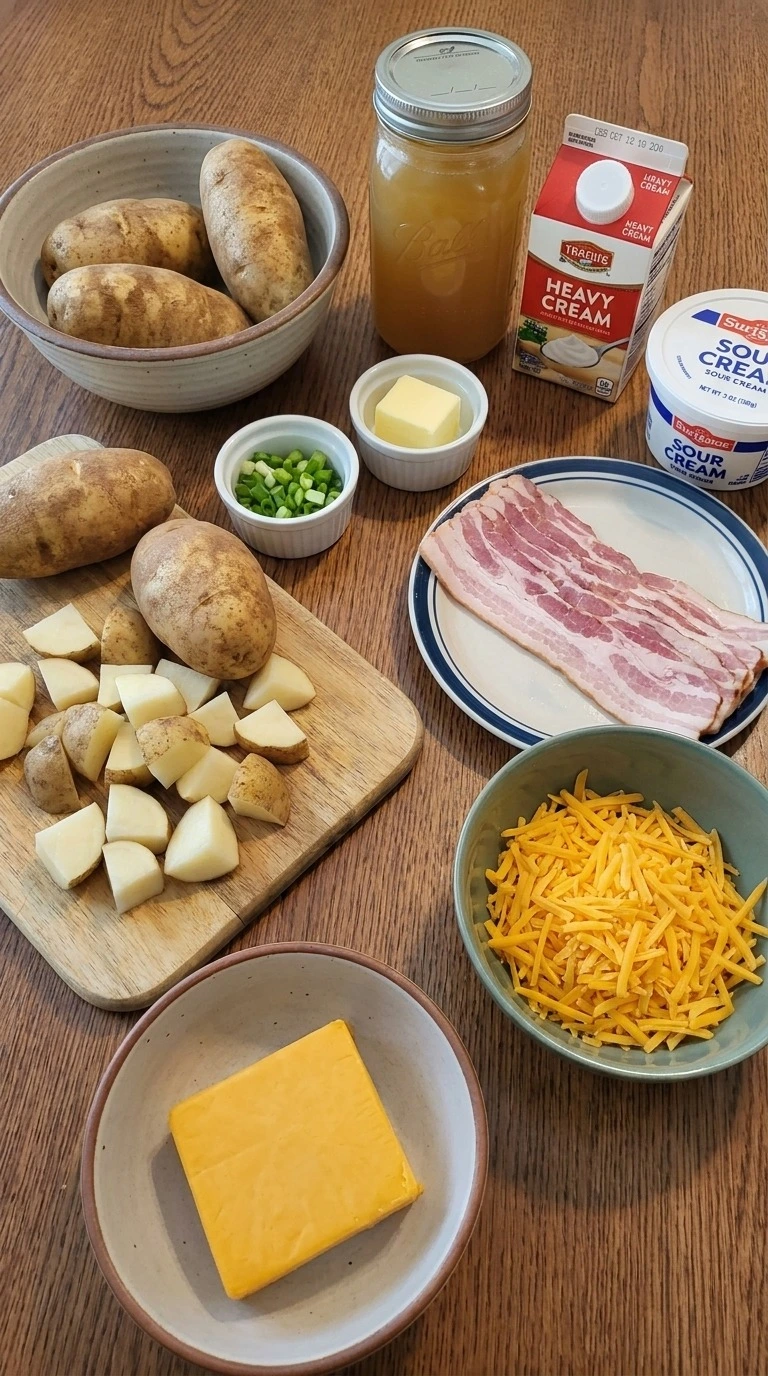
- russet potato: Scrubbed and cut into 1-inch cubes to create the thick soup base.
- bacon: Cooked until crisp to add smoky flavor and savory fat.
- chicken broth: Added as the liquid base for simmering the potatoes.
- heavy cream: Stirred in for a rich and smooth texture.
- sour cream: Added for tang and a creamy finish.
- sharp cheddar: Shredded and melted into the soup for cheesy flavor.
- green onion: Sliced and used as a fresh topping.
- garlic powder: Adds a warm savory note to the soup.
- onion powder: Boosts the onion flavor without extra moisture.
- salt: Balances the flavors after bacon and cheese are added.
- black pepper: Adds mild heat and depth.
Equipment
- 6-quart heavy-bottomed pot: A 6-quart heavy-bottomed pot cooks this soup evenly and reduces hot spots that can scorch dairy during thickening.
- Potato masher: A sturdy potato masher breaks down part of the potatoes while keeping chunks, and a weak one may leave uneven pieces.
- Sharp kitchen knife: A sharp knife makes consistent 1-inch potato cubes, while a dull blade creates uneven sizes that cook at different speeds.
Instructions
Step 1: Cube the russet potatoes and cook the bacon
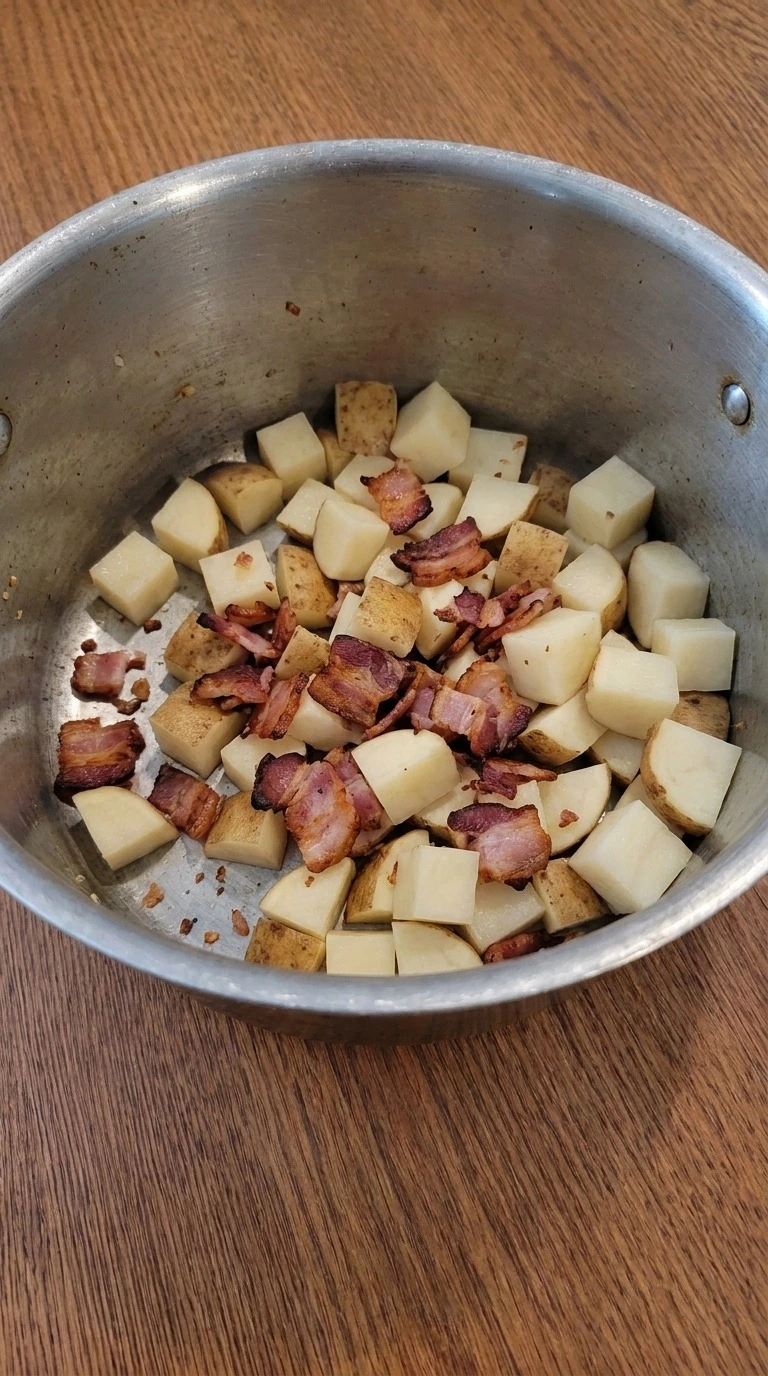
Cut 3 pounds of russet potatoes into 1-inch cubes and cook 8 ounces of bacon until crisp in a large pot over medium heat, about 350°F surface temperature. Use a knife with steady downward cuts and move the bacon pieces with a spatula until they release fat. The potatoes should keep their shape and the bacon should turn deep brown.
Don’t rush this part. The bacon smells smoky when finished and the potato cubes look pale with clean edges. Miss this timing and the bacon can burn before the soup gets its flavor.
Cook the bacon first because rendered fat carries the savory flavor into the soup base.
Tip: Choose russet potatoes with firm skin and no soft spots because older potatoes can break down too fast during simmering.
Step 2: Build the creamy potato base
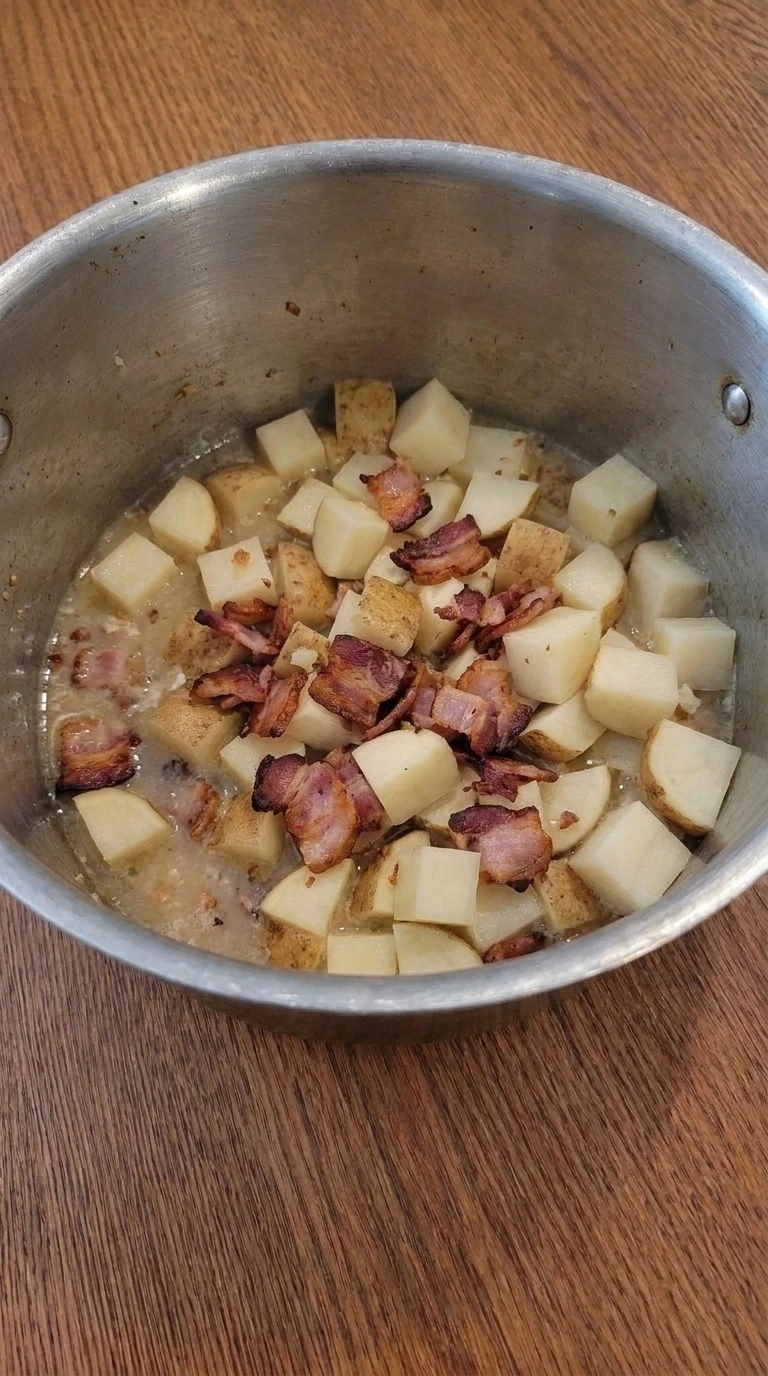
Add the prepared 3 pounds of russet potato cubes into the pot with bacon fat, then pour in 4 cups chicken broth and simmer at medium-low heat around 300°F for 15 to 18 minutes. Stir with a wooden spoon in slow circles and gently press some potato cubes against the side. The potatoes should soften while keeping some chunks.
(I tested a faster boil once and the potatoes broke apart before the flavors blended. ) You’ll see the broth turn slightly cloudy and the potato edges become tender. The smell becomes richer as the soup thickens.
Go too long and the potatoes lose their texture. A slow simmer helps starches release and creates a smoother body.
Tip: Use low-sodium chicken broth so you can adjust the salt after the bacon and cheddar add their own seasoning.
Step 3: Blend and enrich the soup texture
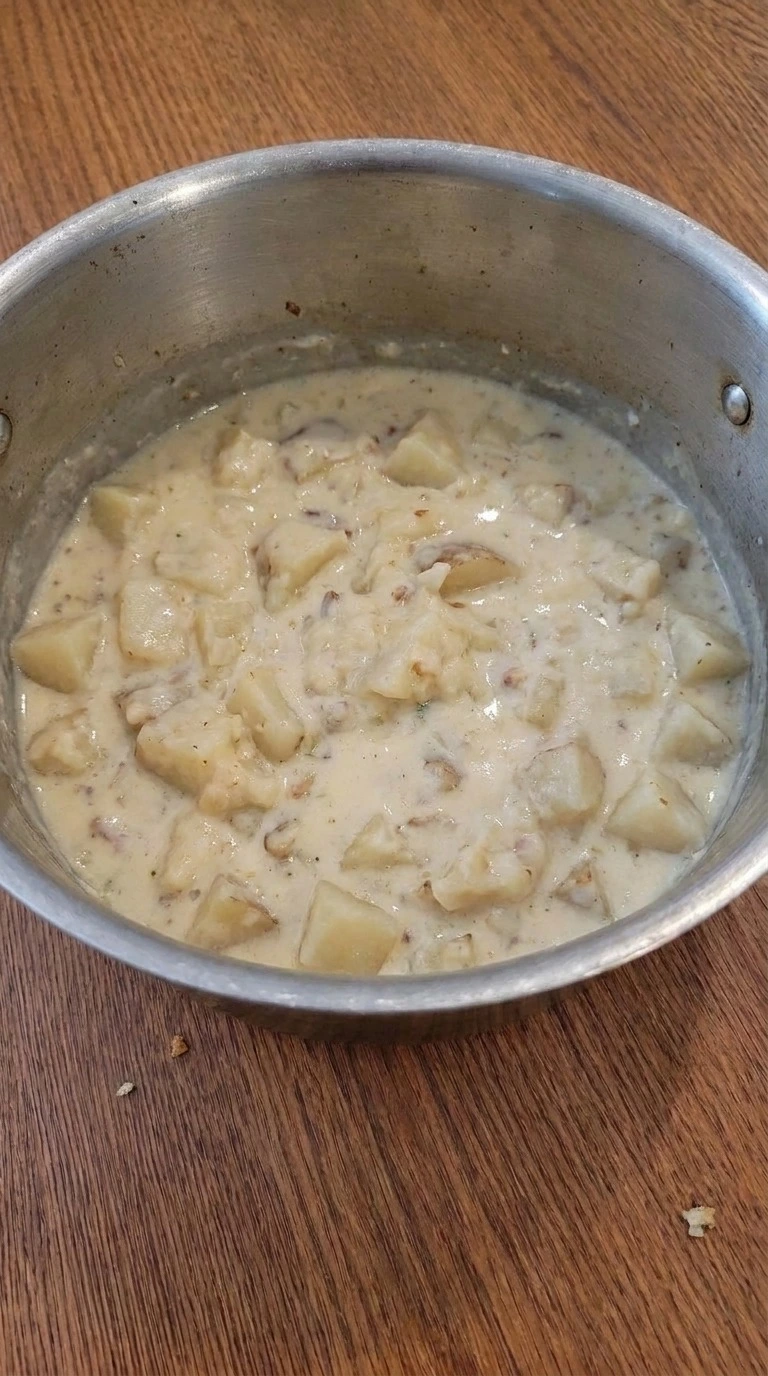
Mash part of the 3 pounds of softened russet potato cubes directly in the pot, then stir in 1 cup heavy cream and 1 cup sour cream over medium-low heat at about 250°F for 5 minutes. Use a potato masher with short presses and fold the cream into the soup with slow motions. The surface should become thicker and velvety.
Don’t overwork it. The soup changes from thin broth to a creamy potato soup with visible potato pieces. You’ll notice a smooth texture with small chunks remaining.
Skip this step and the soup can taste flat and watery. The partial mash releases starch while keeping a homemade texture.
Tip: Keep some potato cubes intact because a completely smooth soup loses the baked potato feeling.
Step 4: Finish with cheddar and toppings
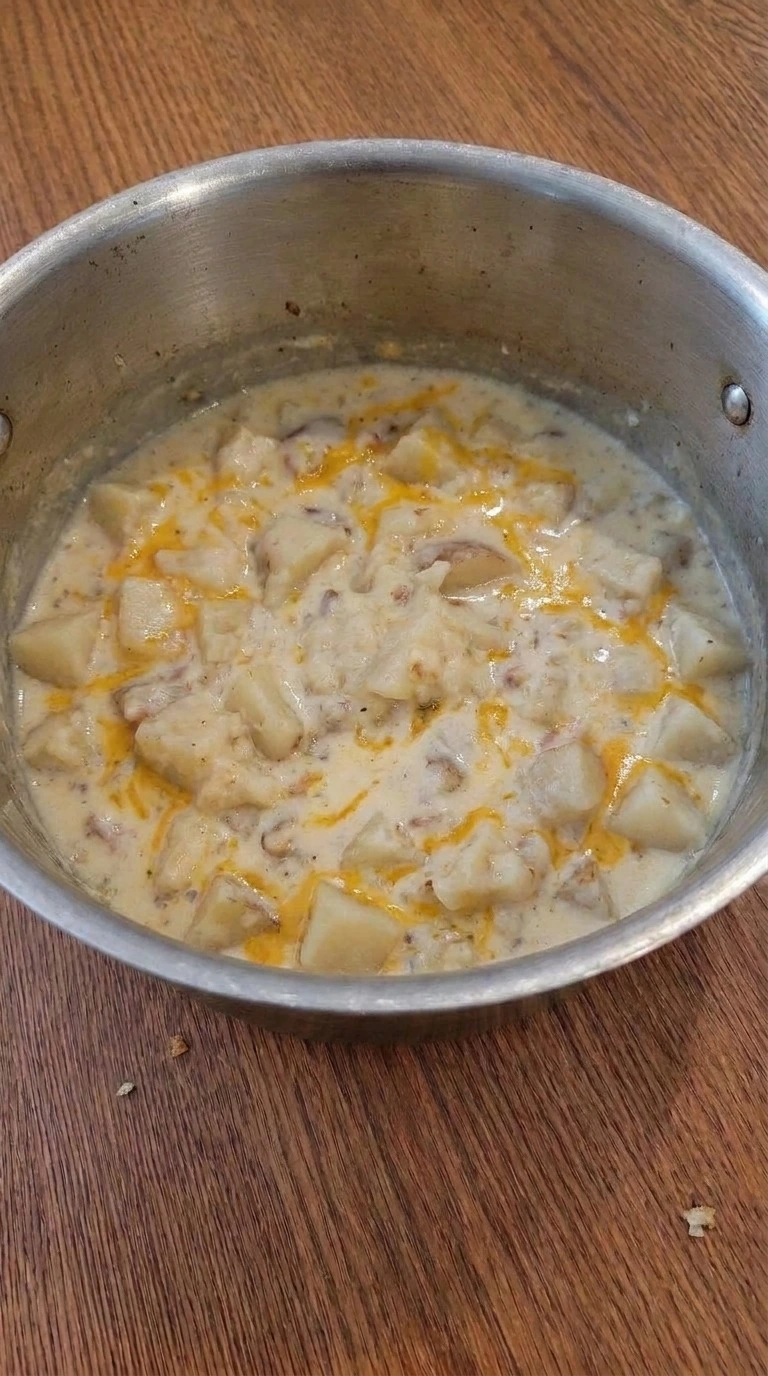
Stir in 2 cups sharp cheddar, 1 teaspoon garlic powder, 1 teaspoon onion powder, 1 teaspoon salt and 1/2 teaspoon black pepper over low heat around 200°F for 3 to 5 minutes. Fold the shredded cheese through the soup until it melts instead of stirring aggressively. (My first batch used extra cheese and the soup became too thick.
This amount keeps the balance. ) The cheddar disappears into the base and leaves golden streaks before blending fully. You’ll smell the sharp cheese and bacon together.
Add cheese too fast and it can clump. Gentle heat keeps the dairy smooth and prevents separation.
Tip: Grate sharp cheddar from a block instead of using pre-shredded cheese because it melts more evenly.
Step 5: Serve the finished soup portion

Ladle the finished soup into bowls and add 1/4 cup green onion, 1/2 cup bacon pieces and extra 1/2 cup sharp cheddar on top. Serve at about 165°F after resting for 2 minutes, then place toppings unevenly with your fingers for a natural finish. The soup should look thick with melted cheese and scattered toppings.
Miss the short rest and the toppings slide into the soup too quickly. You’ll see creamy swirls, crisp bacon pieces and melted cheddar patches across the surface. The final bowl should feel homemade, not arranged by a machine.
Rest briefly so the toppings stay visible while the soup settles.
Tip: Warm serving bowls with hot water for 1 minute before filling so the soup stays hotter at the table.
Pro Tips
- Cut russet potatoes into even 1-inch cubes so they soften together during the 15 to 18 minute simmer and don’t leave hard pieces behind.
- Cook bacon until it reaches a deep brown color over medium heat because 8 ounces of crisp bacon creates the strongest smoky flavor in the soup.
- Grate sharp cheddar from a block instead of a bag and let it melt at about 200°F to keep the cheese smooth.
- Use a 6-quart heavy pot because thick soups can scorch in thin pans after 10 minutes of simmering.
- Don’t boil the cream base after adding dairy. Keep the heat below 200°F so the texture stays creamy and doesn’t separate.
- Make the toppings just before serving and keep 1/2 cup bacon pieces aside for a crisp contrast against the soft soup.
- Taste the soup after adding cheddar and bacon because both ingredients add salt. Adjust seasoning during the final 3 minutes of cooking.
- Add 1 tablespoon smoked paprika and extra bacon pieces for a smoky potato soup with a barbecue-inspired flavor.
- Mix in 1 cup roasted broccoli florets at the end for a cheesy vegetable version with more texture.
- Replace bacon with 8 ounces cooked turkey bacon for a lighter option that still adds a savory topping.
- Add 1/2 cup diced jalapeños and pepper jack cheese for a spicy version with a sharper kick.
Substitutions
- heavy cream: evaporated milk. Use 1 cup evaporated milk for a lighter base with less richness. The soup stays creamy but has a thinner mouthfeel than the original.
- sharp cheddar: dairy-free cheddar style shreds. Use the same 2 cups if you need a dairy-free option. The flavor is milder and the melt can be less smooth, so add it slowly over low heat.
- chicken broth: vegetable broth. Replace with 4 cups vegetable broth for a vegetarian version. The soup keeps its texture but loses some of the savory depth from chicken broth.
- sour cream: plain Greek yogurt. Use 3/4 cup Greek yogurt instead of 1 cup sour cream because it is thicker. The result has more tang and a slightly firmer texture.
- russet potato: Yukon Gold potato. Use 3 pounds Yukon Gold potatoes for a naturally buttery soup. The texture becomes smoother but less fluffy than russet potatoes.
Storage
Keep leftover Loaded Baked Potato Soup in an airtight container for up to 4 days in the refrigerator. For freezing, cool the soup fully and store it in freezer-safe containers for up to 2 months without toppings.
Reheat portions at medium-low heat for 8 to 10 minutes and add 1 to 2 tablespoons of fresh cream if the soup becomes thick. Discard it if you notice sour smells, curdled dairy or unusual changes in color.
FAQ
Yes, you can prepare this soup up to 2 days ahead and keep it chilled in a sealed container. Reheat it slowly at 300°F on the stove or in the oven until warm, then stir in a small splash of cream if the texture has thickened too much.
Store the soup for 3 to 4 days in the refrigerator at or below 40°F. Keep toppings like bacon and green onion separate so they stay fresh and add them after reheating.
You can freeze the soup for up to 2 months, but dairy texture may change slightly after thawing. Freeze it without toppings and warm it gently at 250°F while stirring often to bring the creamy texture back.
A watery soup usually means the potatoes did not release enough starch or the base was not simmered long enough. Cook it for another 10 minutes at medium-low heat and mash some potato pieces to improve the body.
Yes, double every ingredient and use at least an 8-quart pot so the soup heats evenly. Add the broth gradually and simmer for about 20 to 25 minutes because the larger volume takes longer to warm.
Serve it with crusty bread, a green salad or roasted vegetables for a complete meal. For a gathering, keep the soup warm around 165°F and place extra cheddar, bacon and green onion nearby for guests.
Loaded Baked Potato Soup is inspired by the classic loaded baked potato, where toppings transform a simple potato into a full meal. The soup version keeps the same flavors while spreading the bacon, cheese and cream through every spoonful.