

Herb Butter Roasted Turkey Breast is what I make when I want a real Thanksgiving dinner without cooking a huge bird. The skin turns golden and crisp while the meat stays tender beneath a layer of garlic and fresh herbs. And the smell? It’s the kind that brings everyone into the kitchen before dinner is even close. If you’ve ever pulled a dry turkey breast from the oven and wondered what went wrong, this easy herb butter roasted turkey breast is worth trying.
The butter goes beneath the skin instead of sitting only on top. That small change helps season the meat as it roasts. For a traditional holiday plate, serve it with our Southern Thanksgiving Soul Food Cornbread Dressing. It’s a lovely pairing when you’re feeding a smaller group. I also like that this roast doesn’t take over the whole day. You can mix the herb butter early and keep the turkey chilled until it’s time to roast.
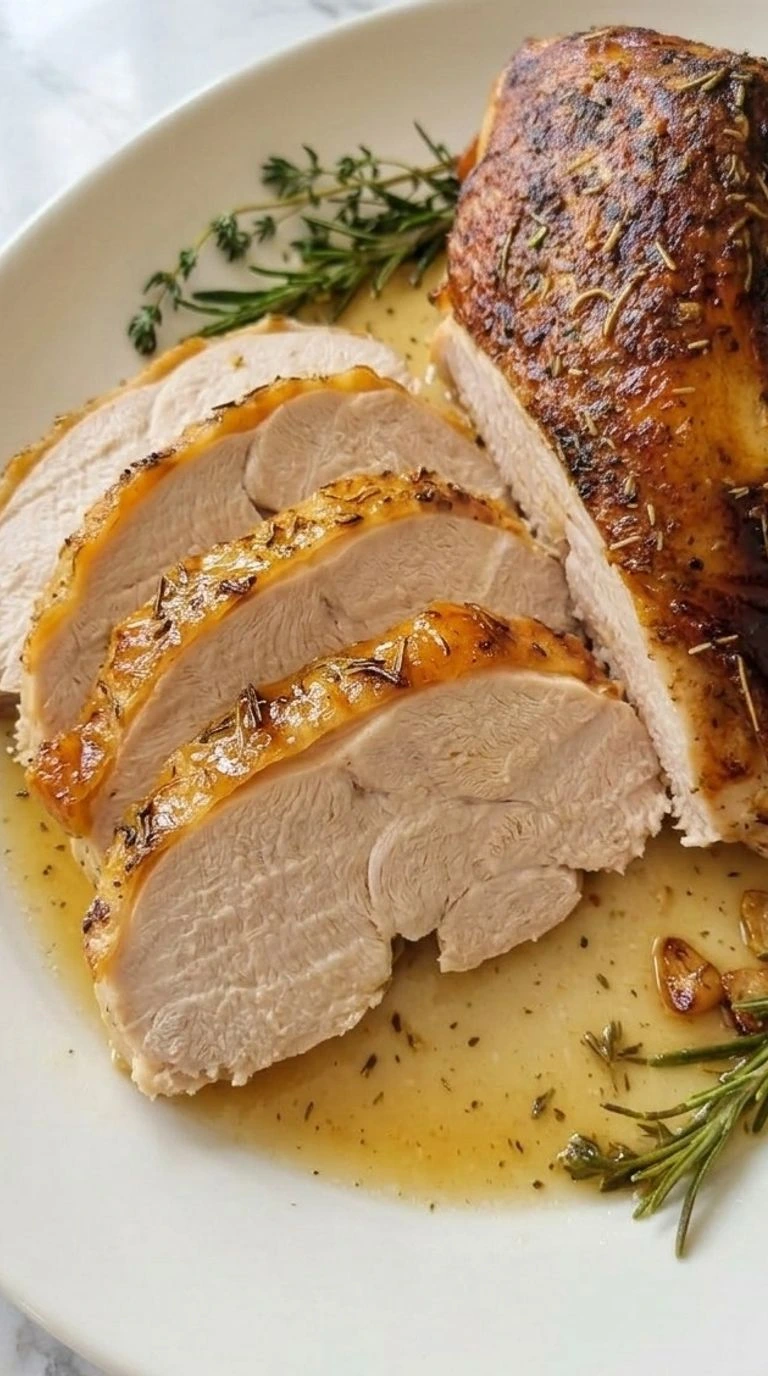
Then the oven does most of the work. No constant fussing. Just a golden roast that slices well and leaves enough pan juices to spoon over dinner.
Why This Recipe Works
Herb Butter Roasted Turkey Breast gets its rich flavor from butter placed directly against the meat. The skin helps hold that seasoned butter close as it melts and bastes the surface from underneath.
Roasting at 350°F gives the breast time to heat through while the skin turns golden. And checking for 165°F in the thickest part takes the guesswork out of dinner.
A 15 to 20 minute rest also helps the slices retain more of their juices.
Ingredients
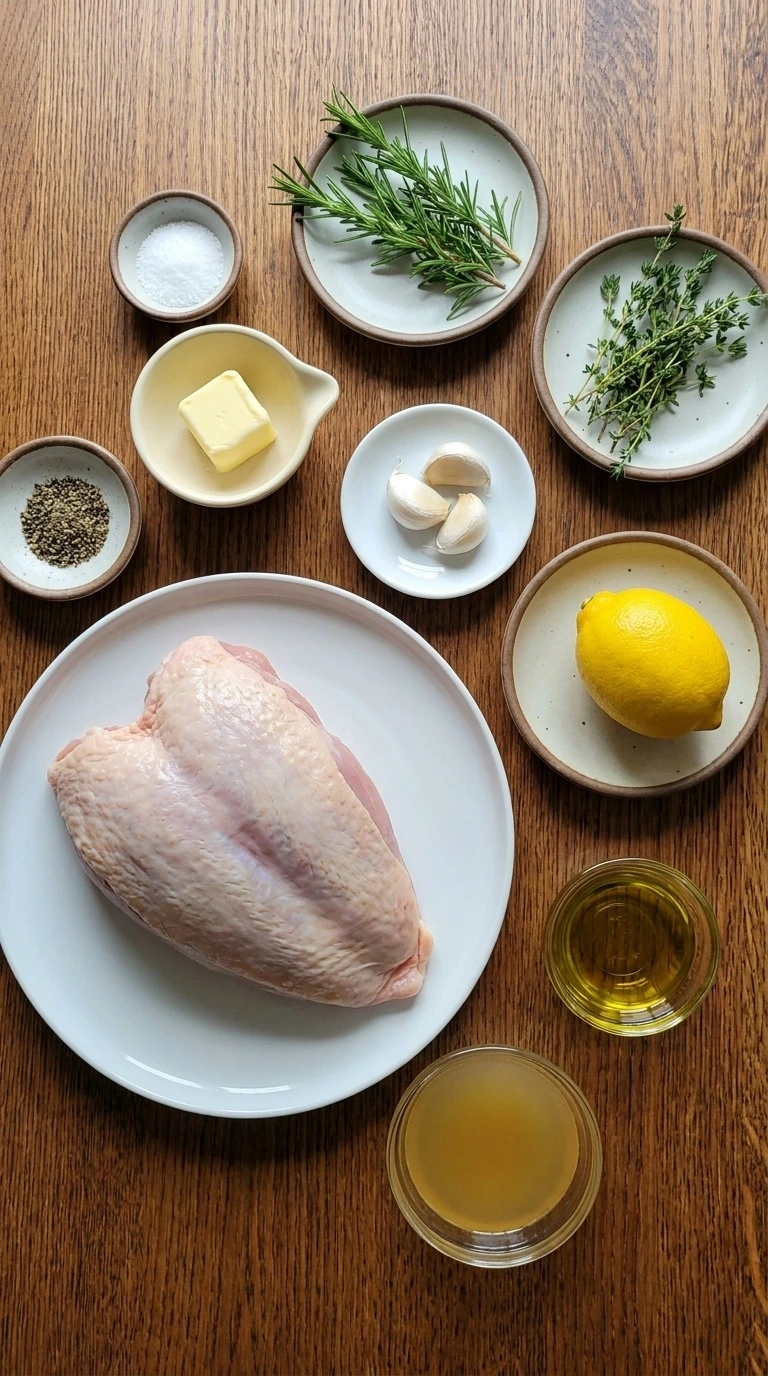
- Boneless skin-on turkey breast: Fully thawed with the skin intact and patted dry before seasoning. One compact breast makes four generous servings.
- Unsalted butter: Softened for 20 to 30 minutes until spreadable but not melted. Carries the fresh herbs beneath the skin and adds richness.
- Fresh rosemary: Leaves stripped from the woody stems and finely chopped. Adds a bold herbal aroma that holds up during roasting.
- Fresh thyme: Leaves removed from the stems and finely chopped. Adds a softer earthy note that balances the rosemary.
- Garlic cloves: Peeled and finely minced before mixing with the butter. Adds savory depth as it gently roasts.
- Fine sea salt: Mixed evenly into the herb butter to season the turkey meat. Adjust only if your turkey is already salted or enhanced.
- Black peppercorns: Freshly ground before adding to the butter. Gives the roast a mild peppery finish.
- Lemon: Washed and finely zested to yield about 1 teaspoon of yellow zest. Adds a fresh citrus note without extra liquid.
- Extra-virgin olive oil: Drizzled across the buttered skin before roasting. Helps distribute the seasoning and encourages even surface browning.
- Low-sodium chicken broth: Poured into the bottom of the roasting pan. Helps prevent the drippings from scorching and provides flavorful juices for serving.
Equipment
- 9-by-13-inch roasting pan: A sturdy 9-by-13-inch roasting pan holds the turkey and catches its juices, while a shallow pan with sides around 2 inches high helps the skin brown instead of steam.
- Instant-read meat thermometer: A digital instant-read thermometer with a thin probe checks the thickest part for 165°F, and a model with a clear display and quick response helps prevent overcooking.
- Medium mixing bowl: A 2-quart mixing bowl gives you room to mash the herb butter evenly, and a stable bowl with a broad base won’t slide as you work.
- Fork: A sturdy dinner fork mashes the softened butter with the herbs, and strong metal tines work better than flexible plastic ones for breaking up firm lumps.
- Fine grater: A fine rasp grater removes the yellow lemon zest without much bitter white pith, and sharp narrow teeth help create small pieces that spread through the butter.
- Cutting board: A large cutting board at least 15 inches long gives the roast room to rest and be carved, while a nonslip base prevents unwanted movement.
- Carving knife: A sharp carving knife with an 8-inch blade cuts clean slices without crushing the meat, while a dull or short blade can pull the crisp skin away.
- Large white serving plate: A serving plate around 12 inches wide leaves room for four portions and a little pan juice, while a raised rim keeps the juices from running off.
- Aluminum foil: A sheet of aluminum foil can loosely shield the skin if it darkens too quickly, and heavy-duty foil resists tearing when lifted away from the hot pan.
- Measuring spoons and cups: A standard measuring set helps portion the butter seasonings and broth accurately, while clear markings prevent a heavy hand with the salt.
Instructions
Step 1: Mash the garlic and fresh herbs into butter
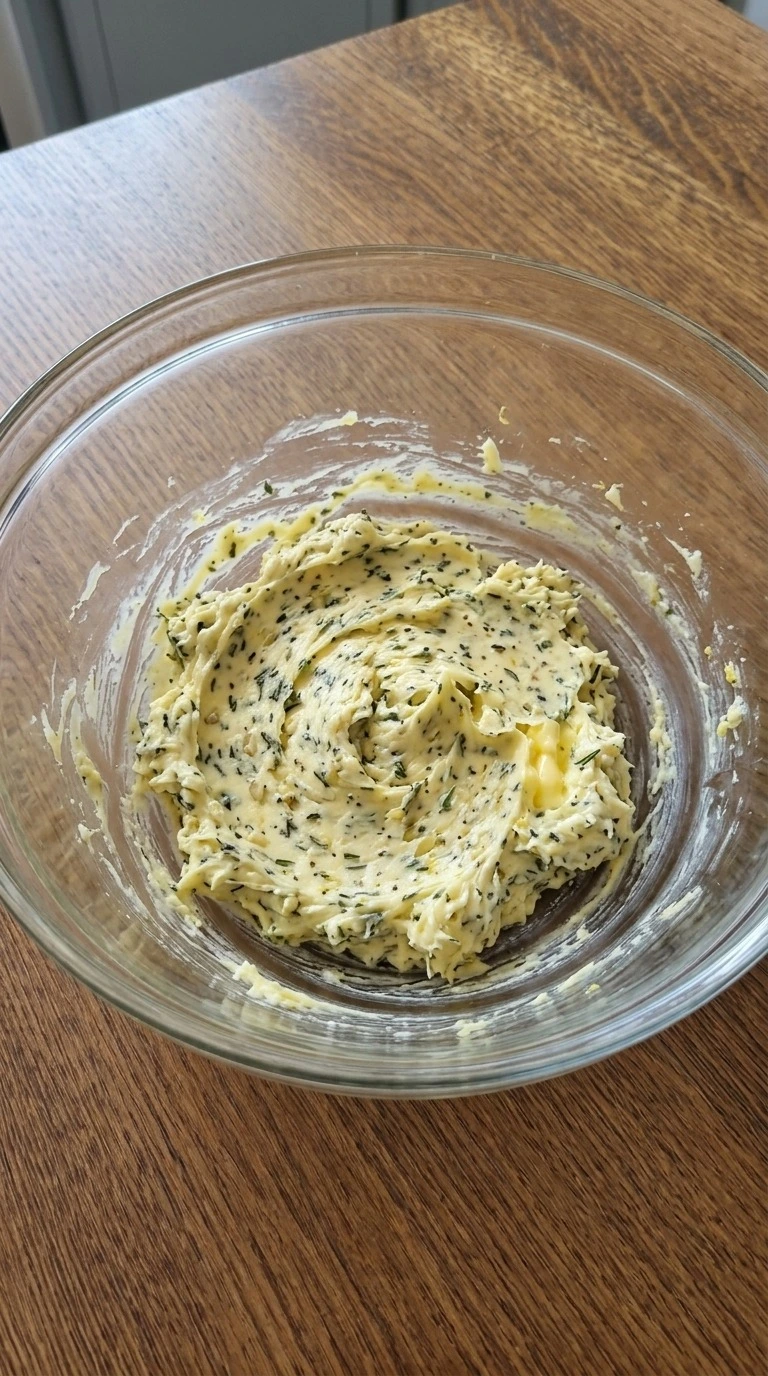
Set the unsalted butter out for 20 to 30 minutes until it softens but doesn’t melt. Keep it near 68°F to 72°F if your kitchen is warm. Finely chop the fresh rosemary and thyme leaves and mince the garlic cloves. Then add everything to a medium mixing bowl with the fine sea salt, freshly ground black pepper and finely grated lemon zest.
Press the mix against the side of the bowl with a fork for about 2 minutes. Scrape the sides halfway through so the herbs spread evenly. You want a thick paste with green flecks throughout. The butter should look pale yellow with small green and white bits.
It should hold soft ridges when you drag the fork through it. If you leave the butter somewhere too hot, it turns greasy and becomes hard to spread beneath the skin. Keep it soft rather than liquid because a thick paste stays where you put it.
Tip: Use fresh rosemary leaves without the woody stems. About 1 tablespoon of chopped leaves gives a clean pine-like aroma without making the butter bitter.
Step 2: Spread herb butter beneath the turkey skin
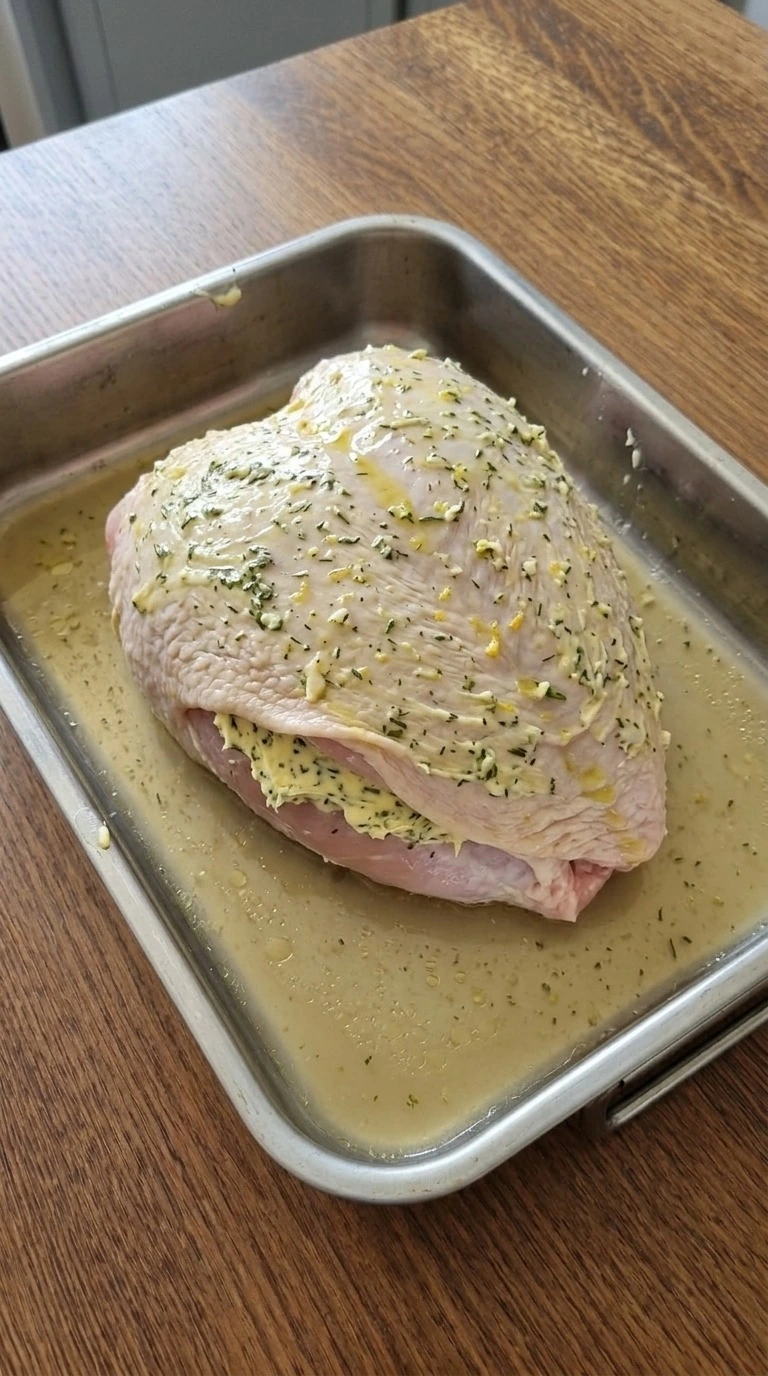
Pat the 2-pound boneless skin-on turkey breast dry with paper towels. Don’t rinse it. Then gently slide two fingers beneath the skin from the wide end while leaving most of the skin attached. Spread about two-thirds of the herb butter over the meat underneath.
Use slow strokes to reach the thickest part without tearing the skin. Rub the remaining butter across the outside and drizzle the olive oil over it. Place the breast skin-side up in a small roasting pan and add the chicken broth to the pan bottom. Finish this step within 10 minutes and keep the turkey chilled if you aren’t roasting it right away.
The skin should look lightly glossy with little green herb flecks across its uneven surface. You should still see the natural shape of the breast beneath the coating. Don’t force a thick layer into one spot because it can tear the skin. Spreading the butter in a thin layer helps it melt over more of the meat.
Tip: Choose a compact turkey breast with its skin intact and a fairly even thickness. A 2-pound piece fits a smaller roasting pan without crowding.
Step 3: Roast the turkey until golden and safely cooked
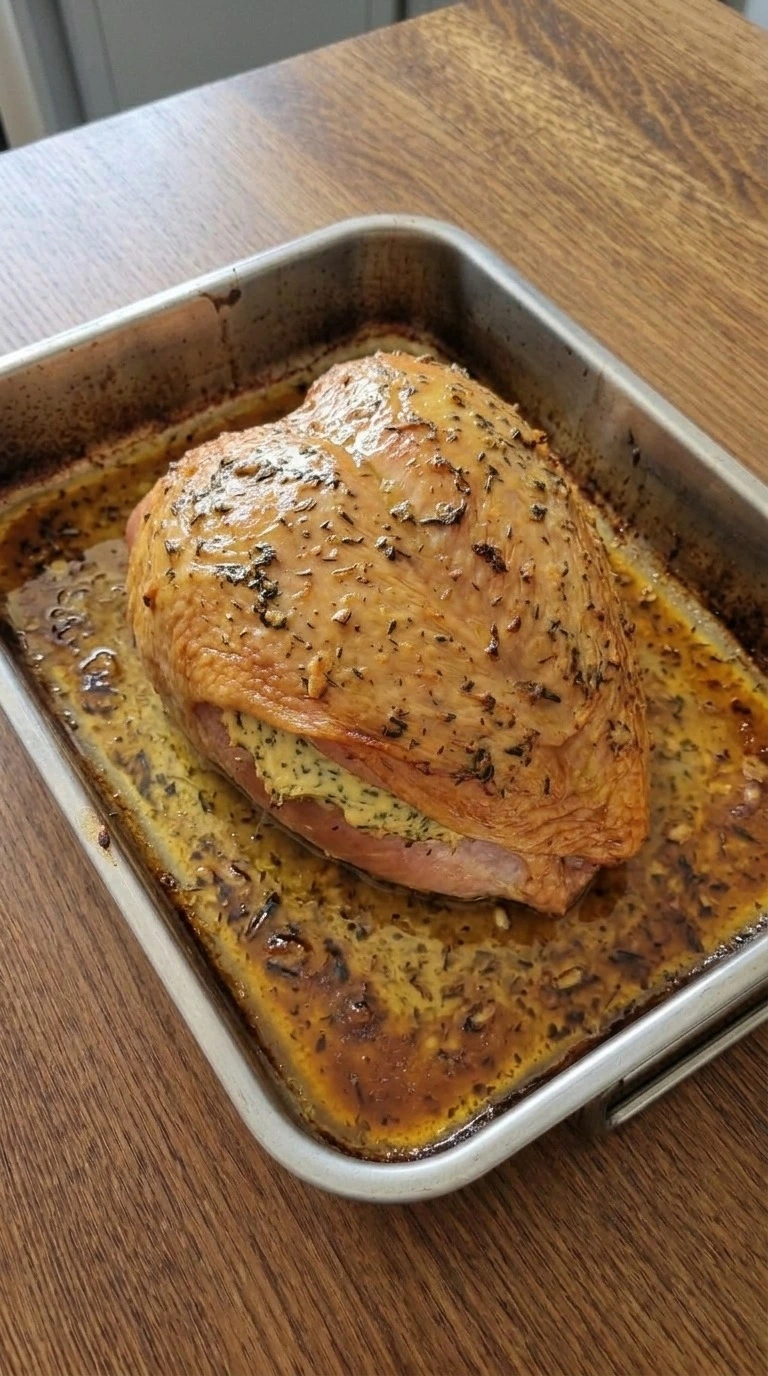
Heat the oven to 350°F and place the roasting pan on the middle rack. Roast the turkey breast uncovered for about 60 to 90 minutes depending on its thickness. At minute 35, turn the pan halfway around and spoon some warm pan juices over any dry-looking edges. Leave most of the skin alone so it can turn crisp.
Begin checking the thickest part with an instant-read thermometer around minute 55. Keep roasting until the center reaches 165°F. If the skin gets too dark before then, cover it loosely with foil. Don’t rely on the clock alone because one thick breast can take much longer than a flatter one.
By the final temperature check, the skin should have deep golden patches and a few darker crisp spots. You’ll smell toasted herbs and garlic while the pan juices turn rich gold. (I once judged turkey by its color alone and found the center needed more time. ) A thermometer matters because the surface can brown before the center reaches 165°F.
Tip: Check the thermometer from the side of the thickest section so its probe reaches the center. Don’t let the tip rest against the pan.
Step 4: Rest the roast and carve thick juicy slices
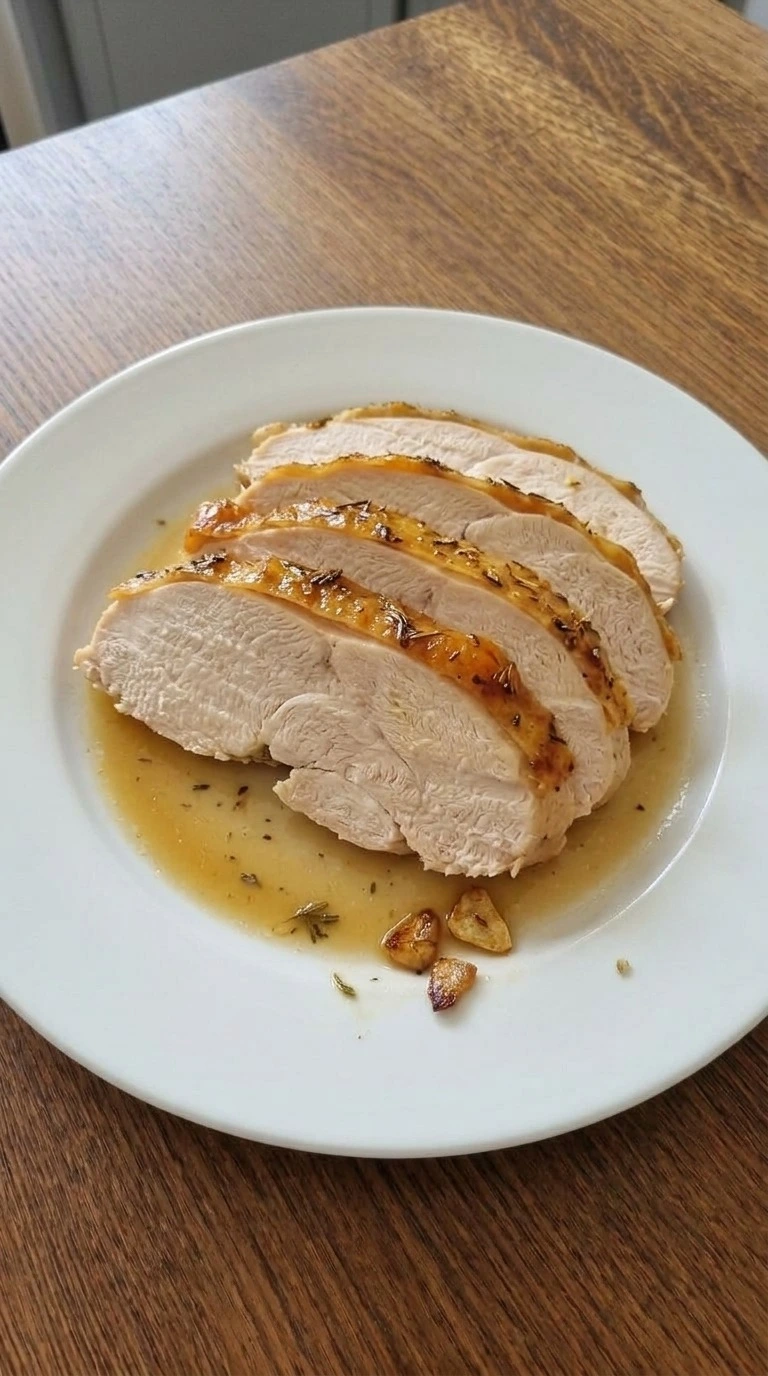
Lift the turkey breast from the roasting pan and place it on a clean cutting board. Let it rest for 15 to 20 minutes without cutting into it. Keep the meat loosely covered if your kitchen feels cool. Then slice across the grain into pieces about 1/2 inch thick.
Use long smooth strokes so the skin stays attached to each slice. Arrange four servings on a large white serving plate and spoon 2 tablespoons of warm pan juices over the meat. Pour slowly so the crisp skin doesn’t become soaked. Add a few of the roasted herb bits from the pan for extra flavor.
The inside should look opaque ivory with moist fibers and slightly uneven slices. The outer edges keep their dark golden crust while a little juice collects beneath the meat. Cut too soon and you’ll lose more moisture onto the board. Resting gives the meat time to hold its juices.
Tip: Warm the serving plate to about 120°F before adding the slices. A warm plate helps the first serving stay pleasant while everyone gathers.
Pro Tips
- Choose a 2-pound skin-on turkey breast with an even shape. A thick and compact roast retains moisture better than a thin piece with loose edges.
- Use butter softened to about 68°F to 72°F. It should spread without dripping because melted butter won’t stay beneath the skin as well.
- Leave at least 1 inch of space around the turkey in your roasting pan. Crowding the meat traps moisture and can soften the skin.
- If you’re making Herb Butter Roasted Turkey Breast for Thanksgiving, mix the seasoned butter up to 2 days ahead and keep it covered in the refrigerator.
- Begin checking the thickest section around minute 55. Oven times vary, so use a thermometer and roast until the center reaches 165°F.
- Watch the garlic bits near the pan edges after 45 minutes. If they turn dark brown, spoon a little broth over those spots to prevent bitterness.
- For a brighter finish, add 1 teaspoon of fresh lemon juice to the warm pan juices after roasting. Don’t pour it over the crisp skin.
- Cut slices about 1/2 inch thick across the grain. Thin slices lose heat faster and can dry out when held for 15 minutes before serving.
- For a citrus rosemary turkey breast, add 1 teaspoon of orange zest to the original herb butter and replace half the thyme with another 1/2 tablespoon of chopped rosemary.
- Make a smoky garlic version by mixing 1 teaspoon of smoked paprika into the 6 tablespoons of softened butter. The skin will develop a deeper reddish golden color.
- For a dairy-free holiday roast, replace the unsalted butter with 6 tablespoons of firm plant-based butter and add 1 teaspoon of extra-virgin olive oil for a smooth spread.
- Create a sage and thyme Thanksgiving version by replacing the rosemary with 1 tablespoon of finely chopped fresh sage. It gives the turkey a more traditional stuffing-inspired aroma.
Substitutions
- Unsalted butter: Use 6 tablespoons of dairy-free plant-based butter. Choose a firm plant-based butter with at least 75% fat for a dairy-free version. It may brown less deeply and taste slightly less rich. Avoid thin spreads because they can slide off the turkey before roasting.
- Fresh rosemary and fresh thyme: Use 1 teaspoon dried rosemary and 1 teaspoon dried thyme. Dried herbs have a stronger and slightly woodier flavor. Crush them between your fingers before mixing them into the butter. Let the mixture stand for 10 minutes so the herbs soften and release their aroma.
- Boneless skin-on turkey breast: Use a 3-pound bone-in skin-on turkey breast. A bone-in breast works well but takes longer to roast. Allow roughly 90 to 120 minutes at 350°F and check the thickest part for 165°F. Keep the skin intact to protect the meat.
- Low-sodium chicken broth: Use 1/2 cup of low-sodium turkey broth or unsalted vegetable broth. Turkey broth gives the pan juices a deeper roasted flavor while vegetable broth tastes lighter. Both options are naturally gluten-free if the package confirms it. For another holiday side, try our Southern Thanksgiving Soul Food Cornbread Dressing.
- Garlic cloves: Use 3/4 teaspoon garlic powder instead of 3 fresh cloves. Garlic powder blends more evenly into the softened butter and gives a milder roasted garlic flavor. It won’t leave the small toasted garlic bits that fresh cloves create. This recipe already contains no eggs, so an egg-free substitution isn’t needed.
Storage
Herb Butter Roasted Turkey Breast keeps well when you cool and store it correctly. Place leftover slices in shallow airtight containers within 2 hours of cooking. Refrigerate at 40°F or below for 3 to 4 days. Spoon 1 to 2 tablespoons of pan juices over the slices before sealing to help them stay moist.
For longer storage, wrap individual portions tightly and place them in freezer-safe containers. Freeze at 0°F for up to 3 months for the best flavor and texture. Label each container with the date so you can use the oldest portions first. To reheat, thaw frozen turkey overnight in the refrigerator.
Add 2 tablespoons of low-sodium chicken broth to a covered baking dish and warm the slices at 300°F until they reach 165°F internally. Start checking after 15 minutes. Discard turkey that develops a sour smell or slimy texture, and don’t taste it to test freshness. If leftovers have been refrigerated for more than 4 days, throw them away even if they seem fine.
FAQ
Yes. You can mix the garlic herb butter and spread it beneath the turkey skin up to 24 hours before roasting. Cover the seasoned breast and keep it refrigerated at 40°F or below. On Thanksgiving, take it out while the oven heats for no more than 20 minutes and roast at 350°F until the center reaches 165°F.
Cooked turkey keeps for 3 to 4 days in the refrigerator when stored at 40°F or below. Place the leftovers in shallow airtight containers within 2 hours of cooking so they cool quickly. For the best texture, store slices with a little pan juice and reheat only the portions you plan to eat.
Yes. For a dairy-free version, replace the 6 tablespoons of unsalted butter with the same amount of firm dairy-free butter. The skin may brown a little differently but the herbs still provide plenty of flavor. The main ingredients are naturally gluten-free, although you should check the broth and plant-based butter labels for gluten-containing additives.
Dry turkey usually means the breast has spent too long in the oven or was sliced immediately after roasting. Start checking its internal temperature around 55 minutes when roasting a 2-pound boneless breast at 350°F. Remove it once the thickest part reaches 165°F and allow 15 to 20 minutes of resting time before carving.
Yes. Use two separate 2-pound turkey breasts and double the herb butter and remaining ingredients. Place both breasts in a roasting pan large enough to leave at least 1 inch between them. Roast at 350°F and check each breast separately for 165°F because their thicknesses may differ. Allow additional roasting time if the oven is crowded.
For Thanksgiving, serve the sliced turkey with cornbread dressing and roasted vegetables for a filling holiday meal. Our Southern Thanksgiving Soul Food Cornbread Dressing is a natural pairing. Plan around 1/2 pound of raw boneless turkey breast per adult and keep the pan juices warm for spooning over each serving.
Yes. Freeze the cooked slices with 2 to 3 tablespoons of cooled pan juices in a freezer-safe container for up to 3 months for best quality. Thaw overnight in the refrigerator. Arrange the slices in a covered baking dish with a little broth and warm at 300°F until the center reaches 165°F. Check after 15 minutes and continue heating as needed.
Turkey breast is naturally leaner than dark turkey meat because breast muscles do less sustained work. That’s why adding fat beneath the skin makes such a noticeable difference. During roasting, the butter melts and spreads the flavor of rosemary, thyme and garlic across the meat. And here’s a useful detail. A smaller boneless turkey breast can develop beautifully golden skin without the long oven time that a whole Thanksgiving turkey needs.