

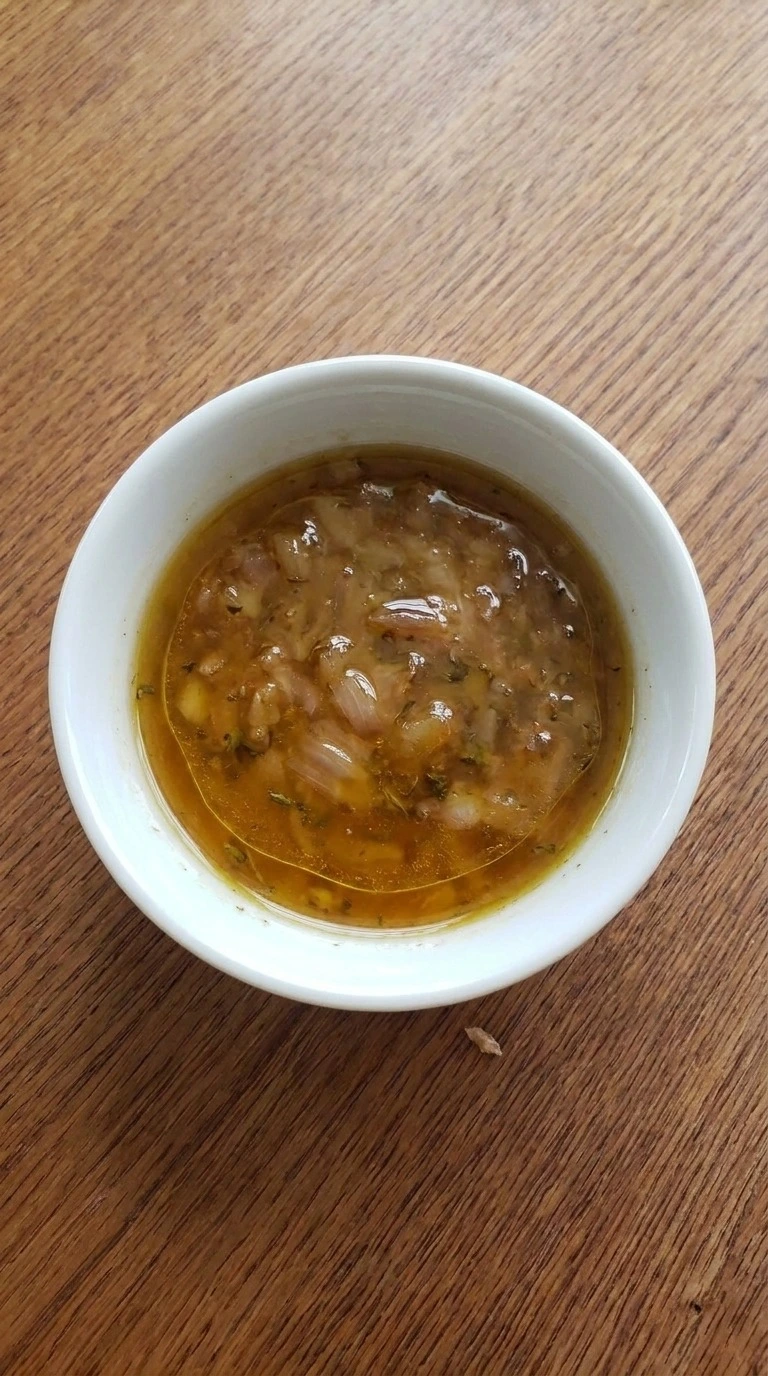
This Fall Salad Dressing is bright, tangy and gently sweet with apple cider vinegar, pure maple syrup and Dijon mustard. The thyme adds a woodsy note while shallot gives the vinaigrette a savory edge without making it heavy. That’s the whole idea.
When I test fall salad dressing recipes, I want enough acid to wake up sturdy greens while maple rounds the sharp edge and mustard keeps the oil from drifting apart. If you need a fall salad dressing for lunch or a holiday table, this one stays balanced instead of turning syrupy. It takes a little patience.
I like it on arugula, roasted squash or a bowl of crisp apples and toasted nuts because the dressing clings instead of pooling at the bottom. And since there’s no cooking, you can make it before the rest of dinner and let the flavor settle while you finish everything else.
Why This Recipe Works
Fall Salad Dressing stays creamy without dairy because Dijon mustard surrounds tiny oil droplets and helps keep them suspended in the vinegar. Macerating the shallot for 10 minutes also lets acid soften its harsh sulfur compounds before the oil goes in, so the flavor stays savory without tasting raw.
Temperature matters too. Keeping everything near 68°F to 72°F makes the oil flow easily and helps the emulsion form faster than it would with fridge cold ingredients.
Ingredients
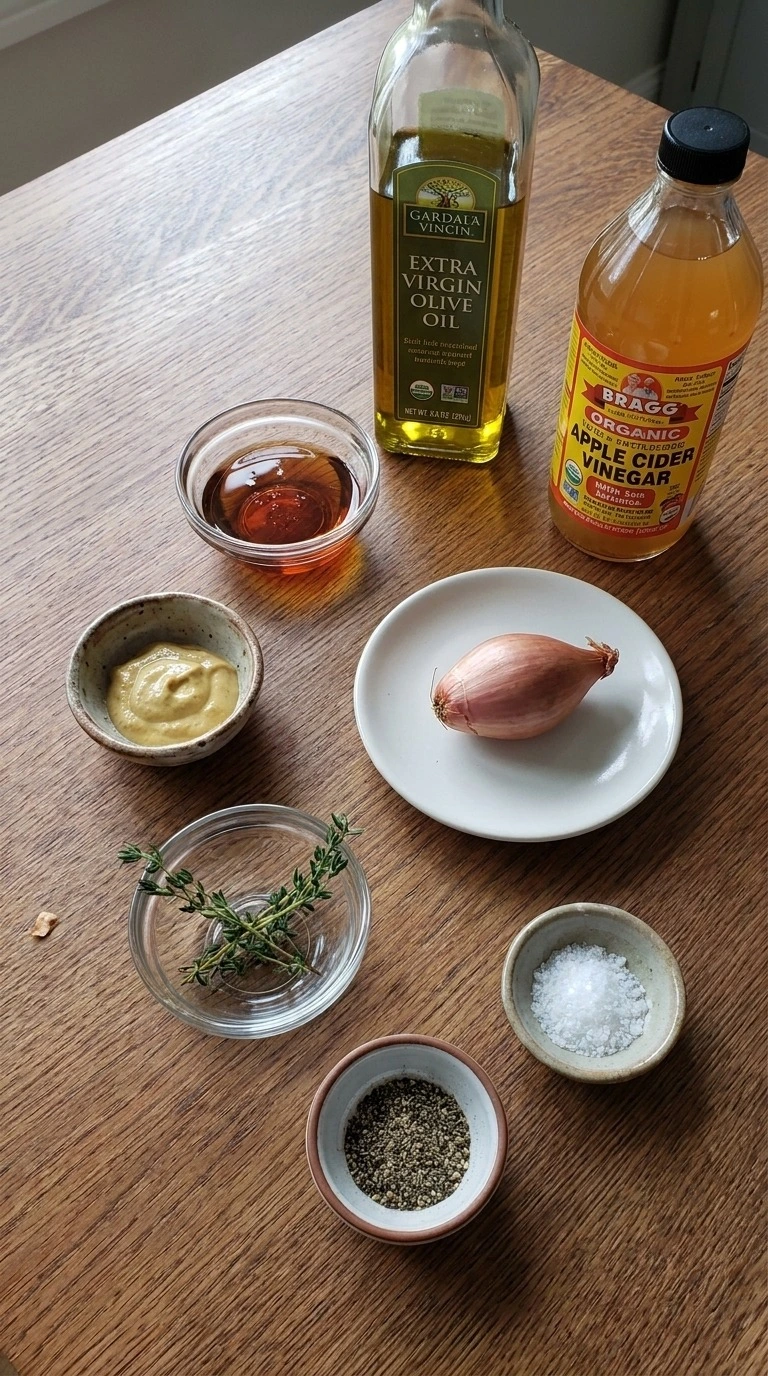
- extra virgin olive oil: Use a mild fruity bottle so the oil supports the maple and thyme instead of tasting aggressively bitter.
- apple cider vinegar: Use unseasoned vinegar with bright apple acidity to form the sharp base of the vinaigrette.
- pure maple syrup: Choose Grade A amber syrup for gentle sweetness and a clear maple note.
- Dijon mustard: Use smooth Dijon because it adds tang and helps hold the oil and vinegar together.
- shallot: Peel and mince into pieces about 1/8 inch wide so the vinegar softens them evenly.
- fresh thyme: Strip the leaves from the stems and use them fresh for a woodsy autumn note.
- kosher salt: Dissolve it in the vinegar first so the seasoning spreads evenly through the dressing.
- black pepper: Grind it fresh just before whisking for a mild warm bite and better aroma.
Equipment
- Chef’s knife: A sharp 8 inch chef’s knife makes the shallot pieces even enough to soften in 10 minutes, while a dull blade crushes them and leaves wet uneven chunks.
- Small cutting board: A board around 8 by 12 inches gives the shallot enough space for fine cuts, while a tiny board makes the knife angle awkward and less controlled.
- 2 cup glass measuring cup: A 2 cup vessel leaves room for vigorous whisking and a steady oil stream, while a narrow cup can splash vinegar and slow the emulsion.
- Small balloon whisk: A whisk about 8 inches long breaks the oil into fine droplets quickly, while an oversized whisk is harder to control in this small batch.
- 8 ounce jar with lid: An 8 ounce jar holds the finished dressing for shaking and storage, while a much larger jar leaves excess air that speeds flavor loss.
Instructions
Step 1: Macerate the minced shallot in vinegar
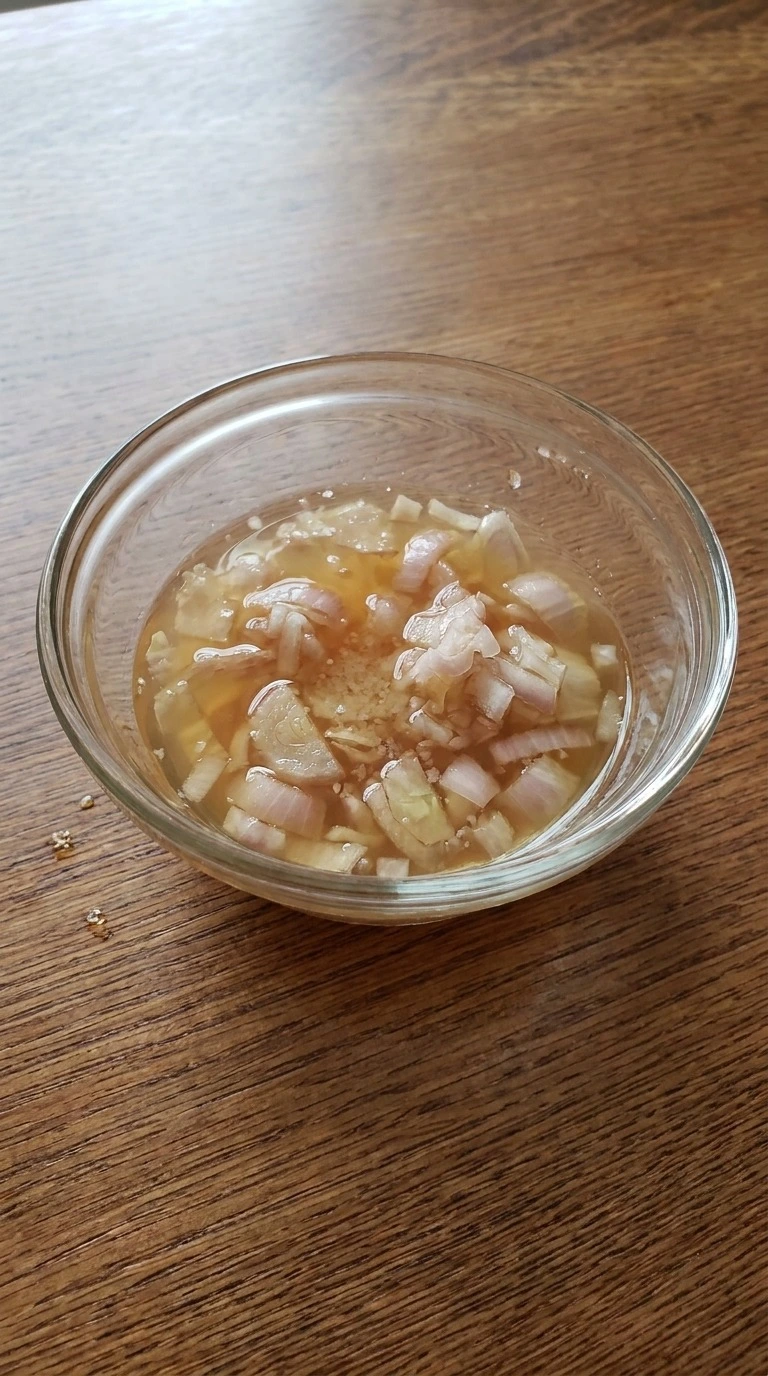
At 68°F to 72°F, mince the shallot into pieces about 1/8 inch wide and combine it with the apple cider vinegar and kosher salt. Stir for 15 seconds, then press the shallot under the vinegar so every piece touches the acid. Let it stand for exactly 10 minutes.
Don’t rush it. The acid softens the raw sulfur bite while the salt starts pulling moisture from the shallot, which gives Fall Salad Dressing a gentler savory base without muting the fresh edge. By minute 10, the shallot should look slightly translucent and smell less sharp.
Stop at 5 minutes and the oniony bite stays harsh. Ten minutes lets acid tame the shallot without flattening its fresh bite.
Tip: Cut the shallot no larger than 1/8 inch so each spoonful gets flavor without one harsh chunk taking over.
Step 2: Whisk in maple, Dijon and thyme
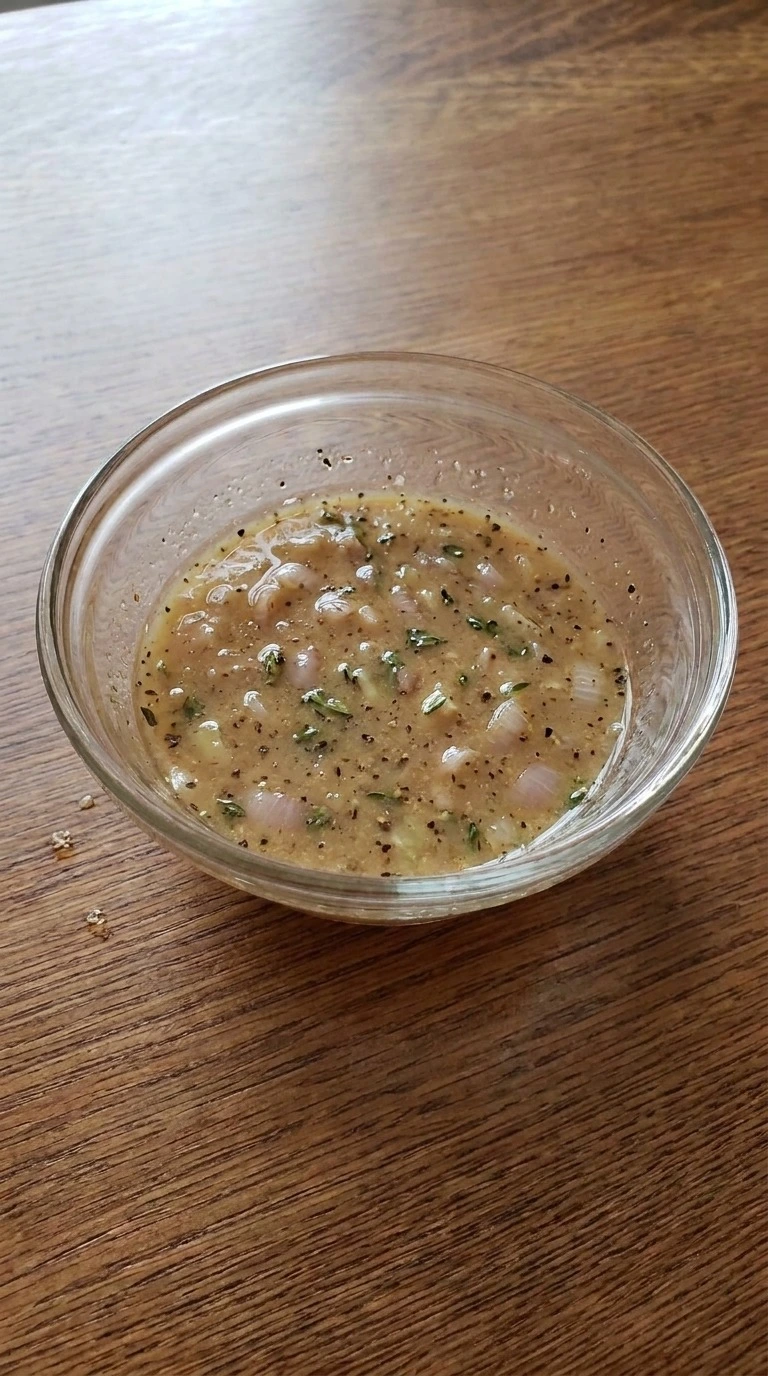
Keep the shallot mixture at 68°F to 72°F, then add the pure maple syrup, Dijon mustard, fresh thyme and black pepper. Whisk in tight circles for 45 seconds and scrape the sides every 15 seconds so the mustard fully disperses through the vinegar. Keep whisking.
The base should thicken slightly and shift from clear amber to a speckled tan color, while the thyme and pepper spread through the liquid instead of clumping near the edges. You’ll smell maple and thyme before the vinegar hits your nose, and no yellow mustard streaks should remain. Stop too early and the emulsion starts unevenly.
A smooth mustard base gives the oil enough structure to disperse evenly.
Tip: Use Grade A amber maple syrup and measure 2 tablespoons level because darker syrup can overpower the thyme at this ratio.
Step 3: Emulsify with extra virgin olive oil
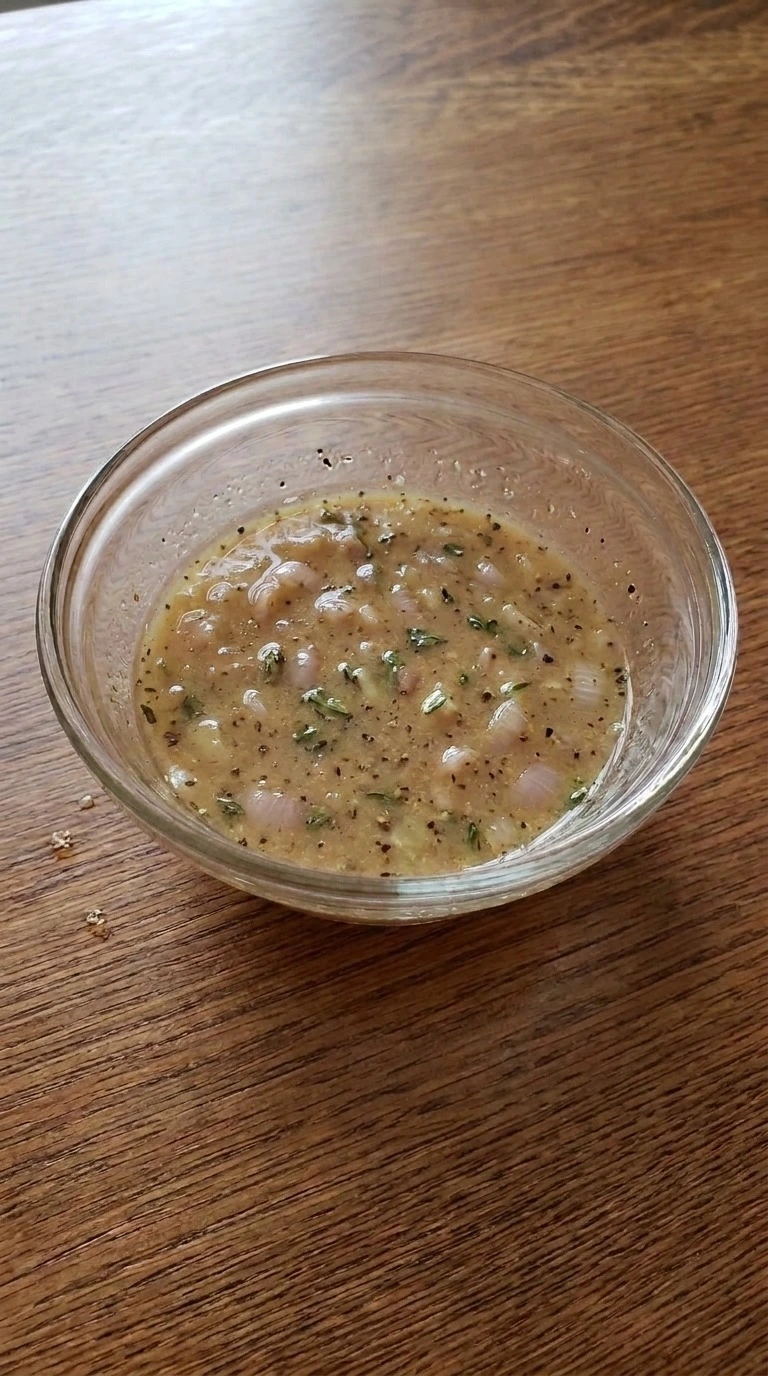
Keep the base at 68°F to 72°F and add the extra virgin olive oil in a thin stream over 60 to 90 seconds while whisking without stopping. Move the whisk in quick circles and sweep the bottom every 10 seconds so fresh oil can’t collect underneath. This is the point when Fall Salad Dressing changes from a loose sharp mixture into a thicker vinaigrette that can cling to leaves.
Pour slowly. (I once added the oil in two big pours. The flavor was fine but the dressing split almost at once.
) The mixture should turn glossy and coat the back of a spoon with a thin even film. Dump the oil in fast and it can break. Slow whisking builds smaller oil droplets that stay suspended longer.
Tip: If your olive oil tastes very peppery, replace 2 tablespoons with avocado oil so the maple and thyme stay clear.
Step 4: Rest and portion the finished dressing
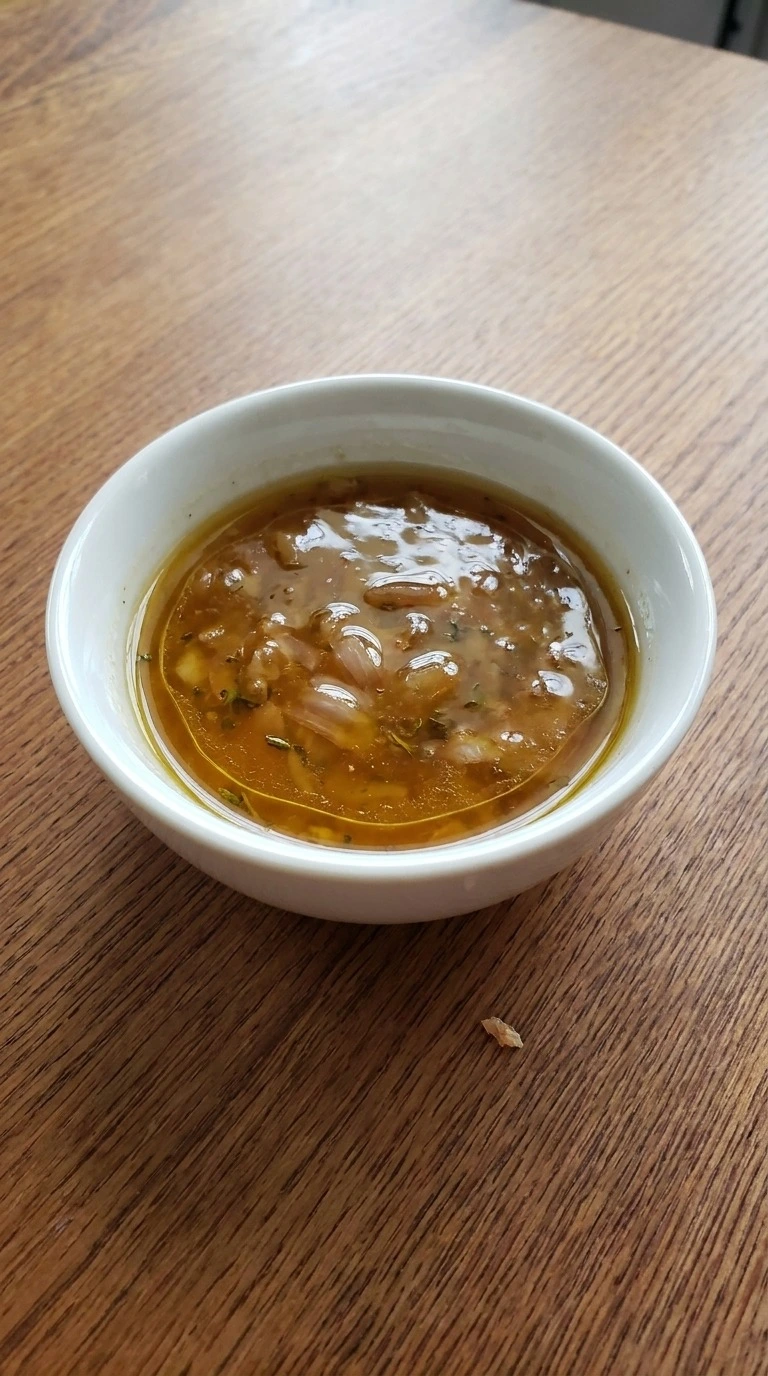
Let the finished dressing rest at 68°F to 72°F for 15 minutes so the thyme, maple and softened shallot settle into the vinegar and oil as one balanced base. Then shake or whisk for 10 seconds before pouring about 3 tablespoons into a small serving bowl for each portion. Taste again.
Before serving Fall Salad Dressing, check one small spoonful for a clean tart start followed by mild maple sweetness. Don’t leave it unrefrigerated for more than 2 hours if you’re saving the rest. After the rest, the aroma should smell rounder and the herbs should stay evenly suspended after a quick shake.
Skip the rest and the flavors taste separate. Fifteen minutes gives the aromatics time to season the emulsion evenly.
Tip: Use 2 tablespoons per 4 cups of greens first, then toss for 20 seconds and add more only if needed.
Pro Tips
- Bring the oil and vinegar to about 68°F to 72°F before whisking because very cold oil thickens and makes emulsifying slower.
- Mince the shallot to about 1/8 inch pieces so 10 minutes in vinegar softens the bite without turning the pieces mushy.
- Pour the 1/2 cup olive oil over 60 to 90 seconds instead of adding it at once, which helps form a smoother emulsion.
- Use Grade A amber maple syrup and measure exactly 2 tablespoons because dark syrup can overpower the apple cider vinegar and thyme.
- Shake the jar for 10 seconds before each use. A thin oil layer after chilling is normal and should disappear once mixed.
- Dress 4 cups of greens with 2 tablespoons first, then toss for 20 seconds before deciding whether the salad needs more.
- For a brighter finish, add 1 teaspoon fresh lemon juice just before serving and taste again after 30 seconds of mixing.
- Add 1 tablespoon finely chopped fresh sage and reduce the thyme to 1/2 teaspoon for a deeper herb flavor with roasted squash.
- Whisk in 2 tablespoons unsweetened apple cider for a fruitier version, then add 1 extra teaspoon Dijon mustard to maintain body.
- Add 1/4 teaspoon ground cinnamon and 1 teaspoon extra maple syrup for a warmer dressing that pairs well with apples and pecans.
- Replace 2 tablespoons olive oil with toasted walnut oil for a nutty finish that works especially well with pear and blue cheese salads.
Substitutions
- extra virgin olive oil: Use avocado oil at a 1:1 ratio. The dressing turns milder and less peppery, so the maple and thyme stand out more. The texture stays nearly the same.
- pure maple syrup: Use honey at a 1:1 ratio. Honey makes the vinaigrette slightly thicker and more floral. This swap isn’t vegan, so keep maple syrup for a fully plant based version.
- Dijon mustard: Use whole grain Dijon mustard at a 1:1 ratio. The dressing becomes more textured and less smooth because mustard seeds remain visible. Whisk for an extra 20 seconds to help the emulsion form.
- apple cider vinegar: Use fresh lemon juice at a 1:1 ratio. The flavor becomes brighter and less apple forward. Add 1 teaspoon extra maple syrup if the lemon tastes especially sharp.
- fresh thyme: Use 1/3 teaspoon dried thyme for every 1 teaspoon fresh thyme. Dried thyme tastes stronger and slightly earthier, so use less. Let the dressing rest 20 minutes so the leaves soften before serving.
Storage
Store Fall Salad Dressing in a tightly sealed 8 ounce jar in the refrigerator for up to 5 days. Freezing isn’t ideal because the oil and vinegar can separate into a grainy texture after thawing.
Before serving, let the jar stand for 15 minutes and shake it hard for 10 seconds. Discard it if the shallot smells sour, the herbs darken heavily or the dressing develops an unusual fermented odor.
FAQ
Yes. Make it up to 4 days ahead and refrigerate it in a tightly sealed 8 ounce jar. Let it sit for 15 minutes at room temperature, then shake for 10 seconds before serving.
The oil probably went in too quickly or the ingredients were very cold. Bring everything near 68°F to 72°F, then whisk in the oil slowly over 60 to 90 seconds.
Yes. Double every ingredient and use a 16 ounce jar or a larger mixing vessel. Whisk the oil in over about 2 minutes so the larger batch emulsifies evenly.
The base recipe contains no dairy, eggs or gluten ingredients. Check the Dijon mustard label for cross contact if you need strict gluten free preparation.
Use it with arugula, kale or mixed greens plus apples, pears or roasted squash. Start with 2 tablespoons for every 4 cups of greens, then toss for 20 seconds.
Freezing isn’t recommended because the emulsion can turn grainy after thawing. For the best texture, refrigerate it and use it within 5 days instead.
Mustard does more than add flavor. Its natural emulsifiers help tiny oil droplets stay suspended in vinegar for longer.