


Busy mornings can be a little easier with a warm breakfast casserole ready to go. This Croissant Breakfast Casserole combines buttery croissants, eggs, and cheese to create a dish that feels special without taking a lot of effort. It’s also a delicious breakfast casserole with hashbrowns alternative when you’re craving a softer, bread-based texture.
Every bite has crisp edges, a tender center, and savory flavors packed into each layer. I love serving it with fresh fruit or another brunch favorite like our Bakery Style Blueberry Muffins when friends and family come over. This recipe is perfect for weekends, holidays, and gatherings because you can prepare it ahead of time.

Unlike a classic overnight breakfast casserole, this version uses flaky croissants that soak up the egg mixture while still keeping their rich, buttery taste.
Why This Recipe Works
The trick in this Croissant Breakfast Casserole is soaking the torn croissants for 10 minutes before baking at 375°F. The bread absorbs the egg custard while the center stays soft instead of turning soggy.
Using sharp cheddar between the layers creates melted pockets with stronger flavor than mild cheese. For another family style dish, try our Chicken Burrito Casserole when you want a hearty baked meal.
Ingredients

- butter croissant: Torn into uneven pieces to absorb the egg mixture and create soft layers.
- large egg: Whisked into the base to create a firm but tender custard texture.
- whole milk: Added to loosen the eggs and keep the casserole moist.
- garlic powder: Mixed into the filling for savory depth.
- salt: Balances the egg and cheese flavors.
- black pepper: Adds mild warmth throughout the dish.
- dried thyme: Adds an herbal note that pairs with buttery croissants.
- sharp cheddar cheese: Shredded and layered for melted pockets of flavor.
Equipment
- 9×13 ceramic baking dish: This size holds the croissant layers evenly and a ceramic dish helps prevent hot spots, while a smaller dish can make the center too thick.
- large clear glass mixing bowl: This bowl gives enough room to coat the croissants and a sturdy size prevents spills during folding.
- food thermometer: This tool checks that the egg center reaches a safe temperature, while guessing can leave the middle under-set.
Instructions
Step 1: Tear croissants and mix the egg filling
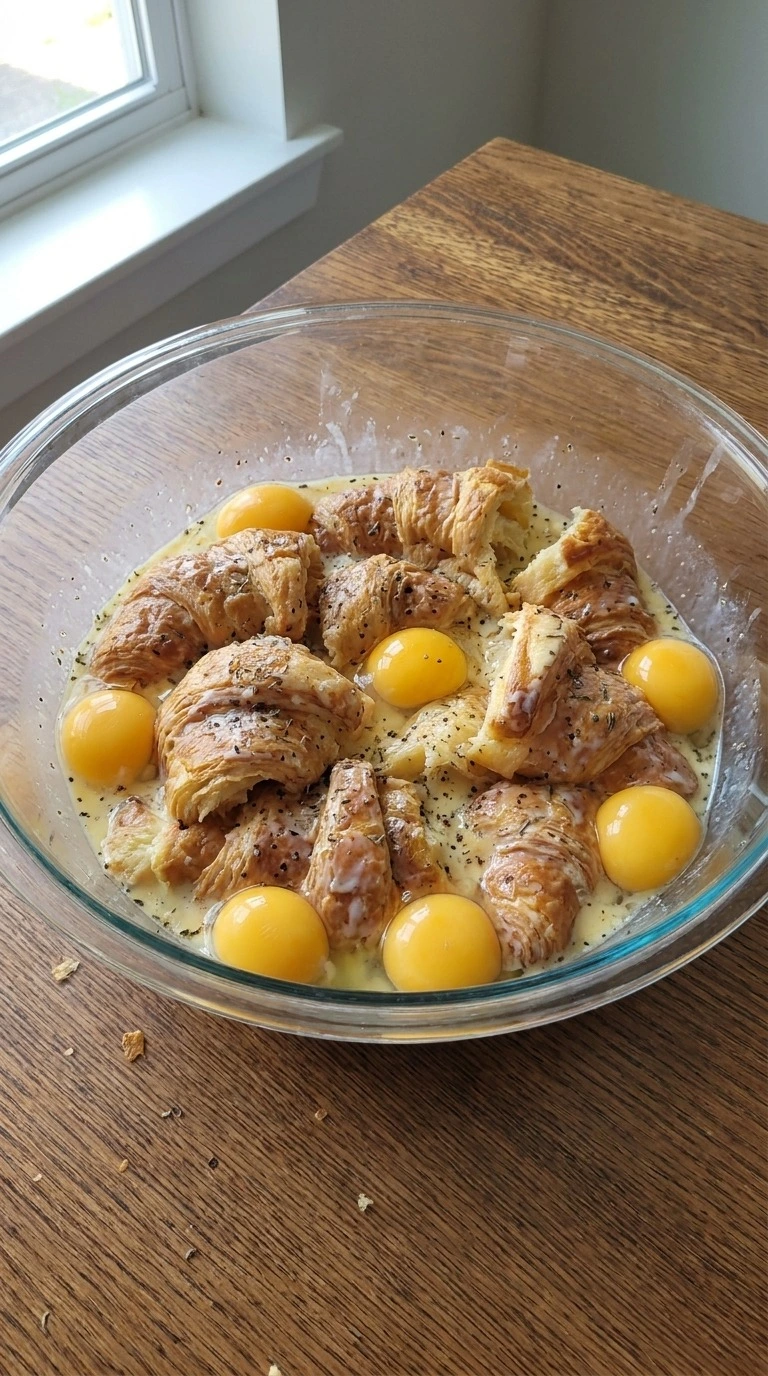
Tear 6 large butter croissants into uneven pieces and place them in the mixture with 8 large eggs, 2 cups whole milk, 1 teaspoon garlic powder, 1 teaspoon salt, 1/2 teaspoon black pepper and 1 teaspoon dried thyme. Whisk the eggs and milk with a circular hand motion for 60 seconds, then fold the croissant pieces gently until coated. Keep the mixture in a large clear glass mixing bowl.
(I tried adding the croissants last minute once, but the center stayed dry. The soak time fixes it. ) You’ll see the croissants become slightly darker and absorb the creamy egg mixture.
The smell of thyme appears first. Miss the 10 minute soak and the bread won’t hold the filling evenly. The 10 minute rest helps the croissants absorb moisture without collapsing.
Tip: Use day-old croissants when possible because they absorb the egg mixture better than very fresh ones.
Step 2: Layer the soaked croissants and cheese

Spread the soaked croissant pieces into a greased 9×13 ceramic baking dish, then add 1 1/2 cups shredded sharp cheddar cheese between uneven layers. Press gently with your hands for 30 seconds so the pieces settle while keeping air pockets. Move quickly because the croissants continue absorbing liquid after 10 minutes.
The cheese should appear tucked between bread pieces instead of sitting as one flat layer. You’ll notice a soft creamy texture forming. Skip the gentle pressing and the top can dry before the center sets.
The layering keeps moisture trapped while the cheese melts through the bread.
Tip: Leave small gaps between some croissant pieces so the egg mixture can cook through the middle.
Step 3: Bake the casserole until set and golden

Bake the assembled Croissant Breakfast Casserole at 375°F for 30 to 35 minutes until the center reaches 160°F. Keep the 9×13 ceramic baking dish uncovered and avoid moving it during the first 20 minutes. (My first batch used 400°F and the top browned before the middle set.
The lower heat solved it. ) The top turns golden and the cheese melts into the croissant layers. You’ll smell toasted butter when it reaches the right stage.
Go past 35 minutes and the edges can become dry. Baking at 375°F lets the eggs set slowly and evenly.
Tip: Check the center with a food thermometer because the middle cooks slower than the edges.
Step 4: Rest and serve a warm portion

Rest the baked Croissant Breakfast Casserole for 10 minutes at room temperature, then cut a single portion with a clean downward motion. Transfer one slice to a white plate and keep the layers intact. The rest period matters after the 375°F bake because the eggs finish setting gently.
The slice should show soft croissant layers, melted cheese pockets and uneven golden edges. You’ll see the center hold together instead of running. Cut too early and the filling may spill.
Resting allows the egg structure to stabilize.
Tip: Add fresh chopped parsley after slicing if you want a brighter finish without changing the bake.
Pro Tips
- Use croissants that are one day old because their drier crumb absorbs the custard better during the 10 minute soak without turning mushy.
- Shred sharp cheddar from a block instead of buying pre-shredded cheese for smoother melting at 375°F because bagged cheese can have extra coating.
- Grease the 9×13 ceramic baking dish lightly before adding the croissants so the edges release cleanly after the 10 minute cooling period.
- Bake the casserole on the middle oven rack for 30 to 35 minutes because this helps the center set before the top becomes too dark.
- Don’t overload the layers with extra cheese beyond 1 1/2 cups because too much fat can make the egg base separate during baking.
- Add 2 tablespoons chopped fresh parsley after baking for a bright finish that balances the buttery croissant flavor.
- For a weekend brunch, assemble the casserole up to 12 hours ahead and keep it covered in the refrigerator before baking.
- Check the center at 160°F with a thermometer because the outer croissant pieces can look finished while the middle still needs more time.
- Add 1 cup cooked breakfast sausage and 1/2 cup diced bell peppers for a savory morning version with extra protein and color.
- Mix 1 cup fresh spinach with the egg filling for a vegetable variation that adds a soft texture and mild earthy flavor.
- Create a holiday version by adding 1 teaspoon rosemary and 1/2 cup cooked turkey pieces for a festive breakfast dish.
- Make a sweeter brunch twist by replacing cheddar with cream cheese cubes and adding cinnamon with a small amount of maple syrup.
Substitutions
- whole milk: 2 cups unsweetened almond milk. This makes the custard lighter and slightly nutty. Use the same amount because almond milk has a similar liquid ratio for soaking the croissants.
- sharp cheddar cheese: shredded mozzarella cheese. Mozzarella melts smoothly but has a milder taste. Add 1/4 teaspoon extra salt if you miss the sharper cheese flavor.
- butter croissant: gluten-free dinner rolls. This swap works for a gluten-free version but changes the texture because the rolls absorb liquid differently. Let them soak for 15 minutes instead of 10 minutes.
- large egg: 8 tablespoons liquid egg substitute. Egg substitute creates a softer set and slightly less rich flavor. Bake for an extra 5 minutes if the center needs more time.
- sharp cheddar cheese: dairy-free cheddar style shreds. A dairy-free cheese option keeps the recipe accessible but may melt less smoothly. Choose a brand made for melting for better texture, similar to the layers in our Crockpot Mac and Cheese Velveeta.
Storage
Keep leftover Croissant Breakfast Casserole in an airtight container in the refrigerator for up to 3 days. You can freeze baked portions for up to 2 months when wrapped tightly in foil and a freezer bag.
Reheat slices at 350°F for 10 to 15 minutes and add a small splash of milk before warming if the texture feels dry. Discard leftovers if you notice a sour smell, slimy texture or unusual color changes.
FAQ
Yes, you can assemble it up to 12 hours ahead and keep it covered in the refrigerator. Let it sit for 20 minutes before baking at 375°F so the cold dish warms slightly and the center cooks evenly.
Store leftovers in an airtight container for up to 3 days. Reheat individual portions at 350°F for 10 to 15 minutes until the center feels warm and the cheese softens again.
A watery center usually happens when the croissants haven’t absorbed the egg mixture or the casserole is removed too early. Bake until the center reaches 160°F and rest it for 10 minutes before slicing.
Yes, you can use sturdy bread cubes like brioche or French bread. Reduce the soaking time to about 8 minutes because these breads may absorb liquid faster than buttery croissants.
Freeze baked portions for up to 2 months by wrapping them tightly after cooling completely. Thaw overnight and reheat at 350°F for about 20 minutes until the layers are warm.
Use two 9×13 baking dishes instead of one deeper dish. Keep the same 375°F temperature and check each casserole after 30 minutes because a thicker pan changes cooking speed.
Croissants were originally created in Europe and became famous for their flaky layered texture. This casserole uses those layers as a natural sponge for the egg custard.