

Mornings feel much better when breakfast is already planned, and this Crockpot Breakfast Casserole brings together eggs, sausage, potatoes and cheese in one warm dish. It’s a breakfast casserole that saves time while still giving you a hearty meal with homemade flavor.
This recipe is also a great choice when you want a breakfast casserole with hashbrowns that can cook while everyone gets ready. If you enjoy simple slow cooker meals, you may also like our Crockpot Thanksgiving Ham for another family-style meal idea.

The best part is how flexible this slow cooker breakfast dish can be. You can prep it ahead for gatherings, busy weekends or a relaxed brunch without spending the whole morning in the kitchen.
Why This Recipe Works
The slow cooker method keeps the eggs gentle while the potatoes absorb the sausage flavor.
Cooking on low for 6 to 7 hours helps the layers set without drying the center.
Using frozen shredded hashbrowns reduces prep and keeps the texture consistent.
Ingredients
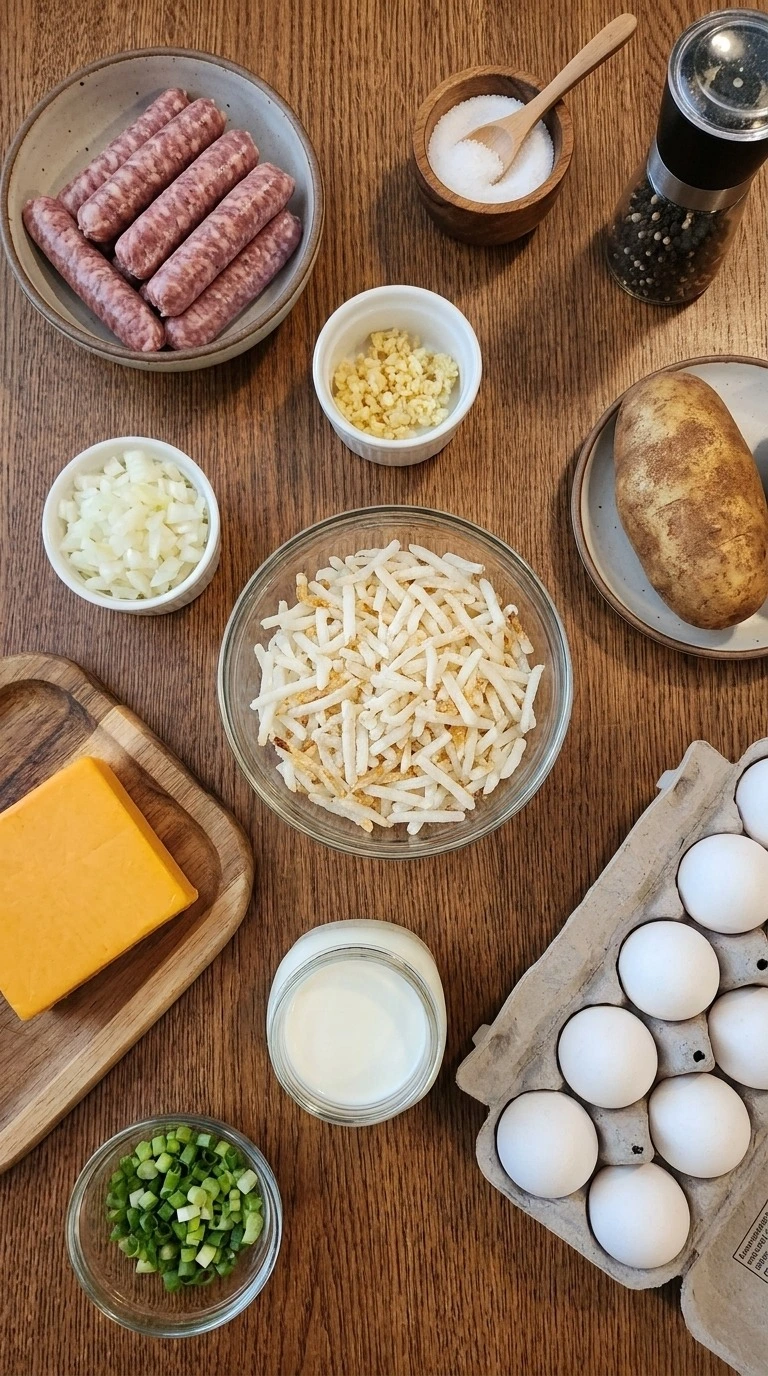
- breakfast sausage: Browned and broken into small pieces for a savory meat layer.
- yellow onion: Diced finely and softened with the sausage for sweetness.
- garlic: Minced to add a warm savory flavor.
- frozen shredded hashbrowns: Used frozen to create the potato base without excess moisture.
- sharp cheddar: Shredded and layered for melted cheesy flavor.
- large eggs: Whisked to create the soft casserole structure.
- whole milk: Mixed with eggs for a tender texture.
- green onion: Sliced and added after cooking for fresh flavor.
- salt: Added to balance the egg mixture.
- black pepper: Ground fresh to add mild heat.
Equipment
- 6-quart slow cooker: A 6-quart slow cooker gives the casserole room to cook evenly and prevents overflow. A smaller cooker can make the center stay wet while a larger one may dry the edges.
- 10-inch skillet: A heavy skillet helps brown the sausage evenly and releases moisture before slow cooking. A thin pan may create hot spots that scorch the meat.
- Large mixing bowl: A large bowl gives enough space to whisk the eggs and milk without spills. Choose one with a stable base because a small bowl makes mixing uneven.
Instructions
Step 1: Brown the breakfast sausage and soften the aromatics
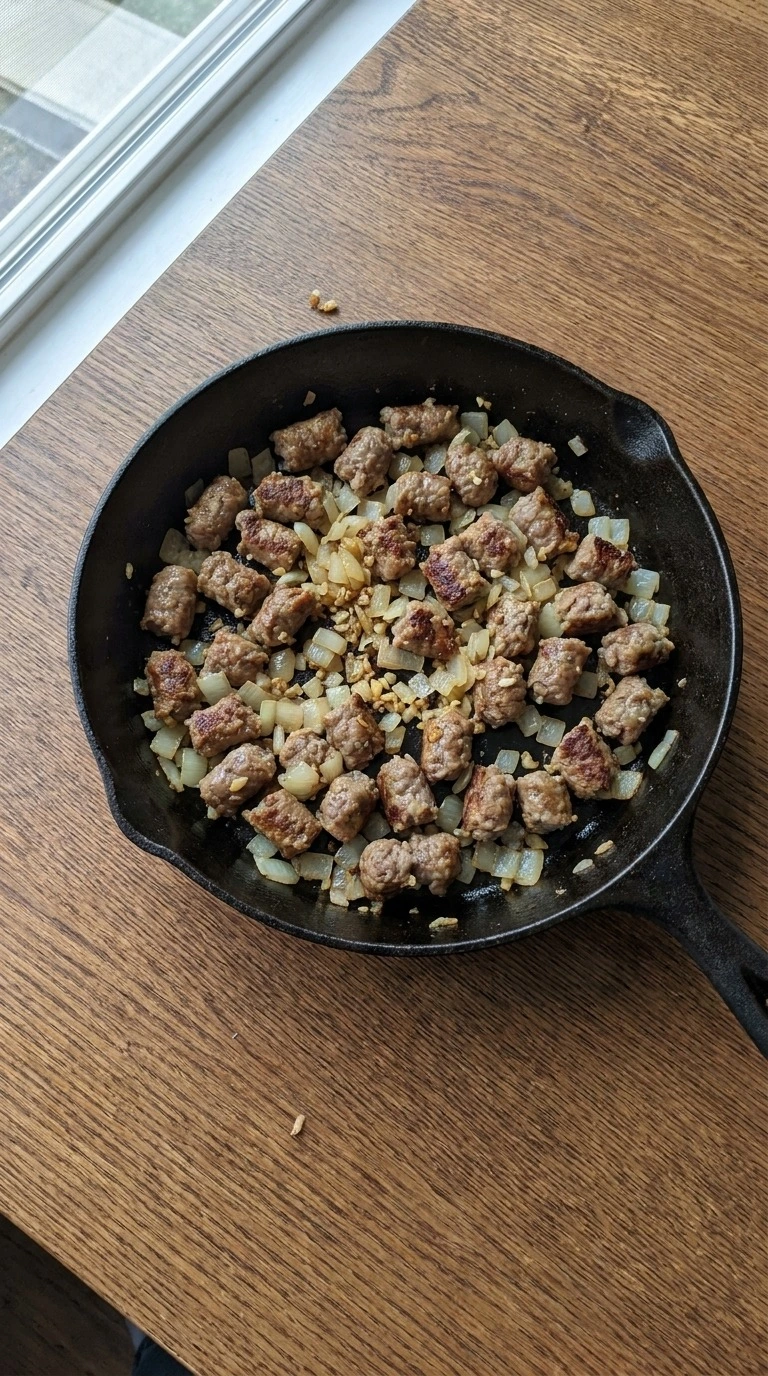
Cook 1 pound breakfast sausage with 1 cup diced yellow onion over medium-high heat (about 375°F surface heat) for 8 to 10 minutes. Break the sausage into small pieces with a wooden spoon while stirring every 2 minutes. Add minced garlic during the final 60 seconds.
You’ll know it’s ready when the sausage has deep brown spots and the onion smells sweet. Miss this window and the meat can stay greasy. The mixture should look uneven with browned bits and soft onion pieces.
You’ll hear gentle sizzling. It matters because browning builds a deeper savory base.
Tip: Drain excess fat after browning so the casserole keeps a firm texture instead of turning oily during slow cooking.
Step 2: Layer the hashbrowns and sausage mixture
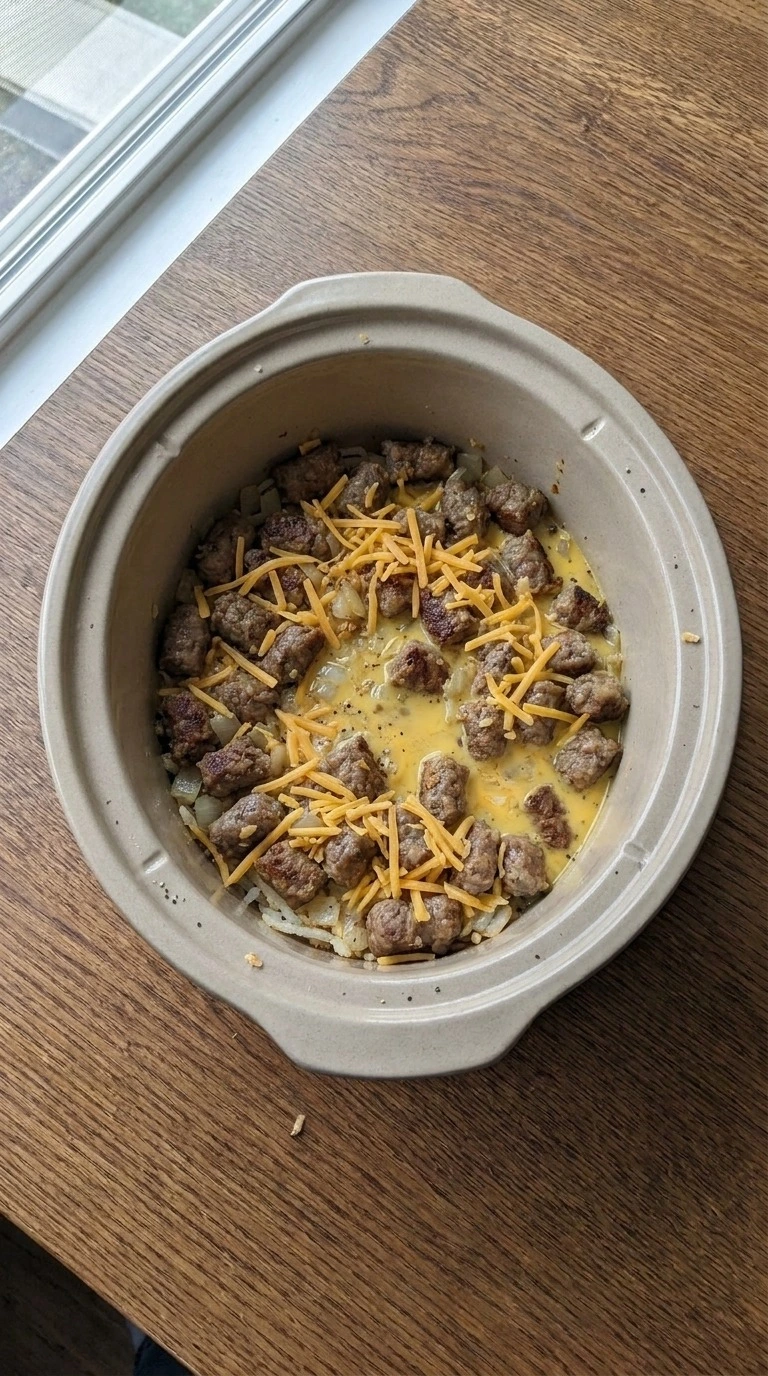
Spread 24 ounces frozen shredded hashbrowns in a greased 6-quart slow cooker and add the browned sausage mixture in uneven layers. Sprinkle 2 cups shredded sharp cheddar between layers, then pour the egg mixture over everything after whisking for 2 minutes at room temperature. (I tested a thicker potato layer once and it stayed soft in the center.
The thinner layers cook more evenly. ) The potatoes should shift from loose strands into a coated mixture. You’ll see the cheese tucked between the layers.
Don’t overfill the cooker because the center needs room to set.
Tip: Use frozen shredded hashbrowns straight from the bag because thawed potatoes release extra water and can soften the casserole too much.
Step 3: Slow cook the layered casserole
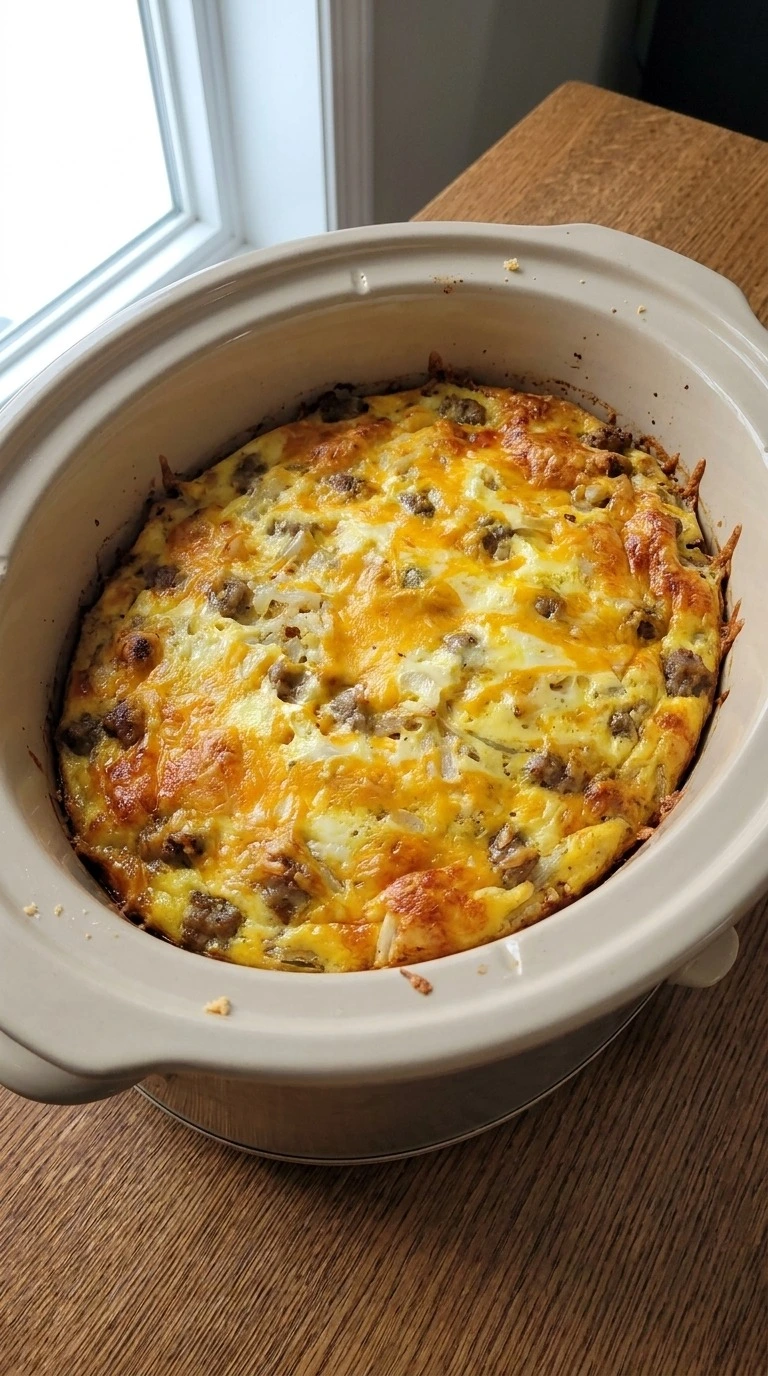
Cover and cook the layered casserole on low heat, about 200°F inside the slow cooker, for 6 to 7 hours. Keep the lid closed and avoid stirring because the layers need time to set. Check at hour 6 by inserting a knife into the center.
(My first batch was opened too often and needed another hour because heat escaped. ) The edges should look firm and lightly golden while the center feels set but tender. A soft egg aroma signals the right stage.
Opening too soon can leave the middle loose. Slow heat for 6 hours lets the eggs set gently without becoming rubbery.
Tip: Plan the cooking time backward from serving because the casserole holds its texture best after resting for 10 minutes.
Step 4: Rest and serve a casserole portion
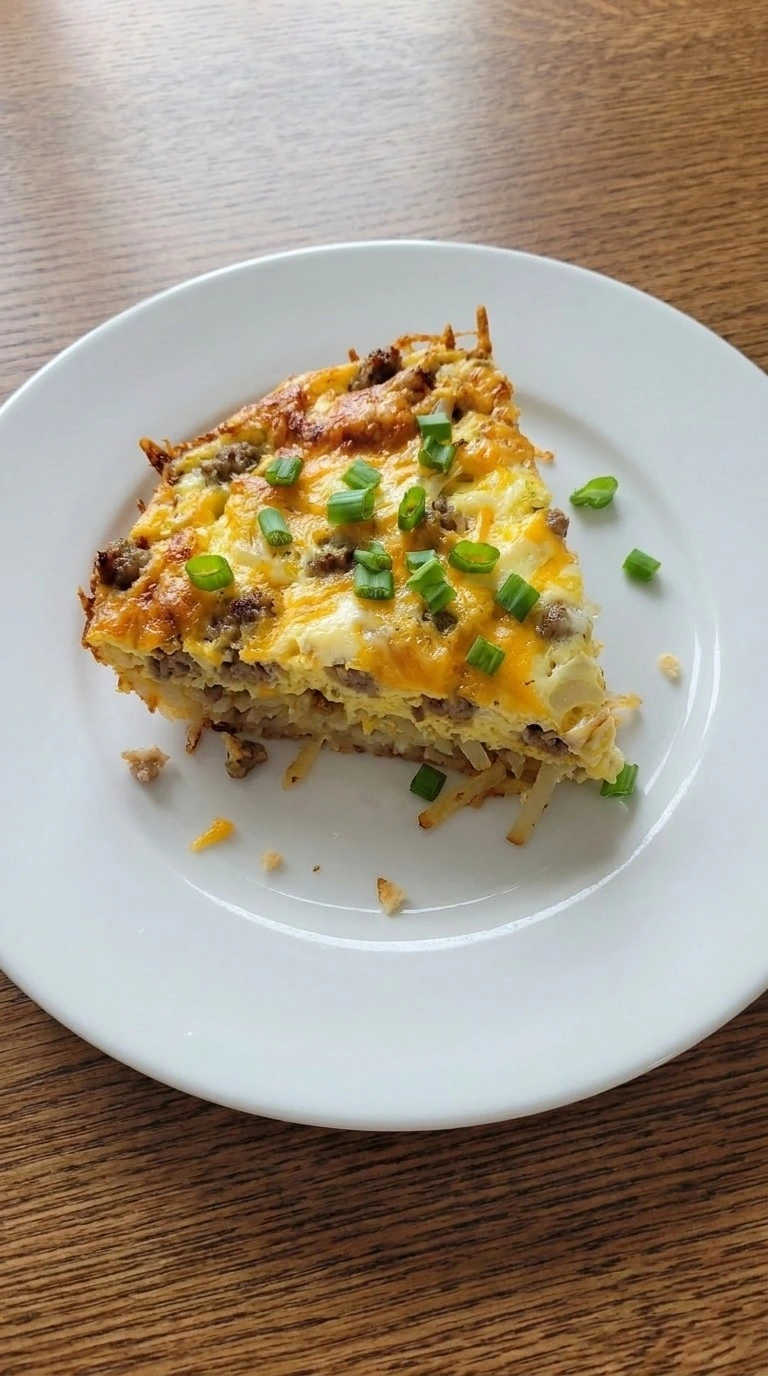
Turn off the slow cooker and rest the casserole for 10 minutes before cutting portions. Slide a spatula under one section and lift carefully so the layers stay together. Add sliced green onion as a finish after the portion is plated.
The surface should show melted cheese, golden edges and soft potato strands. The slice should hold its shape but remain tender inside. The smell becomes richer after resting.
Skip this pause and the layers may separate when served.
Tip: Cut portions with a gentle downward motion instead of dragging across the layers to keep the cheese and potatoes intact.
Pro Tips
- Grease the slow cooker before adding the layers and use a thin coating of oil spray. This helps the edges release after 6 hours without tearing the casserole.
- Choose a sharp cheddar block and shred it yourself because pre-shredded cheese can contain starch that slightly changes the melted texture.
- Keep the lid closed during the first 5 hours of cooking because losing heat can add 20 to 30 extra minutes before the eggs fully set.
- Let the frozen hashbrowns stay frozen when layering them because thawed potatoes can release too much water and create a loose center.
- Brown the breakfast sausage until you see dark golden spots, usually after 8 to 10 minutes, because those bits add the deepest savory flavor.
- Add sliced green onion after cooking instead of before because the fresh color and crisp texture stand out against the soft casserole.
- Rest the casserole for 10 minutes before serving because the layers firm slightly and portions hold together better.
- Add 1 cup of diced bell peppers and 1 teaspoon of smoked paprika for a colorful breakfast casserole with a mild smoky flavor.
- Replace breakfast sausage with cooked bacon pieces and add 1/2 cup of sliced mushrooms for a richer brunch-style version.
- Make a vegetarian variation by removing the sausage and adding 2 cups of sautéed spinach and mushrooms before slow cooking.
- Create a spicy version with 1/2 cup diced jalapeños and 1 cup pepper jack cheese for extra heat and a creamy finish.
Substitutions
- sharp cheddar: Monterey Jack cheese. Use the same 2 cups because Monterey Jack melts smoothly and gives a milder flavor. The texture stays creamy but the cheese taste becomes less sharp.
- whole milk: unsweetened almond milk. Replace with 1 cup for a lighter dairy-free option. The casserole will be slightly less rich because almond milk has less fat than whole milk.
- breakfast sausage: plant-based breakfast sausage. Use 1 pound of a crumbled plant-based sausage. The flavor changes depending on the brand, and the casserole may have a softer texture because there is less rendered fat.
- frozen shredded hashbrowns: frozen shredded russet potato. Use 24 ounces of frozen shredded russet potato for a similar result. Avoid fresh grated potato unless you squeeze out moisture first because extra water can make the eggs watery. For another potato-based meal idea, try our Crockpot Ham and Potato Soup.
- large eggs: liquid egg substitute. Use about 2 1/2 cups of liquid egg substitute instead of 10 large eggs. The finished casserole will set well but won’t have the same rich egg flavor.
Storage
Keep leftover Crockpot Breakfast Casserole in a sealed glass container in the refrigerator for up to 4 days. Freeze individual portions wrapped in plastic wrap and a freezer bag for up to 2 months.
Reheat slices at 325°F for 15 to 20 minutes or microwave smaller portions for 60 to 90 seconds. Add a spoonful of milk before reheating if the eggs seem dry.
Discard leftovers if you notice sour smells, slimy texture or unusual discoloration.
FAQ
Yes, you can assemble the layers up to 12 hours ahead and keep the covered slow cooker insert in the refrigerator. Let it sit for 20 minutes before cooking, then cook on low for 6 to 7 hours so the center sets evenly.
Store leftovers in an airtight container for up to 4 days at 40°F or below. Reheat individual portions for 60 to 90 seconds in the microwave or warm larger pieces at 325°F for about 15 minutes.
Yes, replace whole milk with unsweetened almond milk and use dairy-free shredded cheese. The casserole may have a slightly softer texture, so keep the cooking time near 6 hours and check that the center is firm.
Extra moisture usually comes from thawed potatoes or vegetables that release water during cooking. Use frozen hashbrowns directly and cook uncovered for the final 15 minutes if the center needs more time to firm.
A double batch works best in two 6-quart slow cookers instead of one larger cooker. Cooking too much in one pot can leave the center under-set even after 7 hours.
Yes, freeze cooled portions wrapped tightly for up to 2 months. Thaw overnight in the refrigerator and reheat at 325°F for 20 minutes until the center reaches a warm temperature.
Slow cooker egg casseroles became popular because they let families prepare breakfast ahead while using affordable ingredients. The gentle heat helps eggs stay softer than many oven-baked versions.