

Christmas Morning Breakfast Casserole is the kind of breakfast I want when everyone’s up early and the house is already full of noise. There’s wrapping paper on the floor and someone wants coffee while someone else is asking when breakfast will be served. I don’t want to spend the whole morning cooking. This breakfast casserole takes care of that. It has crisp hash browns, savory sausage and soft eggs under a layer of melted cheddar. The best part is that you can get most of the work out of the way the night before.
This breakfast casserole with hashbrowns uses simple ingredients that are easy to find and it bakes in one dish. You can sit down with everyone instead of running back and forth to the kitchen. That’s the real gift on a busy holiday morning. If you’d like something sweet on the table too, our Cake Mix Pumpkin Bread makes a lovely partner. Breakfast bakes can sometimes turn watery in the middle or dry out before the cheese has a chance to melt. But there’s a simple way around that.
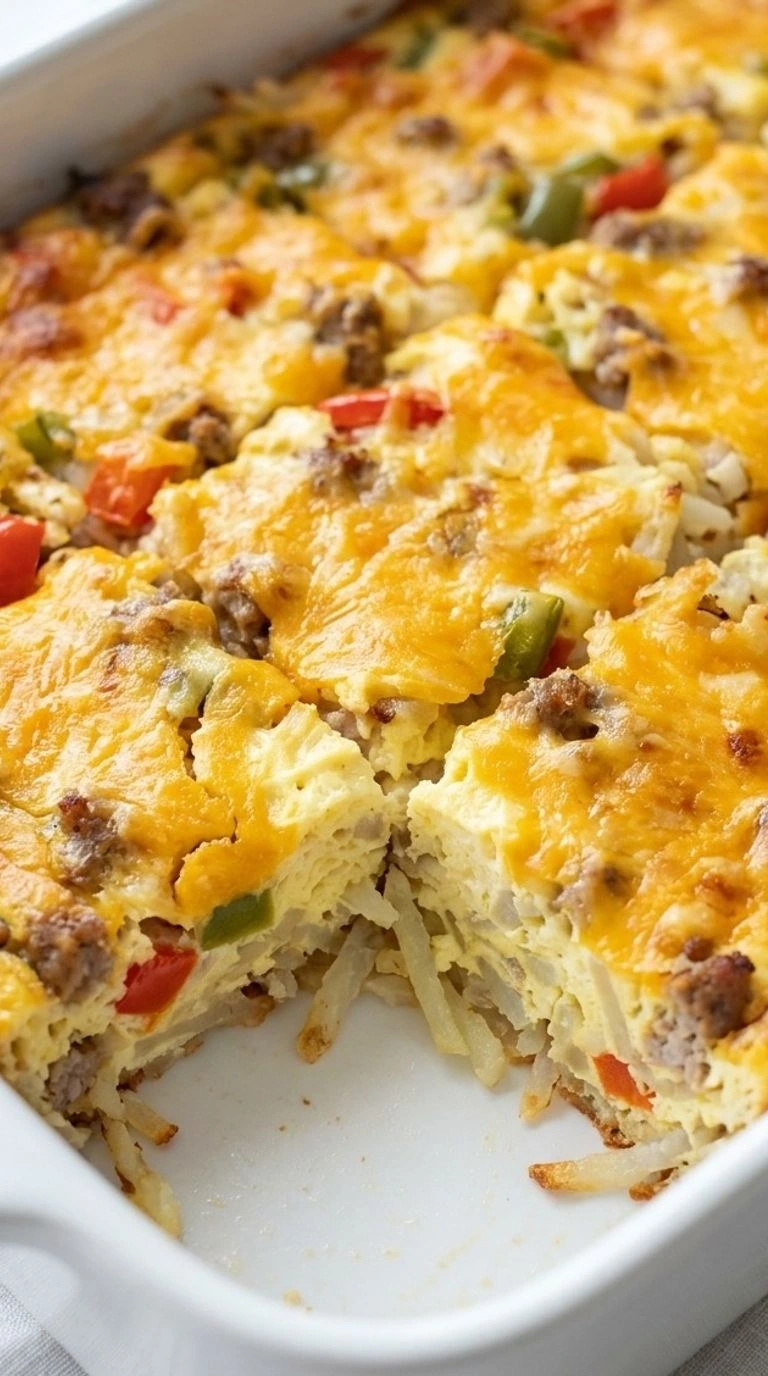
The trick here is to get rid of the extra moisture in the potatoes and give the eggs enough time to set. You’ll get neat slices with tender centers and crisp golden edges. And leftovers? They’re worth keeping.
Why This Recipe Works
Christmas Morning Breakfast Casserole stays firm because you squeeze water from the thawed potatoes before they meet the eggs. The hash browns get a short turn in the skillet too, so their edges can turn gold instead of soaking up more liquid during baking.
Baking at 375°F gives the center time to reach 160°F without turning the top too dark. Then a 10-minute rest helps the egg layers hold their shape.
Ingredients
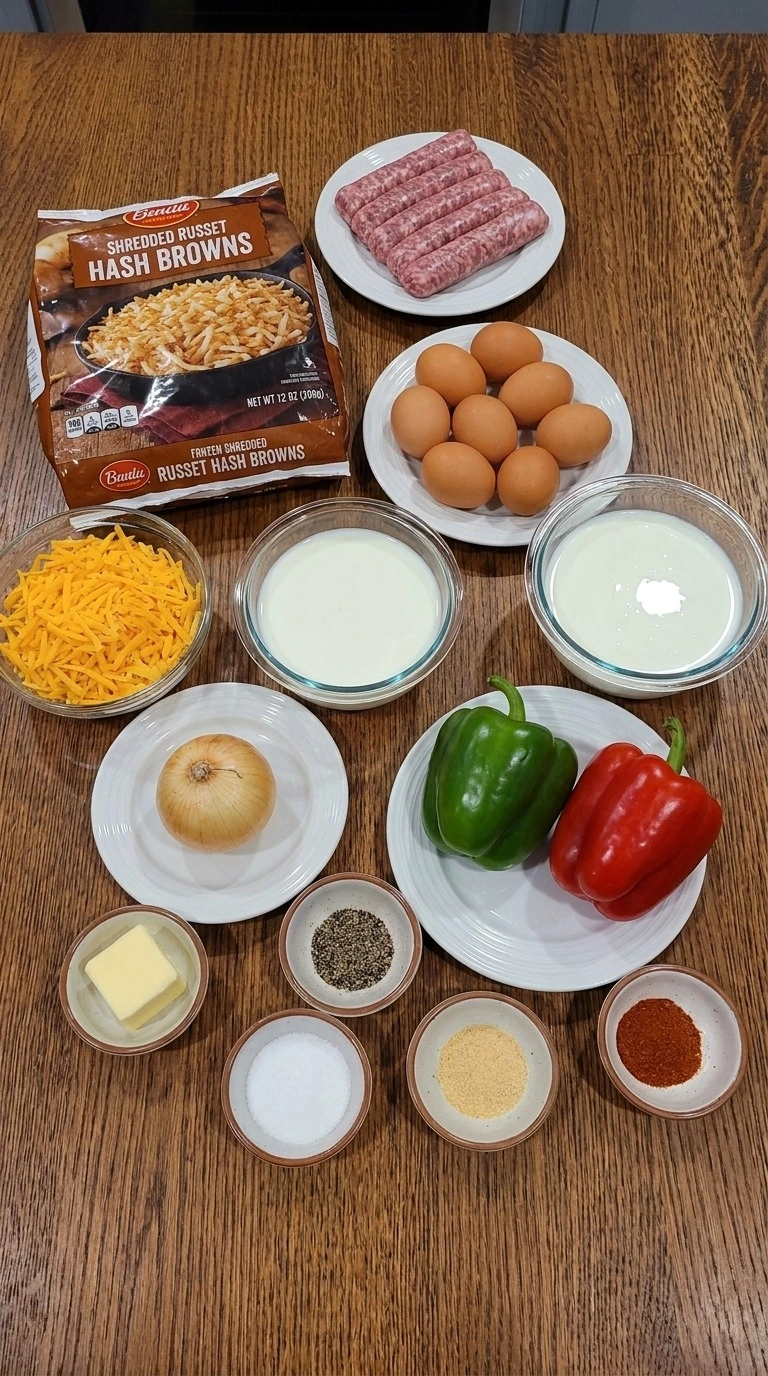
- Frozen shredded russet hash browns: Thaw in the refrigerator and squeeze dry before lightly crisping to create the potato base.
- Pork breakfast sausage: Use plain bulk breakfast sausage and break into small uneven pieces while browning for a savory filling.
- Large eggs: Whisk until smooth to create a tender but sliceable casserole center.
- Whole milk: Blend with the eggs to soften the texture without making the mixture overly rich.
- Sharp cheddar: Shred and divide into 1 1/2 cups for the filling and 1/2 cup for the golden topping.
- Yellow onion: Dice into small pieces and soften with the sausage for a mild sweet flavor.
- Green bell pepper: Remove the seeds and dice finely for fresh vegetable flavor and green flecks.
- Red bell pepper: Remove the seeds and dice into small pieces for sweetness and festive red color.
- Unsalted butter: Use 2 tablespoons for the shredded potatoes and 1 tablespoon to grease the baking dish.
- Kosher salt: Whisk into the egg mixture to season the potatoes and balance the richness.
- Freshly ground black pepper: Add to the egg mixture for gentle warmth and a little sharpness.
- Garlic powder: Blend into the eggs for an even savory garlic flavor without extra moisture.
- Smoked paprika: Add a mild smoky note that complements the pork sausage and sharp cheddar.
Equipment
- 9 by 13 inch baking dish: A 3-quart oven-safe ceramic or glass baking dish holds the filling in a broad layer for even baking, while a smaller deep dish may leave the center underdone.
- 12-inch skillet: A 12-inch heavy-bottomed skillet gives the sausage room to brown and the potatoes room to dry, while a small crowded skillet traps moisture.
- Large mixing bowl: A mixing bowl with at least 5 quarts of capacity lets you fold the eggs and potatoes without spilling, while a smaller bowl makes even mixing difficult.
- Balloon whisk: A sturdy whisk with flexible metal wires blends 10 eggs smoothly, while a narrow whisk takes longer to break up thick egg whites.
- Flexible spatula: A heat-safe silicone spatula helps fold the sausage and potatoes gently and spread the filling evenly without breaking the potato strands.
- Instant-read thermometer: A food thermometer with a thin probe checks that the egg center reaches at least 160°F, which is more reliable than judging by the golden surface.
- Clean kitchen towel: A clean lint-free kitchen towel helps squeeze excess water from thawed shredded potatoes, while a loose-weave towel can leave fibers behind.
Instructions
Step 1: Brown the sausage and soften the vegetables
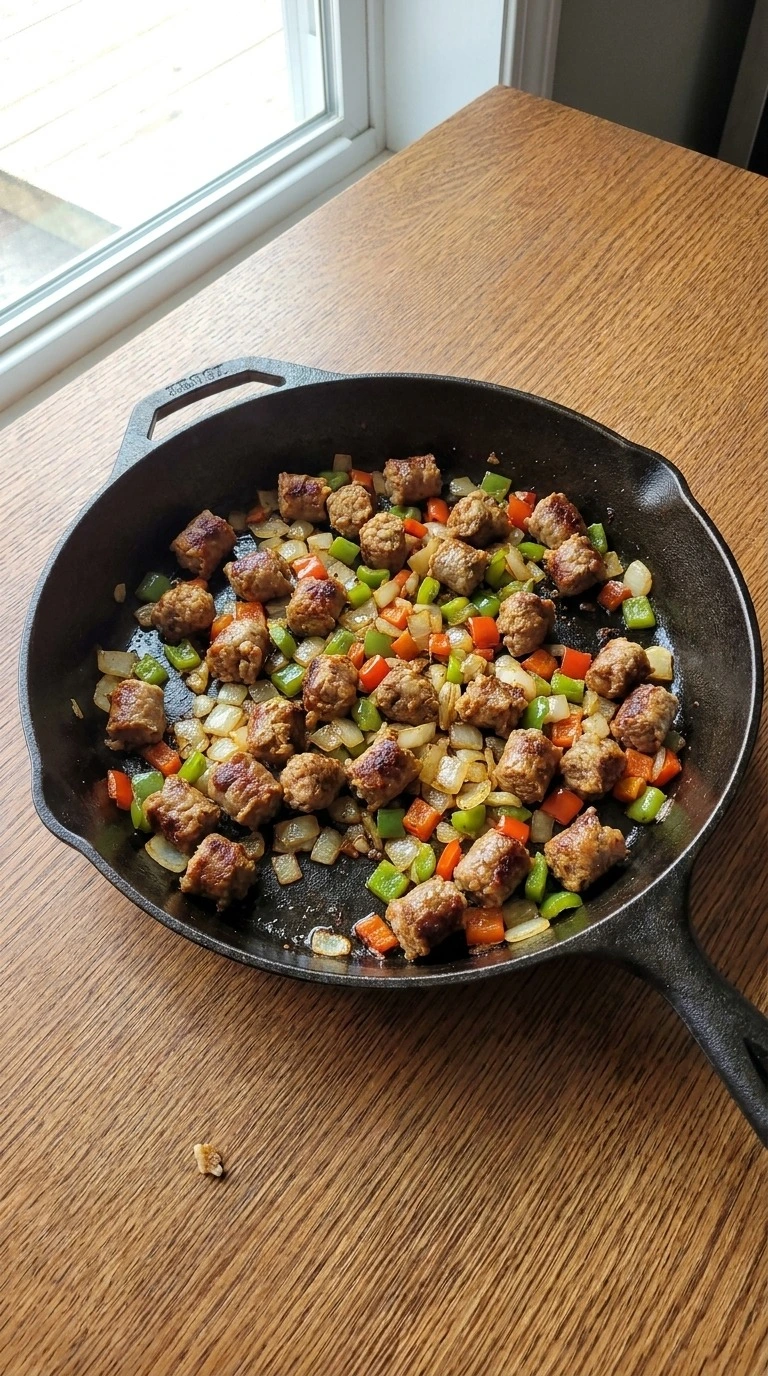
Set a large skillet over medium heat and add 1 pound of pork breakfast sausage. Break it into small uneven pieces with a wooden spoon. Cook for 7 to 9 minutes while turning the pieces so they brown on more than one side. The sausage should reach 160°F. Then add the diced yellow onion and both diced bell peppers.
Stir for another 4 to 5 minutes until the onion looks soft and most of the pan moisture has dried up. Drain away excess fat if more than 1 tablespoon remains. Don’t rush this stage. If you leave the sausage pale or the vegetables wet, the filling won’t taste as rich and the bake may turn watery. You’ll see dark golden spots on the sausage and the peppers will soften without losing all their color.
The mixture should smell savory rather than raw. Let it cool for 5 minutes before you add it to the eggs. Cooling helps prevent the eggs from setting too soon.
Tip: Choose plain breakfast sausage rather than maple-flavored sausage if you want a savory bake. The sweet version changes the flavor quite a bit.
Step 2: Dry the hash browns and crisp their edges
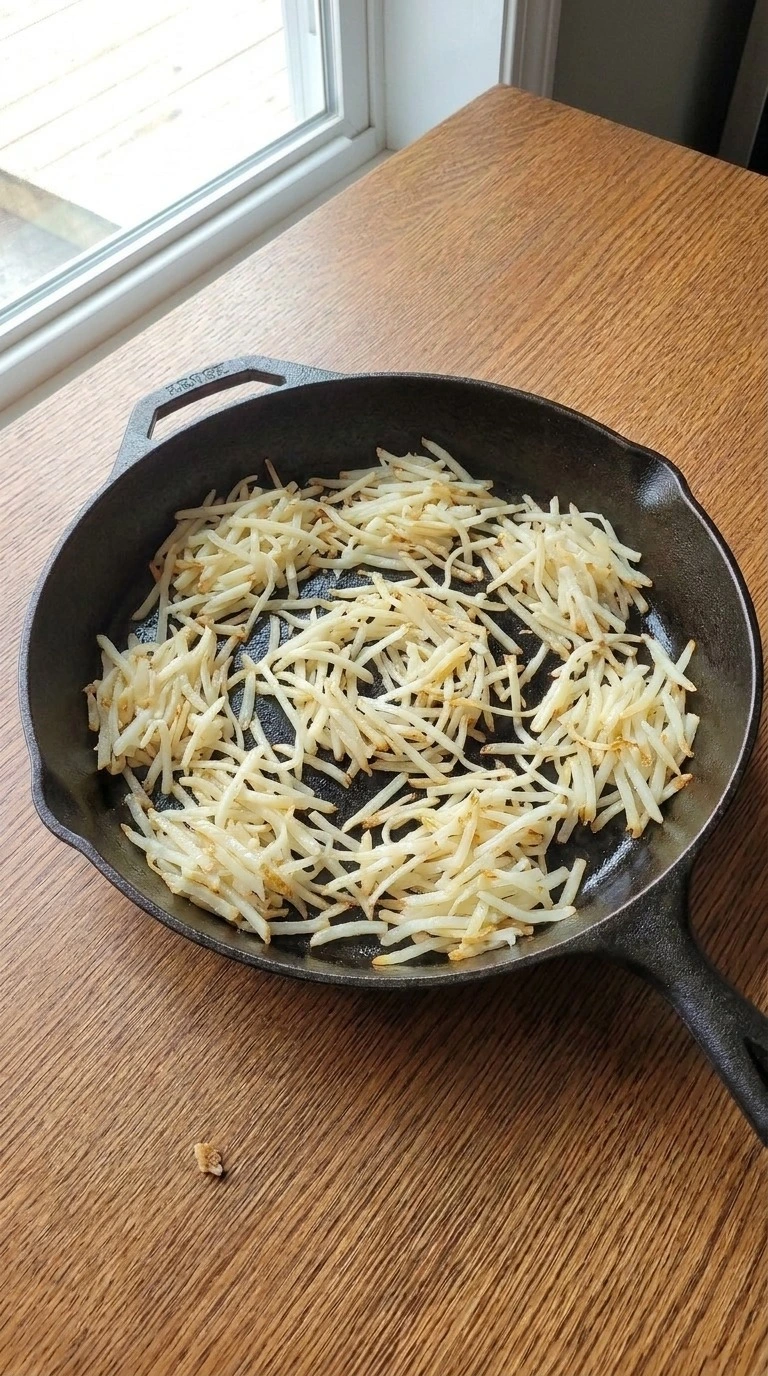
Thaw the 30 ounces of frozen shredded russet hash browns in the fridge first. Then squeeze small handfuls until very little water comes out. Set a large skillet over medium heat and melt 2 tablespoons of unsalted butter. Add the drained potatoes in a loose layer and spread them with a spatula.
Let them heat for 5 minutes before turning broad sections. Cook another 4 to 5 minutes until some strands look pale gold. You don’t need to make every piece crisp. That would dry the potatoes before baking.
The potatoes should feel less wet and you’ll see a few darker strands near the edges. This moisture control matters. If you skip it, extra water can collect beneath the eggs. Removing excess water helps the filling set.
Tip: Thaw the 30-ounce bag overnight in the refrigerator and keep it covered. This saves time when everyone wakes up.
Step 3: Whisk the eggs and fold in the filling
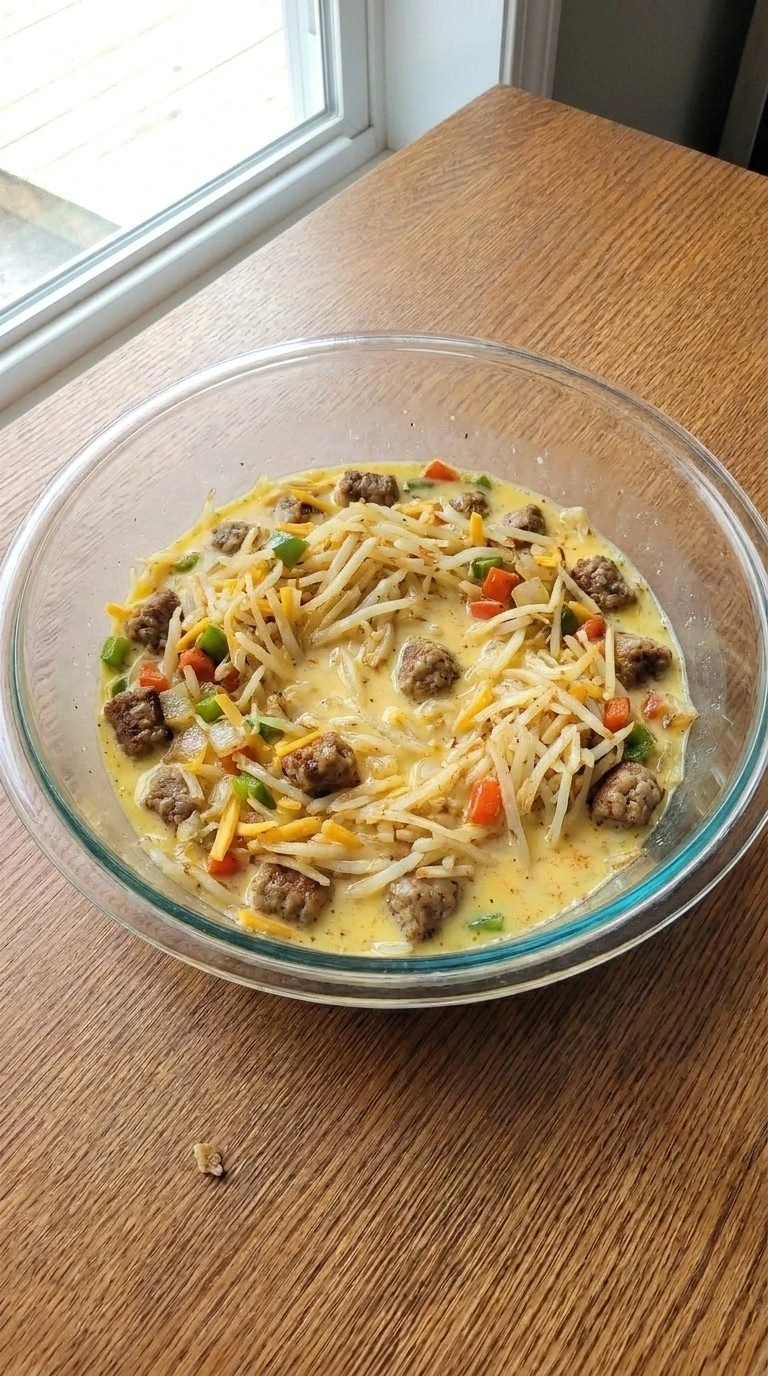
Crack 10 large eggs into a large mixing bowl and whisk for 60 to 90 seconds until the yolks and whites blend fully. Pour in 2 cups of whole milk. Add 1 teaspoon kosher salt, 1/2 teaspoon freshly ground black pepper, 1 teaspoon garlic powder and 1/2 teaspoon smoked paprika. Whisk again for 30 seconds.
The mixture should turn an even pale yellow with tiny bubbles across the top. Next fold in the warm but not hot hash browns and the sausage mixture. Add 1 1/2 cups of shredded sharp cheddar and turn the filling gently until it’s spread through the eggs. Let hot filling cool for at least 5 minutes first.
It shouldn’t start cooking the eggs as you mix. You’ll still see separate strands of potatoes and bits of red and green pepper. Gentle folding keeps the filling evenly spread.
Tip: Whisk the eggs before adding the milk so no clear egg white streaks remain. It gives the finished slices a smoother texture.
Step 4: Fill the baking dish and add the cheddar topping
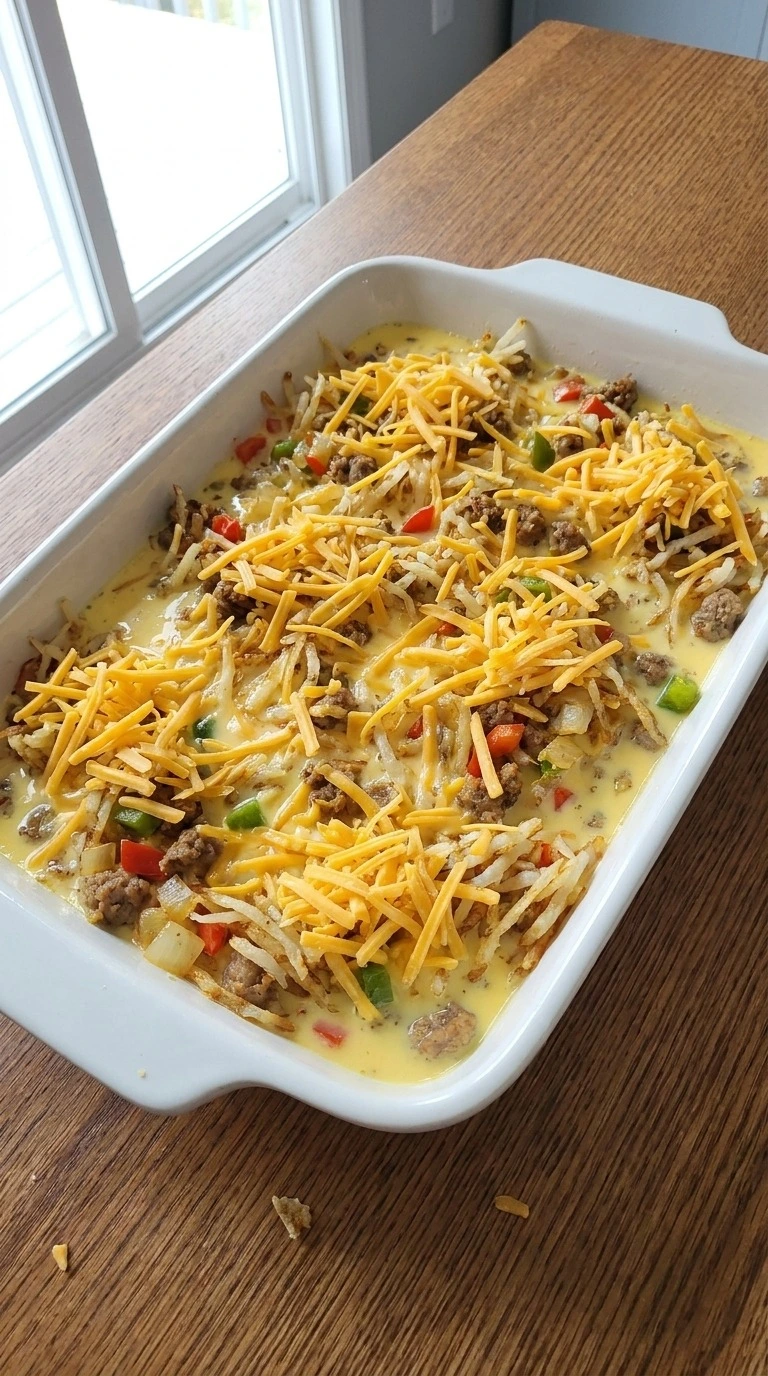
Rub the remaining 1 tablespoon of unsalted butter over the bottom and sides of a 9 by 13 inch baking dish. Pour in the egg and potato mixture. Then use a spatula to guide the sausage and peppers toward any empty spots so each portion gets some of everything. Spread the top loosely instead of pressing it flat.
Scatter the last 1/2 cup of shredded sharp cheddar over the surface. Leave a few potato strands visible between the cheese because those exposed edges will turn crisp in the oven. This takes about 5 minutes. The unbaked filling should look thick and uneven with yellow egg liquid between the potatoes.
If it sits in a deep pool at one end, shift the filling gently before baking. An even layer helps the center heat through.
Tip: For make-ahead prep, cover the filled dish and refrigerate for up to 12 hours. Keep it at 40°F or colder.
Step 5: Bake until the center sets and the cheese turns golden
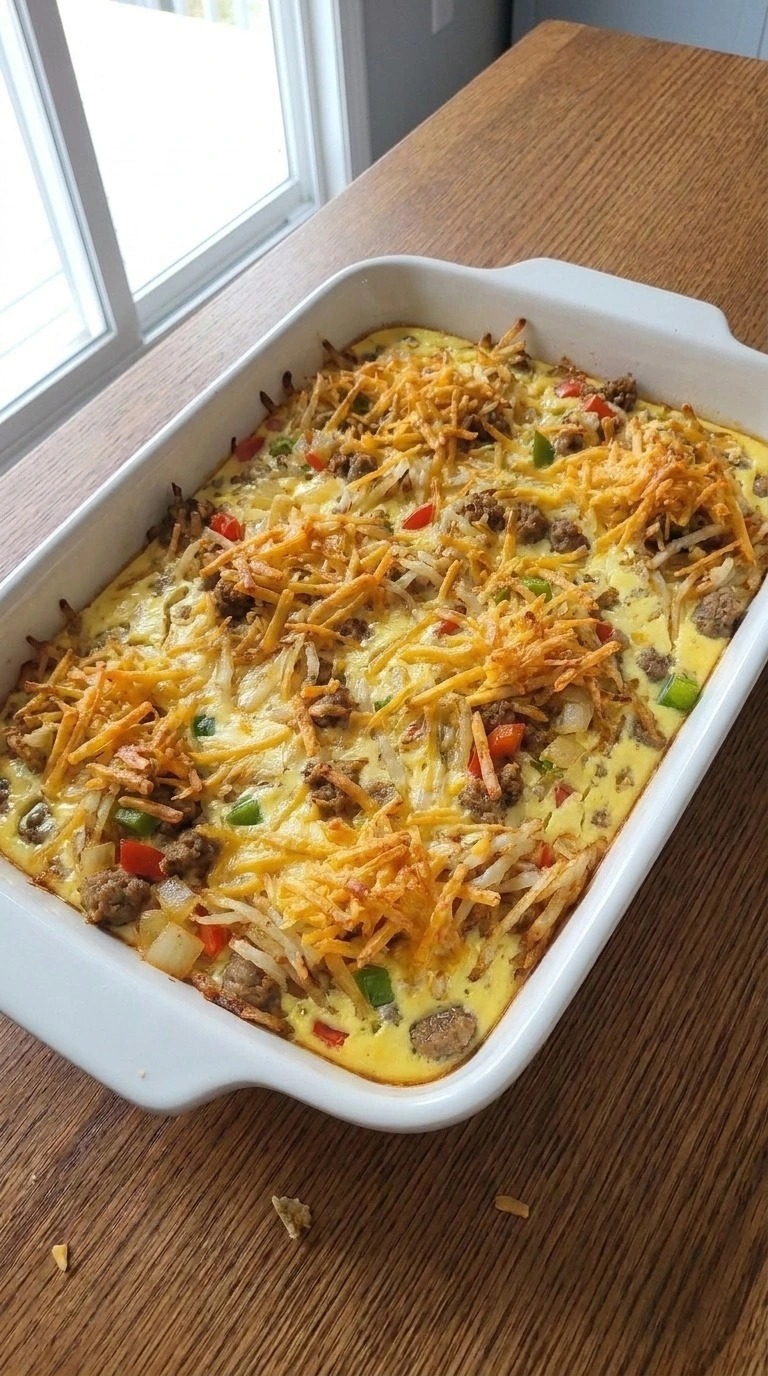
Heat the oven to 375°F with a rack in the middle. Set the uncovered baking dish on the rack and bake for 40 to 50 minutes. Start checking at minute 40. The edges should look golden and slightly raised while the cheese forms small amber patches on top. Insert an instant-read thermometer into the thickest part of the center without touching the dish.
Look for at least 160°F because the eggs need to set through the middle. If you prepared the casserole straight from the fridge, allow about 5 to 10 extra minutes and rely on the center temperature. The middle should have a gentle wobble but no loose egg liquid. If the top gets dark before the center reaches 160°F, cover it loosely with foil. (A hotter oven can brown the cheese before the middle sets.
That’s why 375°F works better here. ) Let the casserole stand for 10 minutes after baking. That rest firms the egg layers so they slice without falling apart.
Tip: Turn the baking dish once around minute 25 if your oven browns more on one side. Watch the cheese along the back edge.
Step 6: Cut a square and serve the warm casserole
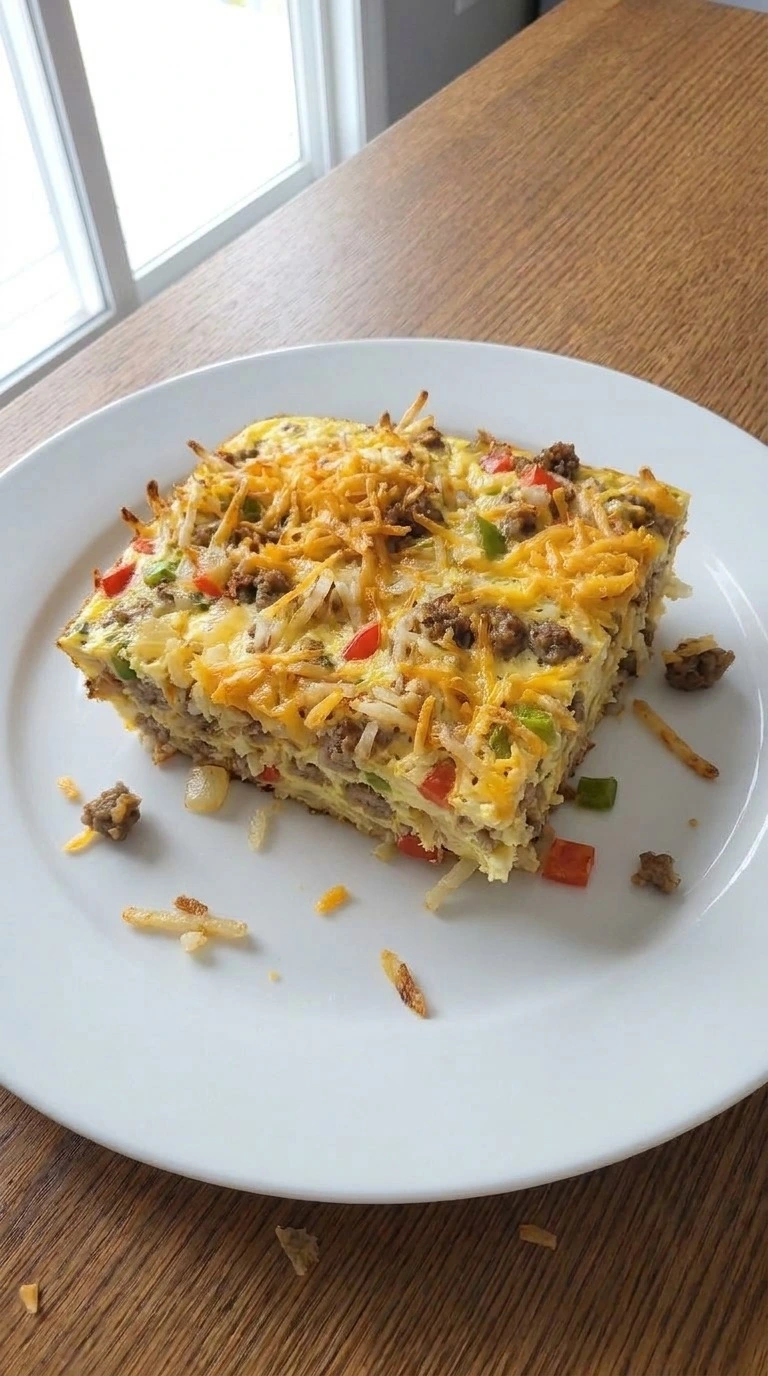
After the casserole has rested for 10 minutes, run a thin knife around the edges. Cut it into 8 large squares with a straight downward motion. Slide a wide spatula beneath one piece and lift it onto a white plate.
Keep the layers together so you can see the pale yellow egg center and the shredded potatoes mixed with sausage and peppers. If the first piece breaks at the corner, don’t worry. That’s normal with a soft egg bake.
The top should have small crisp golden patches and the center should feel tender rather than wet. Serve while warm, within 2 hours of baking. The short rest keeps each serving firm without drying out.
Tip: Serve each square with fresh fruit if you’d like a lighter side. A 1-cup portion of berries adds freshness without another hot dish.
Pro Tips
- Squeeze the thawed hash browns in small handfuls until almost no water drips out. This matters more than adding extra cheese to fix a wet casserole.
- Choose block-style sharp cheddar and shred all 2 cups yourself. Freshly shredded cheese tends to melt more smoothly than varieties coated with anti-caking powder.
- Use a 9 by 13 inch baking dish with at least a 3-quart capacity. A smaller dish makes the egg layer deeper and extends baking time.
- If you’re assembling the casserole on Christmas Eve, cover it tightly and refrigerate for no more than 12 hours before baking. Keep the fridge at 40°F or colder.
- Start checking the middle after 40 minutes at 375°F. A golden top isn’t proof the eggs have set, so use a thermometer and aim for 160°F.
- Let the sausage mixture cool for 5 minutes before folding it into the eggs. Very hot filling can create unwanted firm egg bits.
- For a brighter finish, add 1 tablespoon of finely chopped fresh chives just before serving. The mild onion flavor balances the rich cheddar and sausage.
- If the cheese turns deep amber while the center still needs time, loosely cover the dish with foil. Remove the foil for the last 3 minutes if needed.
- Make a smoky bacon version by replacing the pork breakfast sausage with 12 ounces of crisp cooked bacon pieces and adding 1/2 teaspoon of smoked paprika to the existing seasoning.
- For a colorful vegetable version, replace the sausage with 8 ounces of sautéed cremini mushrooms and 2 cups of chopped baby spinach, cooking both until their excess moisture has evaporated.
- Turn it into a spicy breakfast bake by adding 1 diced fresh jalapeño with the bell peppers and replacing 1 cup of sharp cheddar with 1 cup of Monterey Jack.
- For a different potato texture, replace the shredded russet hash browns with 30 ounces of frozen potato tots to make a tater tot breakfast casserole. Arrange the tots in a single layer and bake until the center reaches 160°F.
Substitutions
- Pork breakfast sausage: Use 1 pound of ground turkey breakfast sausage instead. Turkey sausage has less fat and a milder flavor. Add 1 teaspoon of olive oil if the pan dries out and cook the turkey to 165°F.
- Sharp cheddar: Use 2 cups of shredded dairy-free cheddar and replace the whole milk with 2 cups of unsweetened plain soy milk. The filling will taste less rich and the topping may melt less evenly. Choose dairy-free cheese made for baking and check that the sausage is dairy-free.
- Frozen shredded russet hash browns: Use 30 ounces of certified gluten-free shredded hash browns or freshly grated russet potatoes. Fresh potatoes need a thorough rinse and squeeze because excess starch and water can make the filling gummy. Check your sausage and seasonings for gluten. For another gluten-free holiday option, try our Gluten Free Pumpkin Bread Almond Flour.
- Large eggs: Try a liquid plant-based egg substitute labeled for baking, using the manufacturer’s equivalent of 10 eggs. This is an experimental swap rather than a reliable equal replacement. Some plant-based egg products won’t set firmly in a deep casserole, so expect a softer texture and follow package instructions.
- Whole milk: Use 2 cups of 2% milk or 1 1/2 cups whole milk mixed with 1/2 cup half-and-half. The 2% version tastes lighter and may have a less creamy center. The half-and-half version is richer and slightly more custardy, but both use the same oven temperature.
Storage
Let Christmas Morning Breakfast Casserole cool briefly after serving and refrigerate leftovers within 2 hours of baking. Transfer the portions to shallow airtight containers and keep them at 40°F or colder for 3 to 4 days. For longer storage, wrap chilled individual squares tightly and place them in freezer-safe bags or containers. Freeze for up to 2 months for best texture.
Label each package with the date so you don’t have to guess later. To reheat, thaw frozen portions overnight in the refrigerator and warm them covered in a 325°F oven for about 15 to 20 minutes. Add 1 tablespoon of milk around the portions if they seem dry. Heat the center to 165°F.
Discard leftovers with an unusual smell, visible mold or a slimy surface. Unsafe food doesn’t always show spoilage signs, so follow the storage time limits.
FAQ
Yes, you can assemble the casserole up to 12 hours before baking and keep it covered in the refrigerator at 40°F or colder. On Christmas morning, uncover the dish and bake at 375°F. Since the filling starts cold, you may need an extra 5 to 10 minutes beyond the usual 40 to 50 minutes. Check that the middle reaches 160°F before serving.
The most common cause is excess water in the thawed potatoes or vegetables. Squeeze the hash browns thoroughly and cook the peppers until most of their released liquid evaporates. Also make sure the casserole reaches 160°F at the center. If you’ve followed those steps, let it stand for 10 minutes before slicing so the egg mixture has time to firm up.
Yes, but fresh russet potatoes need more preparation. Grate about 30 ounces of peeled potatoes and rinse them in cold water to remove loose starch. Squeeze them until quite dry and cook in butter over medium heat for 9 to 10 minutes. They’ll have a slightly firmer bite than thawed frozen hash browns, especially around the edges.
Yes, double every ingredient and divide the mixture between two 9 by 13 inch baking dishes rather than filling one extra-deep pan. Bake at 375°F with enough space for air to circulate. Swap the dishes between oven racks around minute 25 if your oven heats unevenly. Both casseroles need to reach 160°F in the middle, even if one finishes before the other.
Let the baked casserole cool briefly and refrigerate it promptly before cutting into portions. Wrap each chilled square tightly and place the pieces in a freezer-safe container for up to 2 months for best quality. Thaw overnight in the refrigerator before reheating. The potatoes may soften slightly after freezing, but the cheddar and sausage should still provide plenty of flavor.
Because the casserole already contains eggs, potatoes, sausage and cheese, I’d pair it with something fresh or lightly sweet. A bowl of strawberries and orange slices works well, especially if you’re serving 8 guests. For a larger holiday spread, try our Weight Watchers Pumpkin Muffins alongside the warm casserole.
For one chilled portion, cover it loosely and microwave at medium power in 30-second intervals until the center reaches 165°F. For several pieces, place them in a covered baking dish at 325°F for roughly 15 to 20 minutes. Add 1 tablespoon of milk around the portions before reheating if the edges seem dry. Check the internal temperature rather than relying only on the clock.
The breakfast casserole is closely related to a dish often called a strata, which layers bread with eggs and milk. Hash brown versions swap the bread for shredded potatoes, giving the finished bake a different texture. Because the potatoes develop crisp edges, they add a contrast that softer bread-based casseroles don’t always have.