

Biscuits and Gravy Breakfast Casserole gives you the comfort of flaky biscuits and peppery sausage gravy in one hot breakfast casserole. The eggs set around the biscuit pieces while sharp cheddar melts into the top, so every scoop has soft centers and golden edges. It’s hearty without feeling fussy.
If you’ve searched for a breakfast casserole with hashbrowns but want something softer and more biscuit focused, this version changes the base without losing that filling brunch feel. And if biscuits are already your favorite part of breakfast, try Peach Butter Swim Biscuits another morning for a sweeter spin. The key is simple.

Cook the sausage gravy until it’s thicker than serving gravy before it goes into the oven because the eggs and biscuit dough release moisture as they bake. That one step keeps the center creamy instead of loose, and it gives the biscuit tops enough time to turn deep gold.
Why This Recipe Works
Biscuits and Gravy Breakfast Casserole works because the gravy is reduced until it coats a spoon before the eggs ever reach the dish. Baking at 375°F gives the biscuit dough enough heat to rise while the egg center reaches 160°F without the top setting too fast.
Leaving gaps between biscuit wedges also lets hot air reach their edges, so they bake instead of steaming into one dense layer. If you enjoy biscuit based breakfasts, Peach Butter Swim Biscuits uses a different method that creates crisp buttery edges around a soft center.
Ingredients
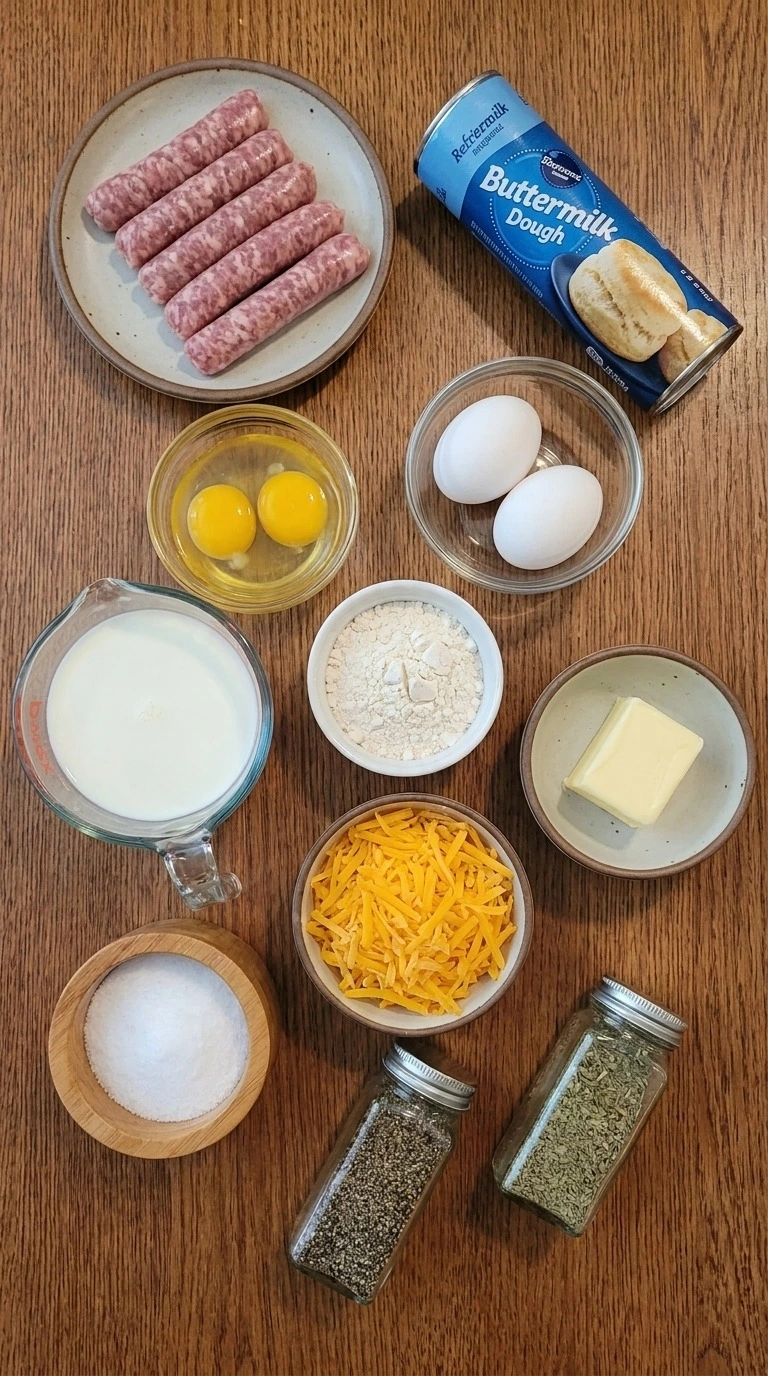
- pork breakfast sausage: Use regular breakfast sausage with enough fat to brown well and flavor the gravy.
- refrigerated buttermilk biscuit dough: Cut each biscuit into 4 uneven wedges so the pieces bake through without forming a dense center.
- large eggs: Whisk until streak free so the custard sets evenly around the biscuit pieces.
- whole milk: Use 2 cups for the sausage gravy and 1 cup for the egg mixture.
- all purpose flour: Cook briefly with the sausage fat and butter to thicken the gravy without a raw flour taste.
- unsalted butter: Melt into the browned sausage before adding flour to provide enough fat for a smooth roux.
- sharp cheddar: Shred before baking so it melts quickly into uneven savory patches across the top.
- kosher salt: Season the gravy lightly because breakfast sausage and sharp cheddar already contain salt.
- coarse black pepper: Use freshly cracked pepper for the classic warm bite found in sausage gravy.
- dried rubbed sage: Stir into the gravy for a mild herbal note that supports the pork sausage.
- unsalted butter for greasing: Rub a thin layer over the baking dish so the egg mixture releases more easily after resting.
Equipment
- 12 inch skillet: A heavy 12 inch skillet browns the sausage evenly and gives gravy room to thicken, while a smaller pan can crowd the meat and slow browning.
- 9×13 baking dish: A 9×13 baking dish keeps the casserole depth even so the center reaches 160°F before the biscuit tops overbrown, while a smaller dish makes the center too deep.
- Large mixing bowl: A 3 quart mixing bowl gives the eggs and milk enough space for full whisking, while a shallow bowl can splash and leave streaks of unmixed egg.
- Instant read thermometer: A fast thermometer confirms the egg center reaches 160°F, and a slow or inaccurate model can lead to guesswork and an underdone middle.
- Wide serving spatula: A spatula at least 3 inches wide supports the biscuit layers during serving, while a narrow turner can split the soft center apart.
Instructions
Step 1: Brown the breakfast sausage
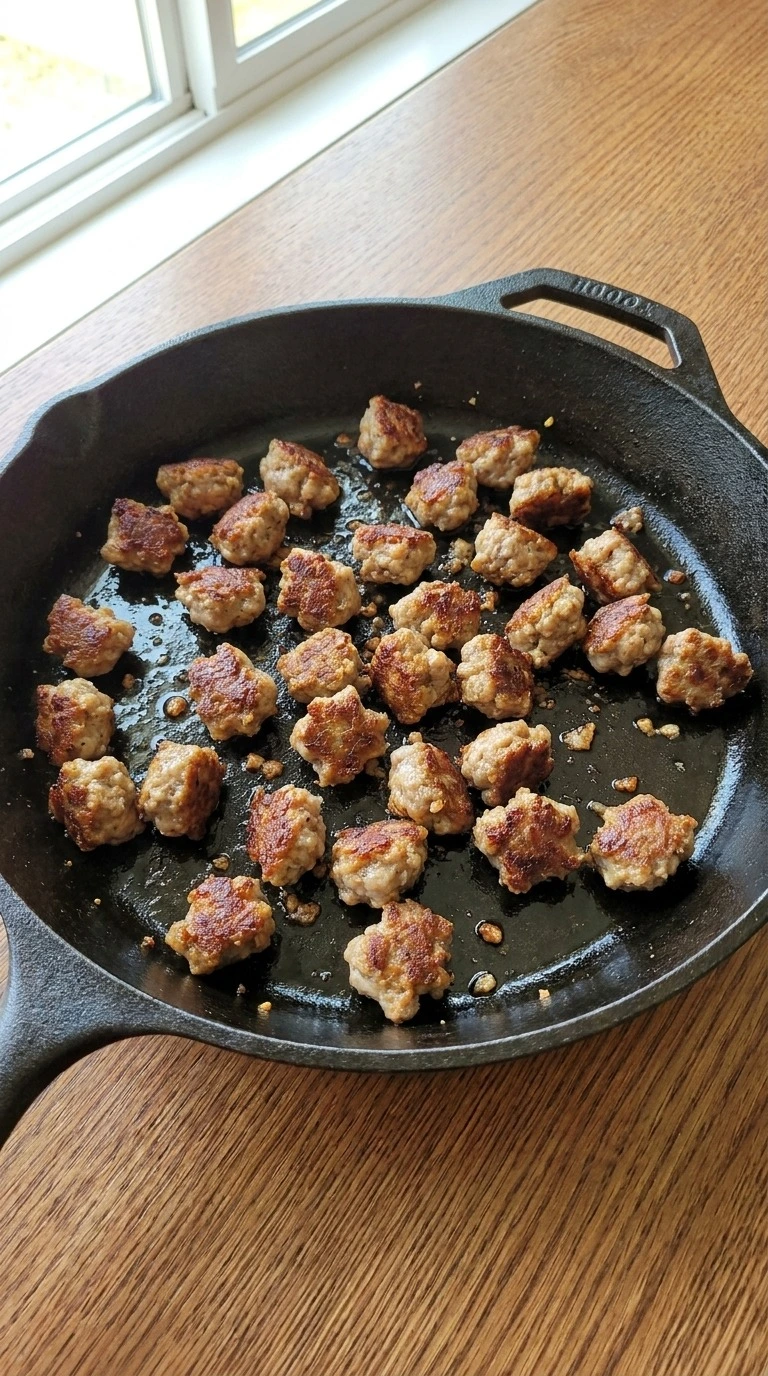
Set a large skillet over medium heat, about 5 on a 10 dial, and add the pork breakfast sausage. Break it into uneven 1 inch crumbles with a wooden spoon and keep turning the pieces for 7 to 9 minutes. Let some bits sit untouched for 45 seconds at a time so they develop deeper brown edges.
The sausage should reach 160°F before you move on. Don’t rush it. You’ll hear the strong sizzle soften as moisture cooks away, and the sausage aroma becomes richer and toasted.
Look for browned edges with no pink centers. Stop before the crumbles become dry, because overcooked sausage turns firm during the second bake. Brown to 160°F so the meat stays safe and still has moisture for the gravy.
Tip: Choose breakfast sausage with about 20 percent fat because leaner sausage can leave the gravy thin and less flavorful.
Step 2: Thicken the sausage gravy
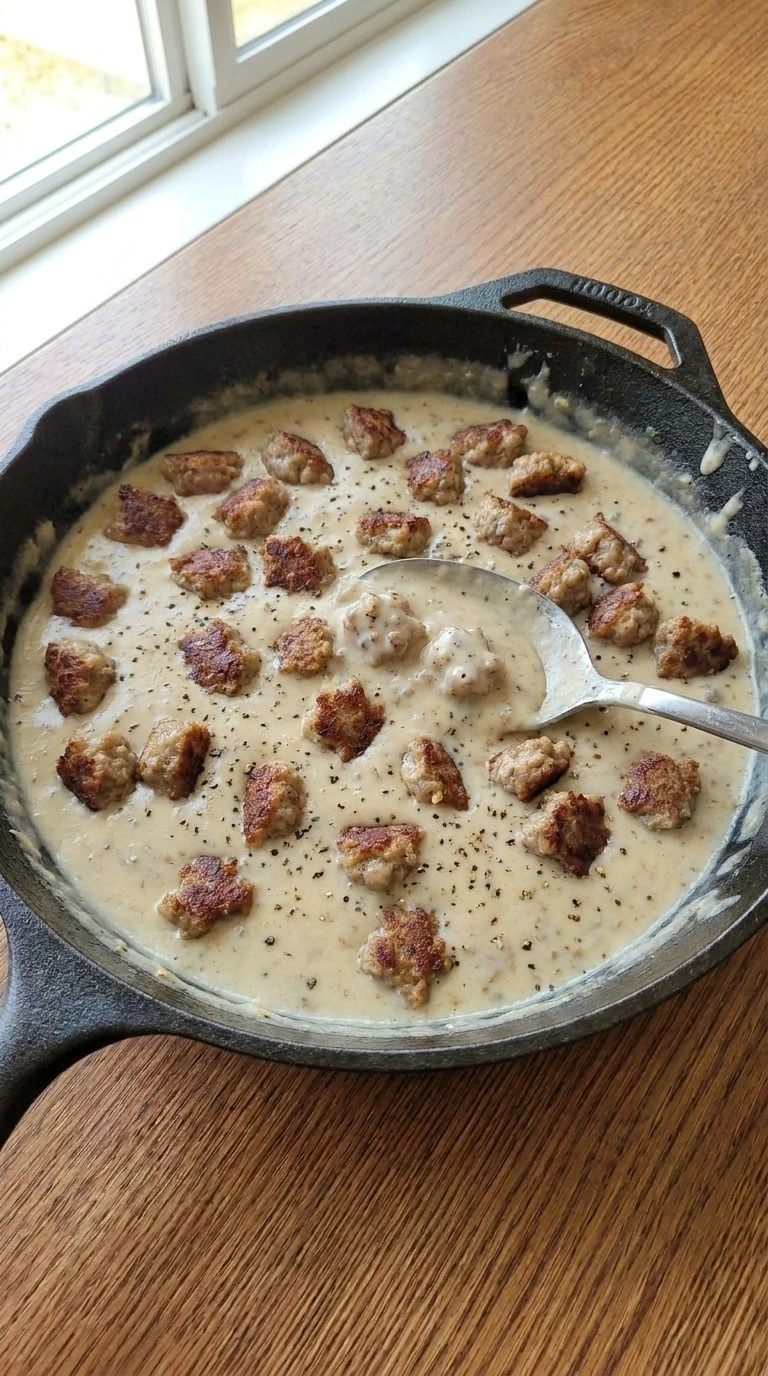
Lower the heat to medium low, about 3 on a 10 dial. Add the unsalted butter and stir for 30 seconds until it melts around the sausage. Sprinkle in the all purpose flour and cook for 90 seconds while scraping and folding the crumbles so every piece picks up a thin flour coating. Slowly pour in the whole milk while stirring.
Add kosher salt, coarse black pepper and dried rubbed sage. Simmer for 5 to 7 minutes at about 190°F until thick. The gravy should coat the back of a spoon and leave a clean line when you drag a finger through it. You’ll smell warm sage and toasted flour instead of raw flour.
If you stop while it’s still runny, the casserole center can turn watery. Simmer gently because starch needs steady heat to swell without scorching the milk.
Tip: If the gravy thickens too far, stir in 2 tablespoons whole milk before assembly instead of thinning it after baking.
Step 3: Layer the biscuits, gravy and egg mixture
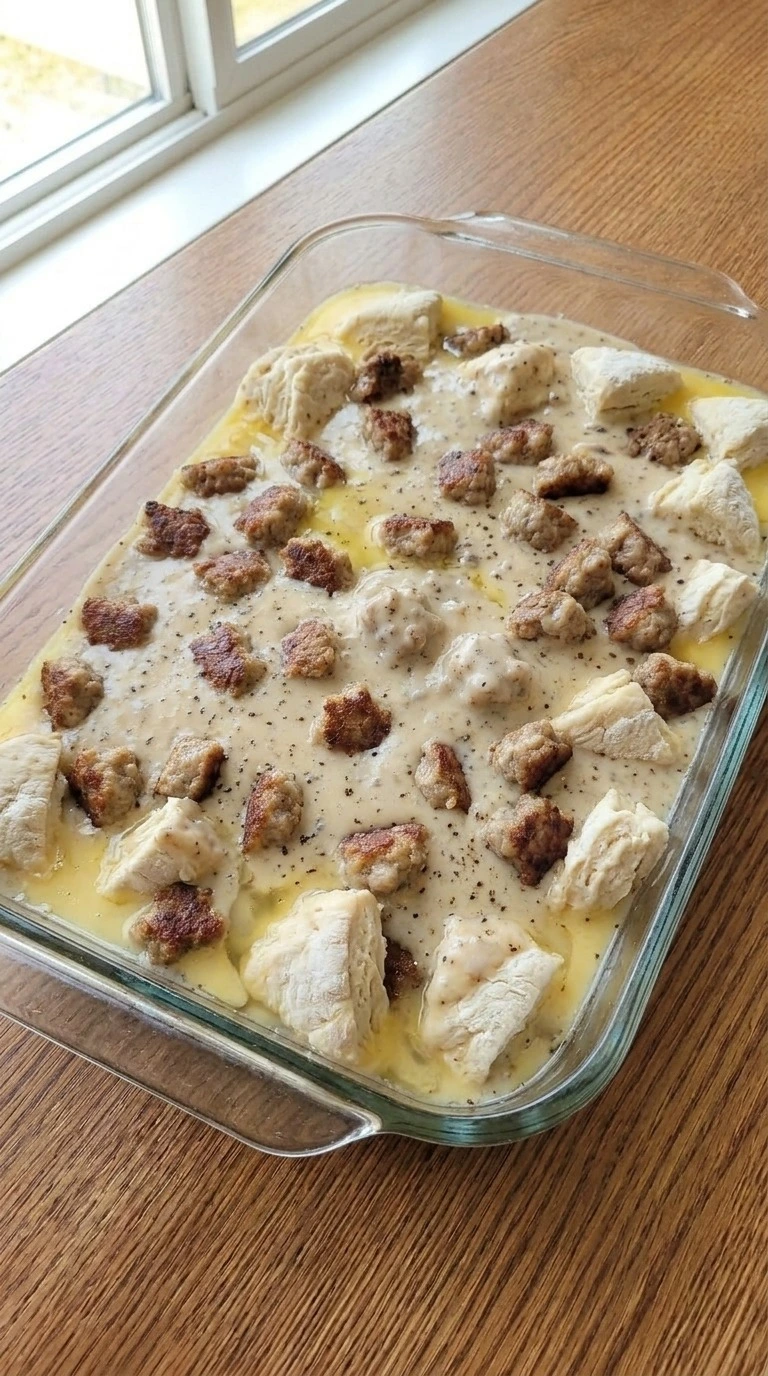
Heat the oven to 375°F. Cut each refrigerated buttermilk biscuit into 4 uneven wedges and spread about two thirds of them across a greased 9×13 baking dish. Spoon the warm sausage gravy over the biscuit pieces but leave several corners exposed. Whisk the large eggs with 1 cup whole milk for 45 seconds until streak free, then pour the mixture slowly across the dish.
Scatter the remaining biscuit wedges over the top and press them only halfway into the gravy. The dish should look irregular with biscuit corners still visible above the liquid and sausage crumbles showing between them. Avoid packing the pieces tightly, because crowded dough steams instead of rising. (I packed my first test too tightly and the middle stayed gummy.
Leaving small gaps fixed it. ) Keep exposed dough on top because direct oven heat creates the biscuit crust.
Tip: Let the assembled casserole stand 5 minutes before baking so the lower biscuit pieces absorb a little custard without becoming saturated.
Step 4: Bake until the center sets
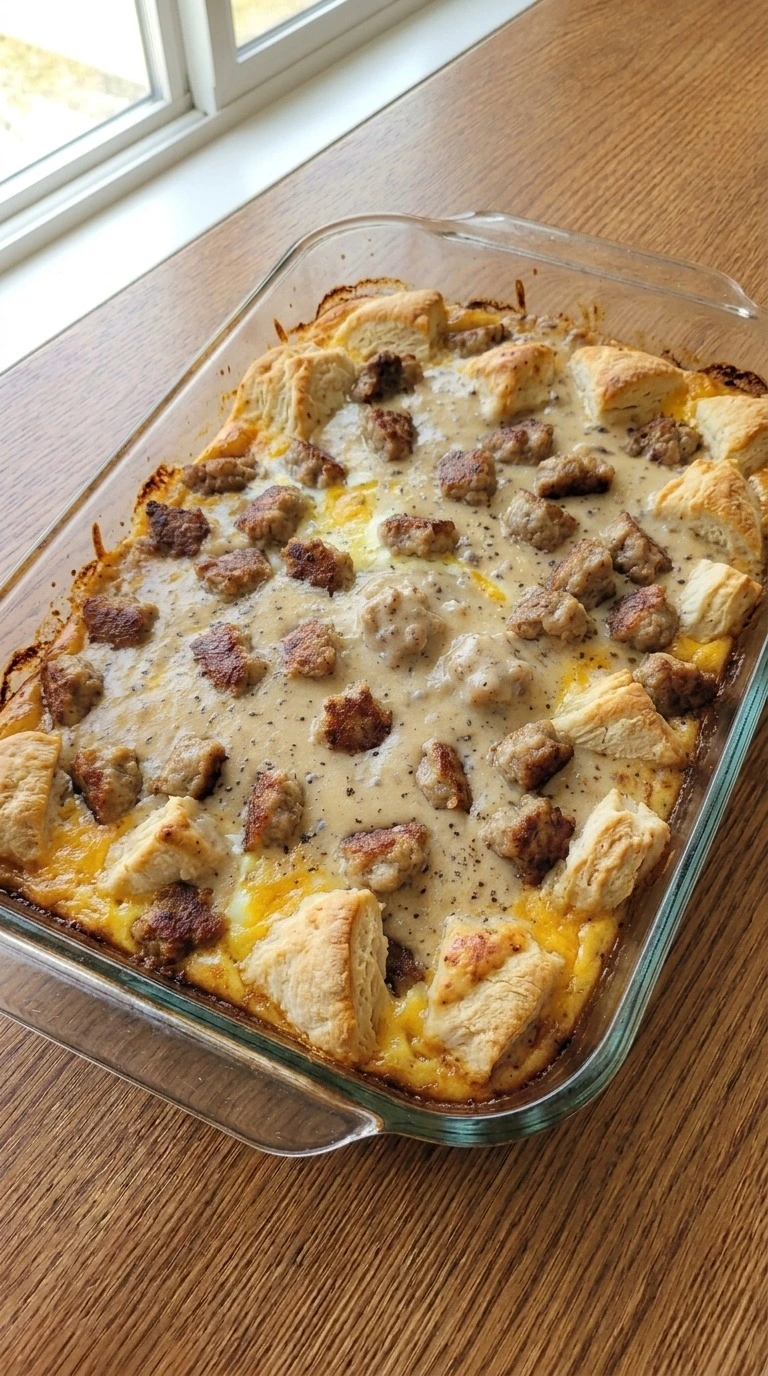
Bake the casserole at 375°F for 20 minutes on the center rack. Then scatter the shredded sharp cheddar over the surface in uneven patches and return it to the oven for 8 to 12 minutes. Check the center with an instant read thermometer.
It should reach 160°F, and a gentle shake should show only a slight wobble near the middle. Rotate the dish once at minute 20 if your oven browns more strongly on one side. The exposed biscuit tops should turn golden brown while the cheddar melts into small bubbly patches.
You’ll smell toasted biscuit edges and peppery gravy. Pull it before the biscuits become dark brown, because another 5 minutes can dry the custard around the edges. Bake to 160°F because the eggs need full setting while the biscuits stay tender.
Tip: Cover only the darkest biscuit tips with small pieces of foil if they brown before the center reaches 160°F.
Step 5: Rest and serve warm portions
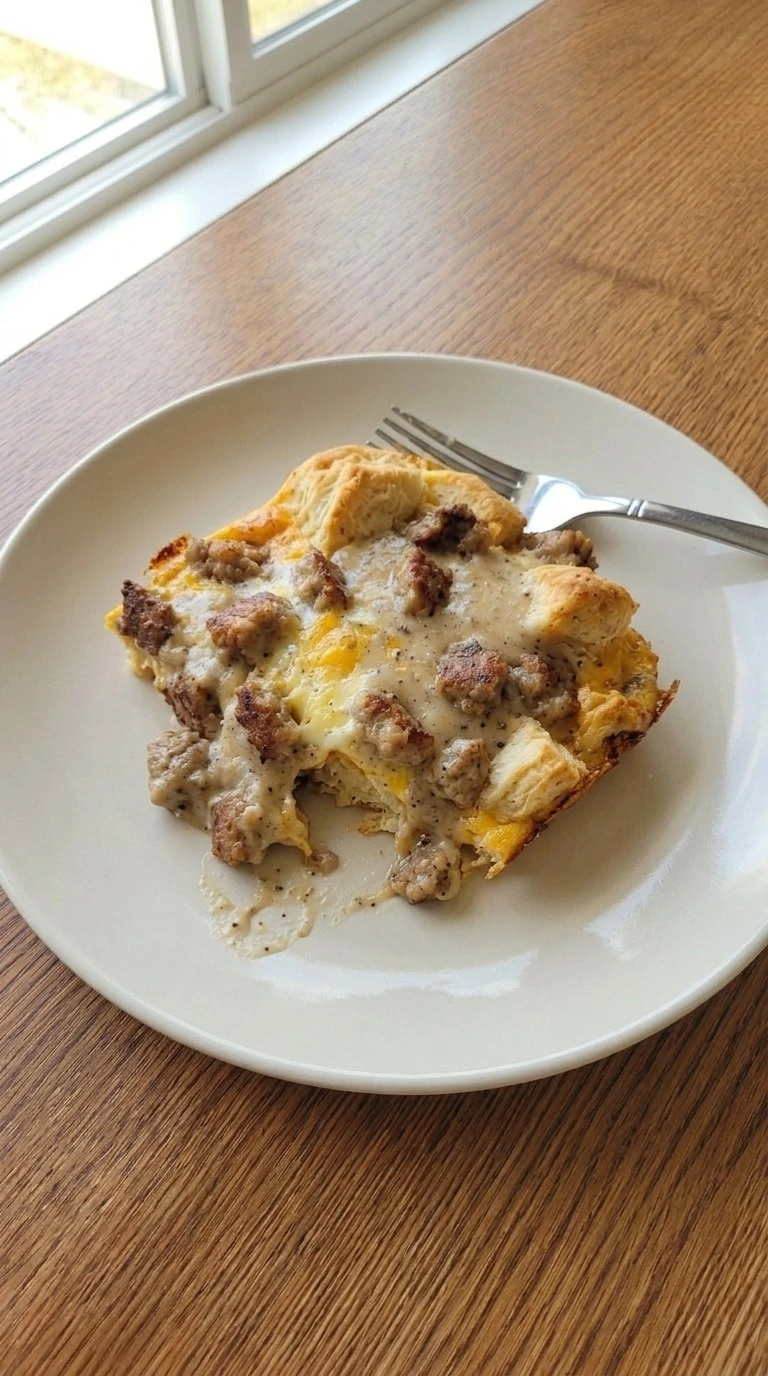
Remove the casserole from the oven when the center reads 160°F and rest it for 10 minutes. Don’t cut right away. Use a wide spatula to lift one irregular portion from the center after the rest, keeping several biscuit layers and sausage crumbles together.
The gravy should cling instead of running across the plate, and the lower biscuit pieces should look soft but fully baked. Serve while the center is still above 140°F for the best texture. The portion should hold its rough shape with tender biscuit layers, melted cheddar strands and thick gravy between visible sausage pieces.
If you skip the 10 minute rest, the hot custard can loosen around the first scoop. Resting lets the starch and egg proteins settle so each serving stays together.
Tip: For cleaner brunch portions, rest 15 minutes instead of 10 and cut the dish into 8 loose squares before serving.
Pro Tips
- Brown the 1 pound pork sausage for 7 to 9 minutes and leave some crumbles untouched for 45 seconds to build deeper flavor.
- Keep the gravy near 190°F and stir often during its 5 to 7 minute simmer so the flour thickens without scorching the milk.
- Cut each refrigerated biscuit into 4 uneven wedges. Pieces larger than that can leave doughy centers after the 30 minute bake.
- Use a 9×13 dish rather than an 8×8 pan because the shallower layer helps the egg center reach 160°F before the biscuit tops get too dark.
- Let the assembled casserole stand for 5 minutes before baking. That short rest gives the lower biscuit pieces time to absorb some custard.
- Add the 1 cup sharp cheddar after the first 20 minutes of baking so it melts without forming a tough dark crust.
- Rest the baked casserole for 10 to 15 minutes before serving. The gravy thickens noticeably and the first portion holds together better.
- Add 1/2 cup cooked crumbled bacon with the sausage gravy for a smokier breakfast version with crisp salty bites.
- Stir 1 diced jalapeño into the browned sausage and use pepper Jack instead of sharp cheddar for a warmer Southwestern style variation.
- Replace 1/2 pound of the pork breakfast sausage with turkey breakfast sausage for a lighter flavor while keeping enough pork fat for the gravy.
- Scatter 1/2 cup sautéed diced bell pepper and 1/4 cup sliced scallions into the casserole before baking for extra color and fresh savory flavor.
Substitutions
- refrigerated buttermilk biscuit dough: 16 ounces gluten-free refrigerated biscuit dough. Use the same amount and watch the final 8 minutes because gluten-free biscuits often brown faster. For another biscuit idea, try [Peach Butter Swim Biscuits](https://thecozymom.com/peach-butter-swim-biscuits/ ) on a separate morning.
- whole milk: 3 cups unsweetened oat milk. Use a 1 to 1 swap for a dairy-free gravy and custard. The sauce will taste slightly less rich and may need 1 extra minute to thicken.
- sharp cheddar: 1 cup dairy-free cheddar shreds. Replace the cheddar cup for cup. Dairy-free shreds melt less evenly, so add them during the final 10 minutes instead of earlier.
- large eggs: 1 1/2 cups liquid plant-based egg substitute. Use 1/4 cup substitute for each large egg. The center sets softer, so expect about 5 extra minutes before it reaches a firm sliceable texture.
- whole milk: 3 cups 2 percent milk. Use the same volume when whole milk isn’t available. The gravy will be slightly lighter and less creamy, but the baking time stays nearly unchanged.
Storage
Store Biscuits and Gravy Breakfast Casserole in a shallow airtight container for up to 4 days in the refrigerator. For freezing, wrap cooled portions tightly and freeze for up to 2 months.
Reheat covered at 325°F for 12 to 15 minutes and add 1 tablespoon milk before warming. Discard leftovers with a sour smell, slimy surface or unusual discoloration.
FAQ
You can prepare the sausage gravy up to 2 days ahead and refrigerate it separately. For the best biscuit texture, assemble the casserole no more than 30 minutes before baking because an overnight soak can make the dough heavy and gummy.
The gravy was probably too thin before assembly or the egg center didn’t reach 160°F. Simmer the gravy for 5 to 7 minutes until it coats a spoon, then bake until the middle barely wobbles.
Yes. Use 16 ounces gluten-free refrigerated biscuit dough and replace the 1/4 cup all purpose flour with an equal amount of a cup-for-cup gluten-free blend. Start checking 5 minutes early because some gluten-free doughs brown faster.
Double every ingredient and divide the mixture between two 9×13 baking dishes instead of using one deep pan. Bake both at 375°F and rotate their oven positions around minute 20 for more even browning.
Serve it with fresh fruit or a crisp green salad to balance the rich sausage gravy and biscuits. For a larger brunch, plan about one eighth of a 9×13 casserole per adult alongside fruit and coffee.
Yes. Cool it fully and freeze individual portions wrapped tightly for up to 2 months. Thaw overnight in the refrigerator, then reheat covered at 325°F for 15 to 20 minutes until the center reaches 165°F.
Cover the portion and warm it at 325°F for about 12 to 15 minutes. Add 1 tablespoon of milk over the gravy before reheating, then uncover for the final 3 minutes to refresh the biscuit top.
Classic sausage gravy thickens because flour starch absorbs liquid as it heats. That same thickening helps this casserole stay creamy instead of soupy.