

When you’re greedy like me and want proper salt-and-pepper flavor on every seed, not just a faint dusting of “vaguely seasoned. maybe? ”, making Roasted Pumpkin Seeds with Salt and Pepper suddenly becomes harder than it sounds. I wanted roasted pumpkin seeds with salt and pepper that stayed crisp and tasted seasoned from the first handful to the last. I really thought it would be simple: rinse pumpkin seeds, toss them with oil and season them before roasting.
I like serving them beside something warm and savory too. Our Baked BBQ Chicken Drumsticks make a cozy dinner when you want the seeds as a crunchy little extra. But every shortcut had problems. Seeds that stayed damp steamed instead of crisping.
Too much oil made them heavy and unevenly browned. And if I blasted them with high heat, the thin edges darkened before the thicker shells turned crunchy. Drying them thoroughly and roasting at 325°F fixed all three problems.
Ingredients
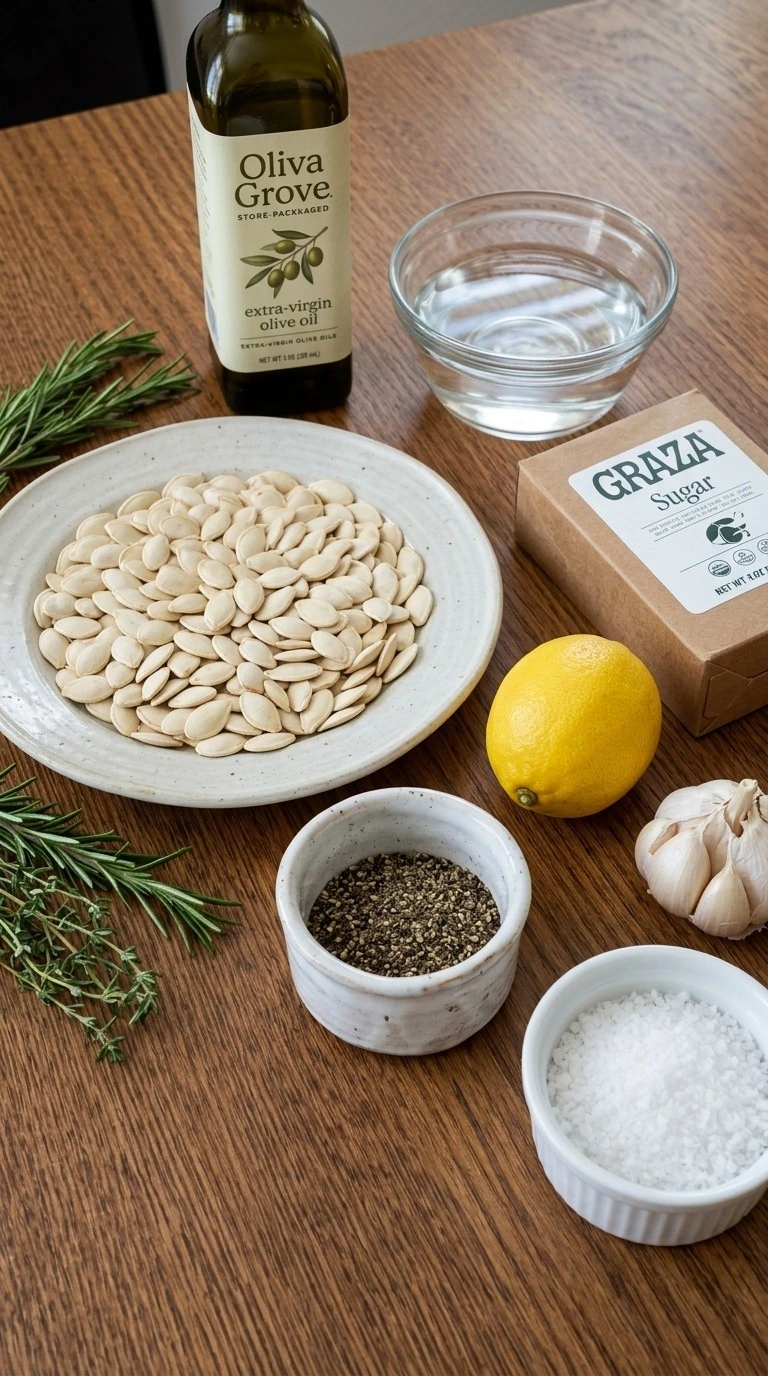
Here’s what I use for this recipe and you can always make substitutions if you prefer.
- Fresh pumpkin seeds: Removed from one medium to large pumpkin, with large strands of pulp pulled away before rinsing.
- Cold water: Used at about 55°F to rinse sticky pumpkin pulp and residue from the fresh seeds.
- Extra-virgin olive oil: Coats the dried shells in a thin film that encourages even browning without making the seeds greasy.
- Kosher salt: Provides clean savory seasoning and visible salt crystals across the roasted shells.
- Coarse ground black pepper: Adds a warm peppery bite and visible dark flecks that match the simple savory flavor.
Tools You’ll Need
- Rimmed sheet pan: A sturdy 13-by-18-inch rimmed sheet pan gives 2 cups of seeds enough room to roast evenly, while an undersized pan crowds them and traps steam.
- Large mixing bowl: A 3-quart bowl gives the seeds room to turn through the oil and seasoning, while a narrow bowl encourages uneven coating and clumps.
- Fine-mesh strainer: A medium 7-to-8-inch fine-mesh strainer drains small pumpkin seeds without losing them, while wide perforations can let smaller seeds slip through.
- Absorbent kitchen towels: Two clean lint-free towels remove surface moisture efficiently, while thick fuzzy fabric can leave fibers attached to the damp pumpkin seed shells.
Instructions
Step 1: Separate and rinse the pumpkin seeds
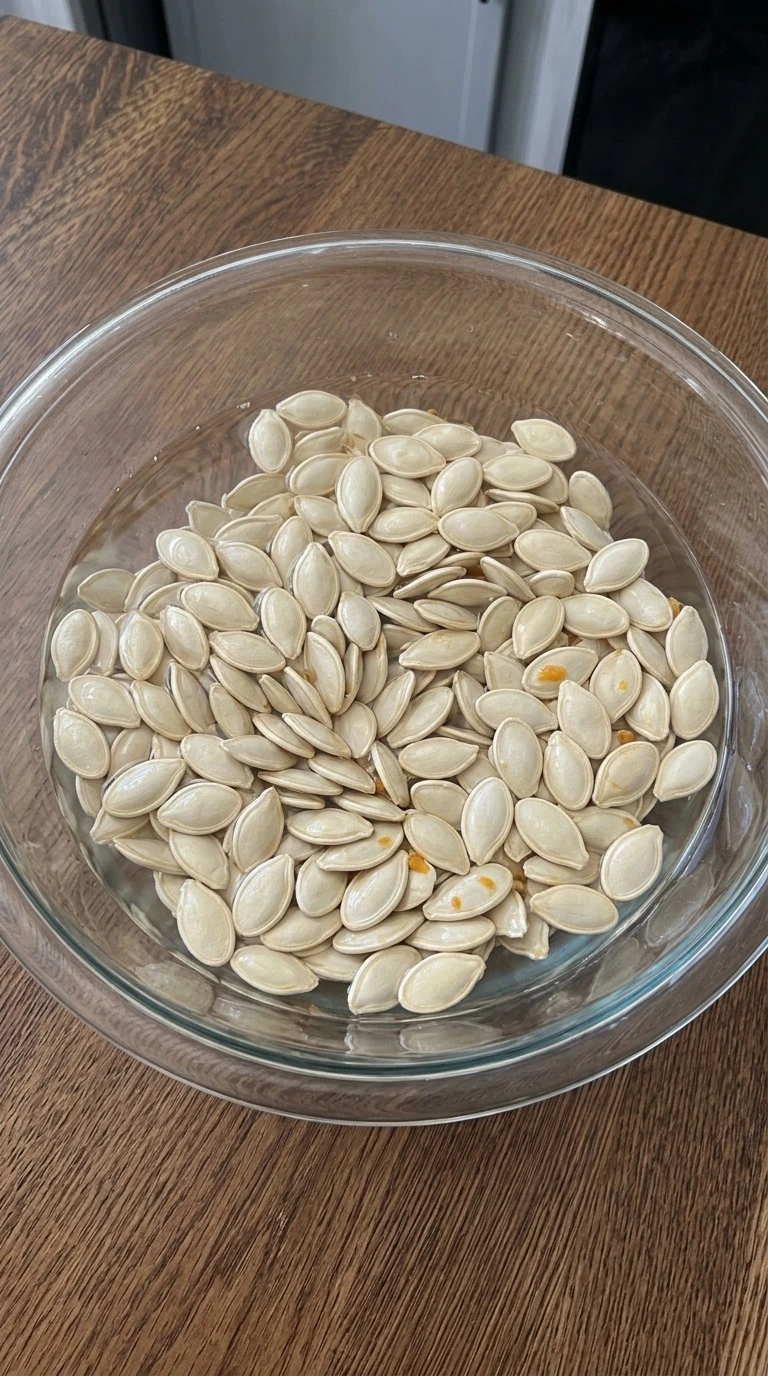
Preheat the oven to 325°F. Pull away the large strands of pumpkin pulp from 2 cups of fresh pumpkin seeds. Then rinse them with 4 cups of cold water at about 55°F for 3 to 5 minutes.
Rub small clusters gently between your fingers so the slippery orange fibers release without cracking the pale shells. Drain once the water looks mostly clear and the seeds no longer feel coated in sticky pulp. The cleaned seeds should look pale cream and slightly glossy from water.
You’ll see only a few tiny orange flecks rather than thick strings of pumpkin flesh. If you stop too early, leftover pulp can scorch during the 325°F roast and create bitter dark spots. Rinse thoroughly because clean shells brown more evenly in the oven.
Tip: If several fibers still cling after rinsing, separate the seeds into smaller handfuls for 2 minutes rather than scrubbing the shells aggressively.
Step 2: Dry the rinsed pumpkin seeds completely
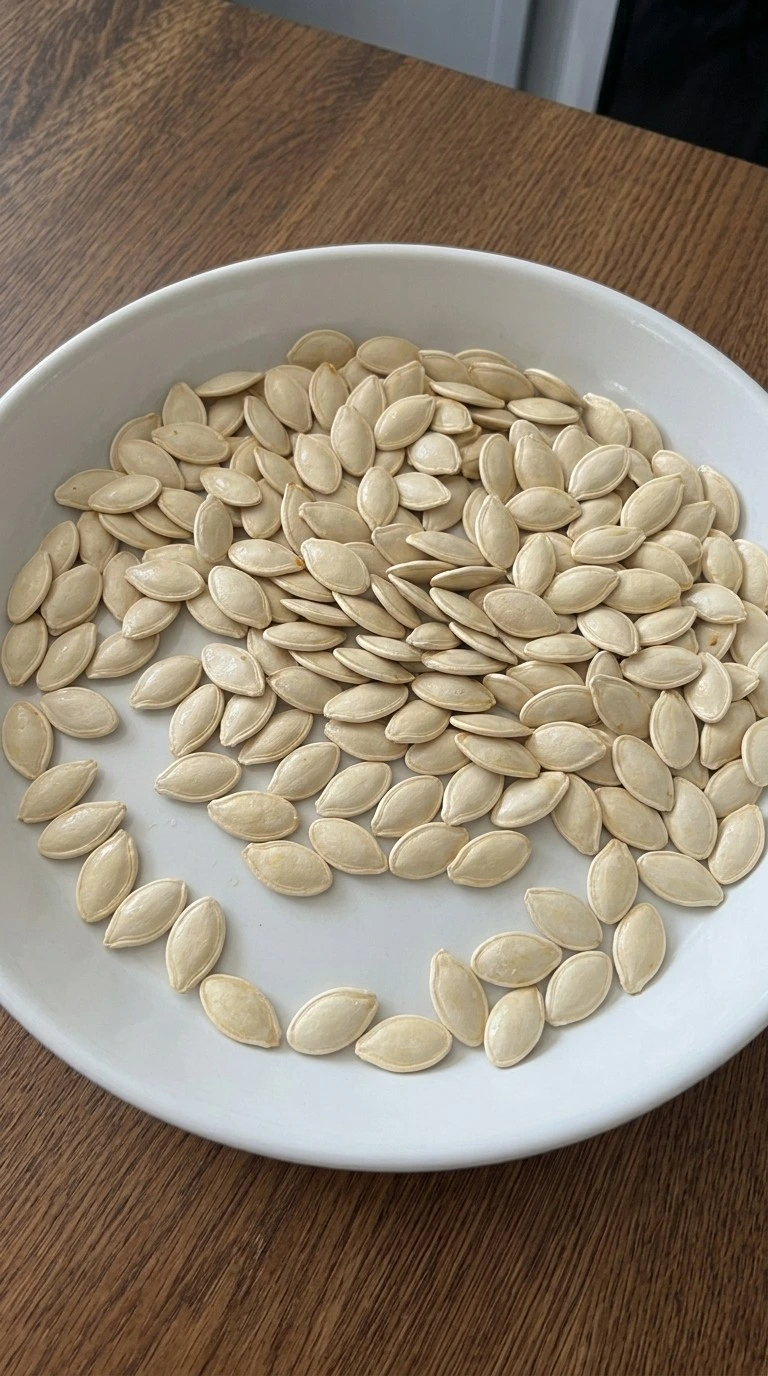
Spread the rinsed seeds into one loose layer and leave them at about 70°F for 15 minutes. Press and roll them gently between clean absorbent layers every 5 minutes so moisture moves off both sides. Keep separating any clusters that stick together.
The shells should change from visibly wet and shiny to mostly matte before you season them. Look closely at the surface. Properly dried seeds feel barely tacky and won’t leave beads of water behind.
If they still look slick after 15 minutes, give them another 5 minutes before moving on. Wet shells trap steam and delay browning, which can leave the finished seeds chewy. Dry the shells fully because surface moisture blocks crisp roasting.
Tip: Give very large seeds an extra 3 to 5 minutes of drying since their deeper shell grooves can hold hidden moisture.
Step 3: Coat the seeds with olive oil, salt and pepper
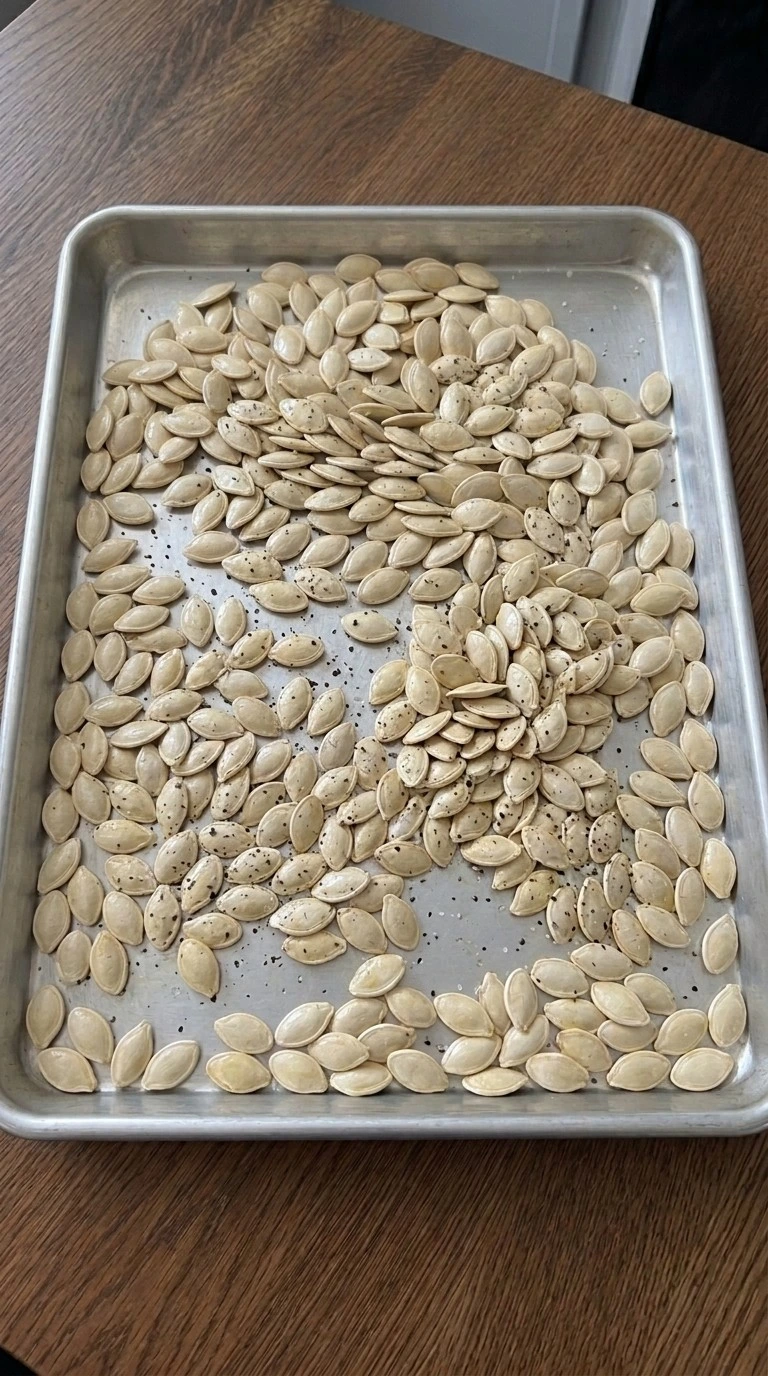
Keep the oven at 325°F while you coat the dried seeds with 1 1/2 tablespoons extra-virgin olive oil. Add 1 teaspoon kosher salt and 3/4 teaspoon coarse ground black pepper. Fold and turn the seeds for 60 to 90 seconds so a thin sheen reaches most shells.
Then spread all 2 cups into a loose single layer with small gaps between clusters. The seeds should look lightly glossy rather than drenched. Black pepper specks and salt crystals should appear unevenly across the pale shells, which is exactly right.
Pools of oil mean the coating is too heavy and can make the finished seeds greasy. (My first oily batch stayed soft in the middle, a thin coating fixed it. ) Use only a thin film because excess oil slows moisture loss.
Tip: Leave about 1/2 inch of open space between the largest clusters so hot air can reach more shell edges during roasting.
Step 4: Roast until the shells turn crisp and golden
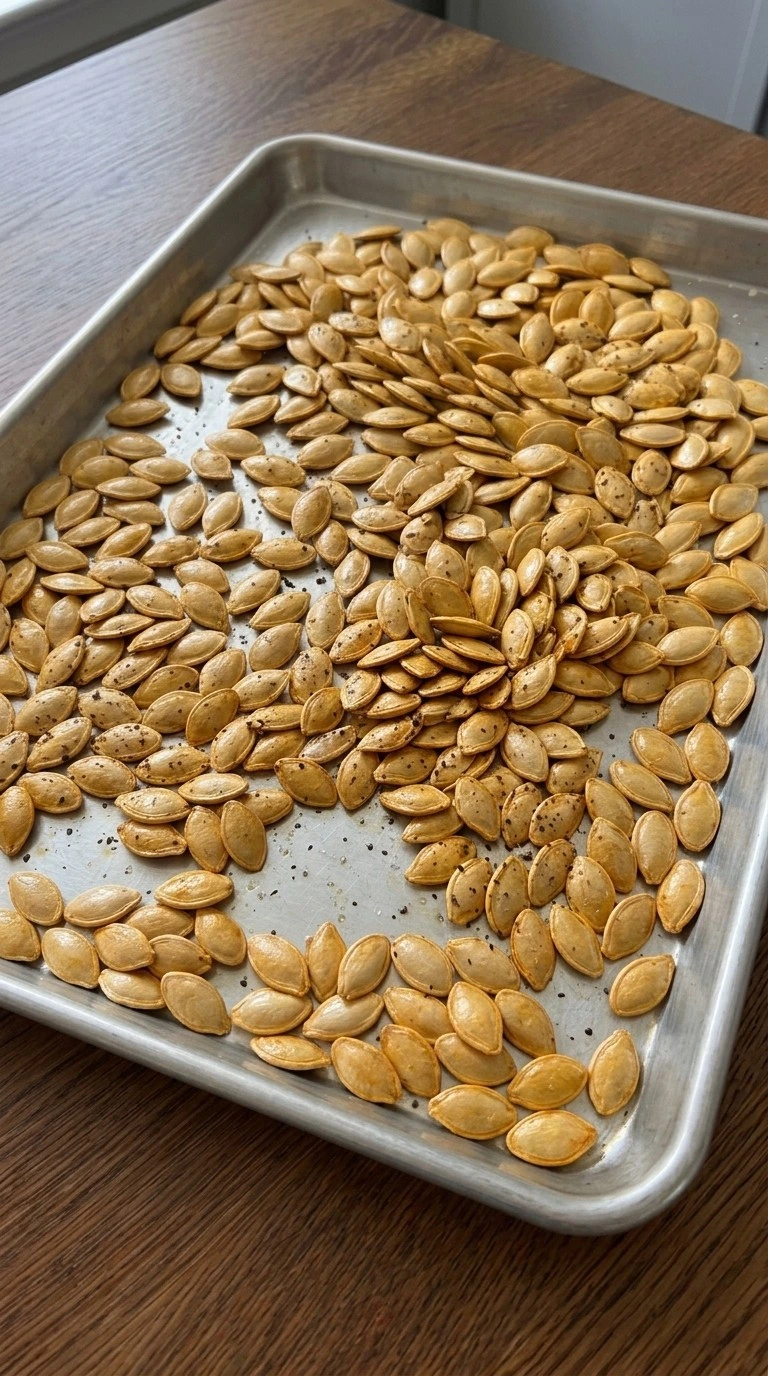
Roast the seasoned seeds at 325°F for 25 to 30 minutes. At minute 12, redistribute the seeds so the pieces near the edges move toward the center. Turn several clusters over while you spread them back into an uneven single layer.
Check again at minute 22 because smaller seeds can reach their ideal color before the largest ones. The shells should shift from pale cream to warm gold with scattered amber edges and darker toasted freckles. You’ll smell a nutty roasted aroma and hear a faint dry rustle when the pan moves.
Go beyond 30 minutes and the thinnest edges can become bitter before every seed matches in color. Roast gently because moderate heat crisps the shells without scorching their thin edges.
Tip: Start checking at 22 minutes if your seeds are small, since batches from different pumpkin varieties can brown 4 to 5 minutes apart.
Step 5: Cool the roasted seeds and serve
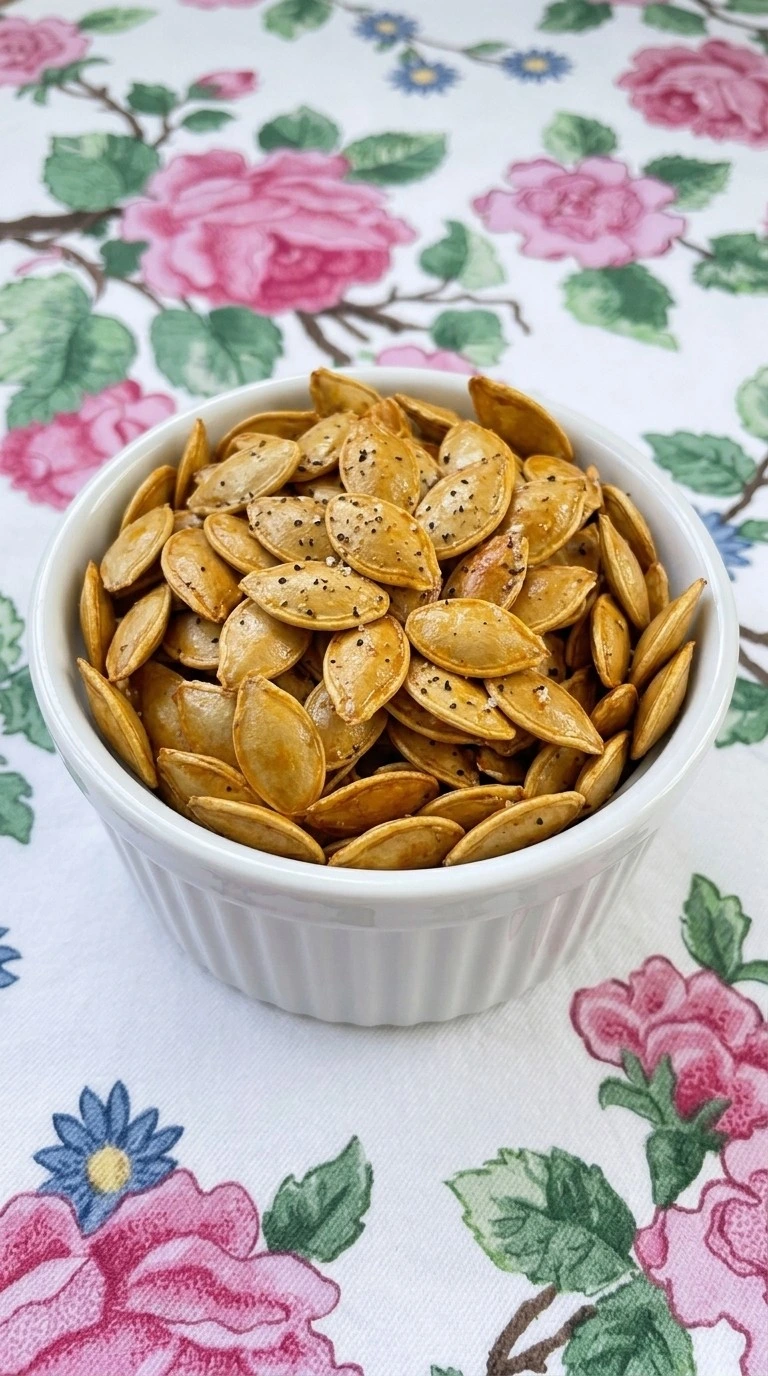
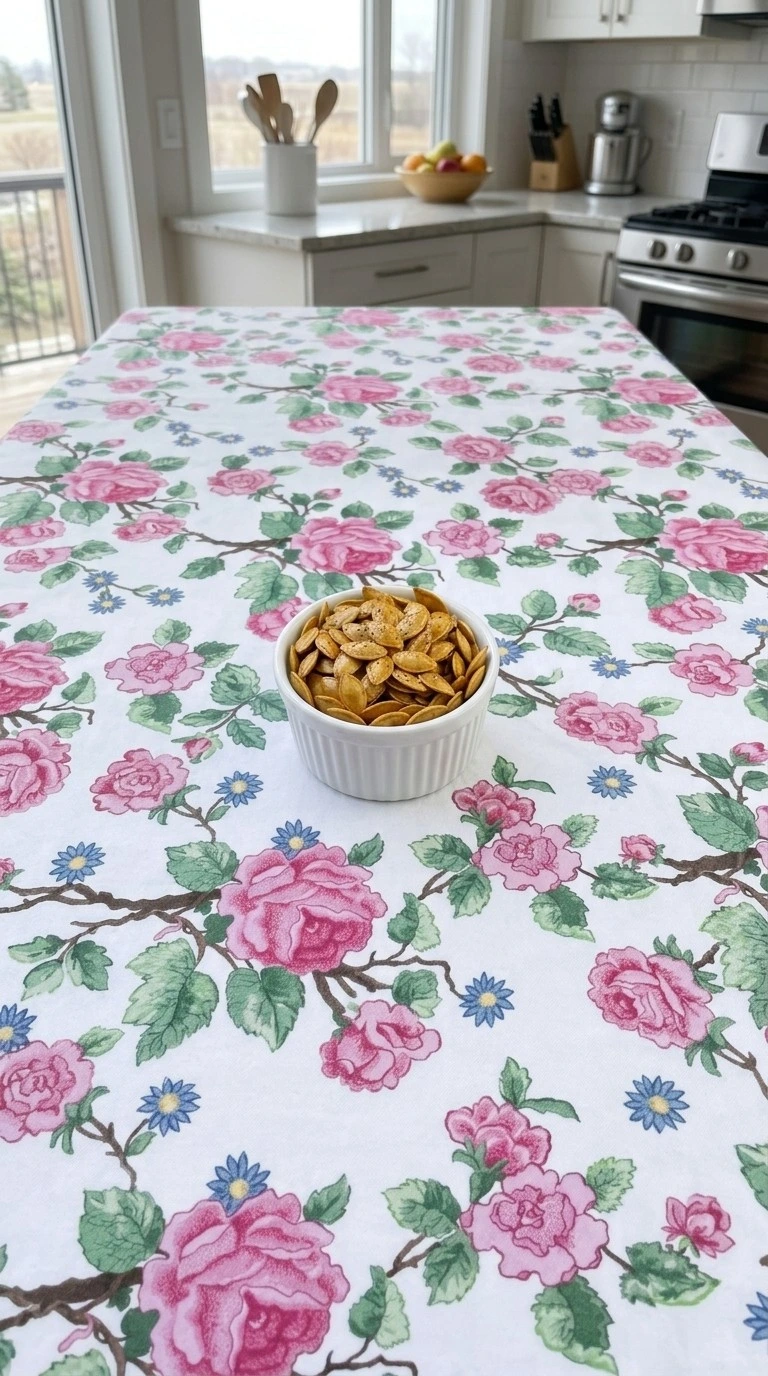
Transfer one serving of the roasted seeds to a small white ramekin after they leave the 325°F oven. Let the batch cool at about 70°F for 10 minutes before eating. Keep the seeds loosely piled rather than packing them down so trapped heat can escape.
During cooling, their surface changes from slightly oily and hot to drier and noticeably crisper. The finished seeds should have uneven golden shells, deeper amber patches and distinct black pepper specks. Bite one after the full 10-minute cooling window.
It should crack cleanly instead of bending. Eating immediately can make a properly roasted batch seem softer than it really is because steam still lingers inside. Cool 10 minutes because escaping steam finishes the crisp texture.
Tip: Taste one cooled seed before adding anything else, since the salt becomes more noticeable after the surface oil settles for about 10 minutes.
Pro Tips
- Dry the rinsed seeds for at least 15 minutes before adding oil. If the shells still shine with water, give them another 5 minutes.
- Keep the oven at 325°F instead of pushing it to 400°F. The gentler heat dries the thicker shells before the thin edges become bitter.
- Use only 1 1/2 tablespoons extra-virgin olive oil for 2 cups of seeds. A visible pool of oil means the coating is too heavy.
- Redistribute the seeds at minute 12 so pieces near the hotter pan edges move toward the center. This gives the batch more even golden color.
- Begin checking at minute 22 because smaller seeds can finish several minutes before larger ones. Look for amber edges and a dry rustling sound.
- Cool the seeds for a full 10 minutes before judging their texture. Escaping steam makes them noticeably crisper as they sit.
- Add 1 teaspoon smoked paprika with the salt and pepper for a smoky version that keeps the same 325°F roasting temperature.
- Mix in 1/2 teaspoon garlic powder before roasting for a deeper savory flavor without changing the oil amount or cooking time.
- Add 1/4 teaspoon cayenne pepper with the black pepper for noticeable heat, then taste the cooled seeds before adding any extra seasoning.
- Replace half the black pepper with 1/2 teaspoon dried rosemary crushed between your fingers for a woodsy fall variation.
Storage Instructions
Store completely cooled Roasted Pumpkin Seeds with Salt and Pepper in an airtight container at room temperature for 5 to 7 days. For longer storage, refrigerate them for up to 2 weeks, although the shells can gradually lose some crispness. You can also freeze them for up to 3 months.
Cool them for at least 30 minutes first and press excess air from the freezer bag before sealing it. To refresh the texture, spread the seeds loosely and reheat them at 300°F for 5 to 7 minutes. Then cool them for 5 minutes so escaping steam doesn’t soften the shells.
Don’t add more oil before reheating because the original coating is enough. Discard the seeds if they smell rancid, taste bitter beyond the normal roasted edges or develop visible moisture inside the storage container.
Print
Roasted Pumpkin Seeds with Salt and Pepper
- Total Time: 40 minutes
- Yield: 4 servings 1x
Description
These easy Roasted Pumpkin Seeds with Salt and Pepper turn leftover pumpkin seeds into a quick, simple snack with crisp edges and a warm toasted smell. The best part is the healthy ingredient list: pumpkin seeds, extra-virgin olive oil, kosher salt and coarse black pepper. They’re great for meal prep, a holiday party or a potluck. What makes this version different is the drying step, which helps the shells roast evenly instead of steaming in the oven.
Ingredients
- 2 cups Fresh pumpkin seeds
- 4 cups Cold water
- 1 1/2 tablespoons Extra-virgin olive oil
- 1 teaspoon Kosher salt
- 3/4 teaspoon Coarse ground black pepper
Instructions
- Preheat the oven to 325°F. Pull away the large strands of pumpkin pulp from 2 cups of fresh pumpkin seeds. Then rinse them with 4 cups of cold water at about 55°F for 3 to 5 minutes. Rub small clusters gently between your fingers so the slippery orange fibers release without cracking the pale shells. Drain once the water looks mostly clear and the seeds no longer feel coated in sticky pulp. The cleaned seeds should look pale cream and slightly glossy from water. You’ll see only a few tiny orange flecks rather than thick strings of pumpkin flesh. If you stop too early, leftover pulp can scorch during the 325°F roast and create bitter dark spots. Rinse thoroughly because clean shells brown more evenly in the oven.
- Spread the rinsed seeds into one loose layer and leave them at about 70°F for 15 minutes. Press and roll them gently between clean absorbent layers every 5 minutes so moisture moves off both sides. Keep separating any clusters that stick together. The shells should change from visibly wet and shiny to mostly matte before you season them. Look closely at the surface. Properly dried seeds feel barely tacky and won’t leave beads of water behind. If they still look slick after 15 minutes, give them another 5 minutes before moving on. Wet shells trap steam and delay browning, which can leave the finished seeds chewy. Dry the shells fully because surface moisture blocks crisp roasting.
- Keep the oven at 325°F while you coat the dried seeds with 1 1/2 tablespoons extra-virgin olive oil. Add 1 teaspoon kosher salt and 3/4 teaspoon coarse ground black pepper. Fold and turn the seeds for 60 to 90 seconds so a thin sheen reaches most shells. Then spread all 2 cups into a loose single layer with small gaps between clusters. The seeds should look lightly glossy rather than drenched. Black pepper specks and salt crystals should appear unevenly across the pale shells, which is exactly right. Pools of oil mean the coating is too heavy and can make the finished seeds greasy. (My first oily batch stayed soft in the middle, a thin coating fixed it.) Use only a thin film because excess oil slows moisture loss.
- Roast the seasoned seeds at 325°F for 25 to 30 minutes. At minute 12, redistribute the seeds so the pieces near the edges move toward the center. Turn several clusters over while you spread them back into an uneven single layer. Check again at minute 22 because smaller seeds can reach their ideal color before the largest ones. The shells should shift from pale cream to warm gold with scattered amber edges and darker toasted freckles. You’ll smell a nutty roasted aroma and hear a faint dry rustle when the pan moves. Go beyond 30 minutes and the thinnest edges can become bitter before every seed matches in color. Roast gently because moderate heat crisps the shells without scorching their thin edges.
- Transfer one serving of the roasted seeds to a small white ramekin after they leave the 325°F oven. Let the batch cool at about 70°F for 10 minutes before eating. Keep the seeds loosely piled rather than packing them down so trapped heat can escape. During cooling, their surface changes from slightly oily and hot to drier and noticeably crisper. The finished seeds should have uneven golden shells, deeper amber patches and distinct black pepper specks. Bite one after the full 10-minute cooling window. It should crack cleanly instead of bending. Eating immediately can make a properly roasted batch seem softer than it really is because steam still lingers inside. Cool 10 minutes because escaping steam finishes the crisp texture.
Notes
Pro Tips:
- Dry the rinsed seeds for at least 15 minutes before adding oil. If the shells still shine with water, give them another 5 minutes.
- Keep the oven at 325°F instead of pushing it to 400°F. The gentler heat dries the thicker shells before the thin edges become bitter.
- Use only 1 1/2 tablespoons extra-virgin olive oil for 2 cups of seeds. A visible pool of oil means the coating is too heavy.
- Redistribute the seeds at minute 12 so pieces near the hotter pan edges move toward the center. This gives the batch more even golden color.
- Begin checking at minute 22 because smaller seeds can finish several minutes before larger ones. Look for amber edges and a dry rustling sound.
- Cool the seeds for a full 10 minutes before judging their texture. Escaping steam makes them noticeably crisper as they sit.
Storage: Store completely cooled Roasted Pumpkin Seeds with Salt and Pepper in an airtight container at room temperature for 5 to 7 days. For longer storage, refrigerate them for up to 2 weeks, although the shells can gradually lose some crispness. You can also freeze them for up to 3 months. Cool them for at least 30 minutes first and press excess air from the freezer bag before sealing it. To refresh the texture, spread the seeds loosely and reheat them at 300°F for 5 to 7 minutes. Then cool them for 5 minutes so escaping steam doesn’t soften the shells. Don’t add more oil before reheating because the original coating is enough. Discard the seeds if they smell rancid, taste bitter beyond the normal roasted edges or develop visible moisture inside the storage container.
- Prep Time: 15 minutes
- Cook Time: 25 minutes
- Category: Lunch
- Cuisine: American
Nutrition
- Serving Size: 383g
- Calories: 538
- Sodium: 592mg
- Fat: 30g
- Carbohydrates: 68g
- Fiber: 28g
Frequently Asked Questions
Yes. Rinse the seeds and remove the stringy pulp up to 24 hours ahead. Dry them thoroughly and refrigerate them in a covered container once no visible water remains. Before roasting, let them sit at room temperature for about 15 minutes so condensation doesn’t create extra surface moisture.
The usual problem is trapped moisture or overcrowding. Dry the shells for at least 15 minutes and spread 2 cups across a 13-by-18-inch sheet pan. Roast at 325°F for 25 to 30 minutes, then cool them for 10 minutes before testing their final crunch.
Yes, but use two rimmed sheet pans instead of crowding 4 cups onto one pan. Keep both pans at 325°F and rotate their oven positions around minute 12. Start checking at minute 22 because one pan may brown faster depending on your oven’s hot spots.
You can reduce the extra-virgin olive oil from 1 1/2 tablespoons to 1 tablespoon for 2 cups of seeds. The finished shells will taste slightly drier and the seasoning won’t cling quite as evenly. Toss for a full 90 seconds so the thinner coating reaches as many seeds as possible.
Spread the seeds in a loose layer and heat them at 300°F for 5 to 7 minutes. Let them cool for another 5 minutes before eating because their crunch improves as steam escapes. Avoid microwaving them for long periods since that can soften the shells rather than crisp them.
Yes. Cool the seeds completely for at least 30 minutes and seal them in a freezer-safe bag with excess air pressed out. Freeze for up to 3 months. Reheat them from thawed at 300°F for 6 to 8 minutes, then cool briefly before serving.
Final Thoughts
Every time I make Roasted Pumpkin Seeds with Salt and Pepper, I think about the first batch I rushed. I was sure the seeds would get crispy even though they were still wet. I quickly learned that drying them well makes all the difference.
Once you do that, these roasted pumpkin seeds are pretty forgiving, and a simple 325°F roast gives them that crisp texture I love. If you try them, leave me a comment below. I read every single one!
And if you enjoyed this recipe, try our Crockpot Sausage Pasta or finish your meal with Soft Chocolate Chip Cookies.