

Gluten Free Gingerbread Cookies bring that warm holiday smell into your kitchen without the usual wheat flour. They’re soft in the middle with gently crisp edges and plenty of ginger and cinnamon. And you don’t need any fancy baking skills. If you’ve searched for gingerbread cookies gluten free and felt put off by dry or crumbly results, this recipe gives you a simple way to make tender cookies that still hold their shape.
I love how the dough smells as soon as the molasses hits the spices. It’s the kind of baking that makes a cold afternoon feel special. These dairy and gluten free gingerbread cookies use a small amount of butter in the main recipe, but you can swap it for plant-based baking butter without much fuss. If you’re planning a full dessert spread, our Gluten Free Apple Crisp Almond Flour is another lovely choice for the table.
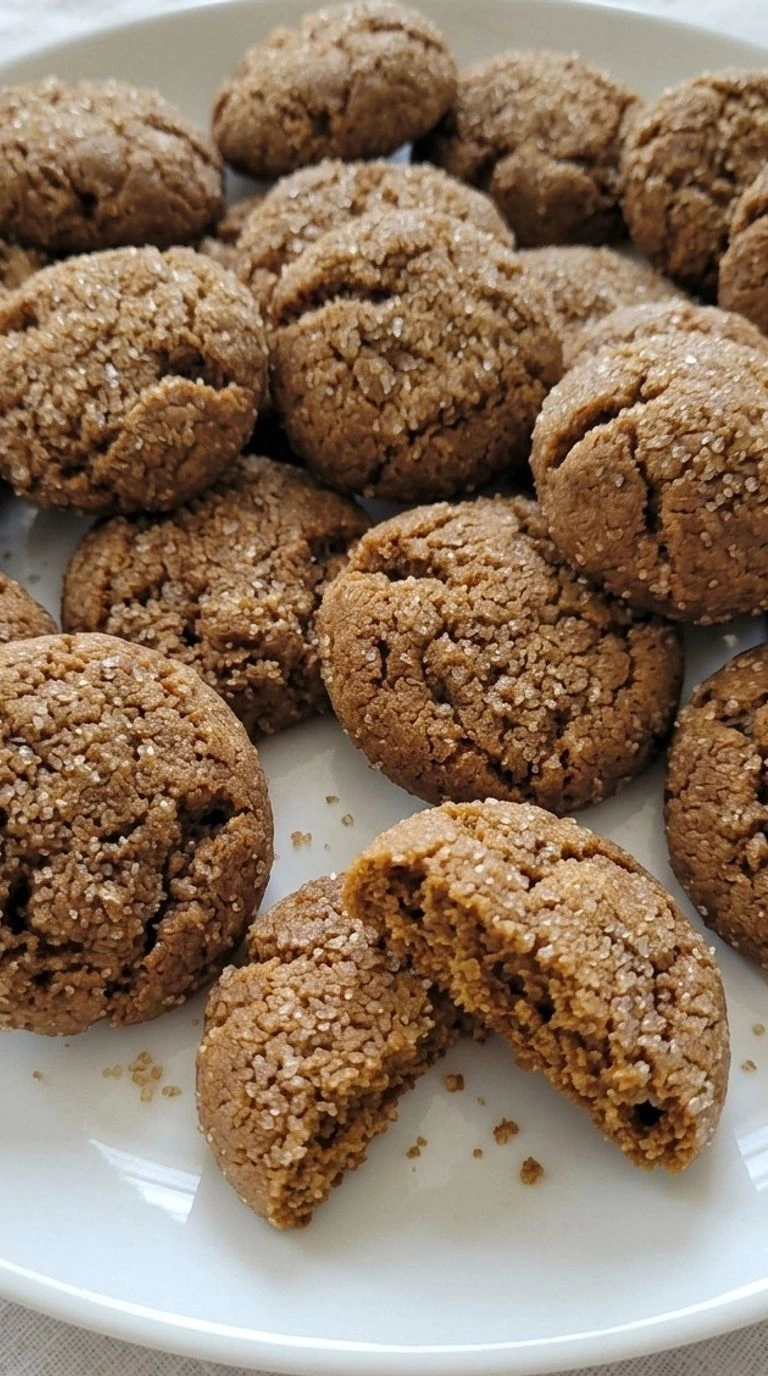
What I like most is how easy the dough is to handle after a short rest in the fridge. You can scoop it into soft round cookies or roll it out for gingerbread shapes if you prefer. Either way, you’ll get that deep brown color and a sweet spice flavor that makes homemade gingerbread worth the effort.
Why This Recipe Works
Gluten Free Gingerbread Cookies need enough moisture because gluten-free flour blends can soak up liquid more slowly than wheat flour. That’s why the 45-minute chill matters.
It lets the flour hydrate and firms the butter so the dough spreads less in the oven. The molasses and dark brown sugar also help the centers stay soft.
Baking at 350°F for 10 to 12 minutes sets the edges before the middle dries out. And if you enjoy desserts that use almond flour, try our Gluten Free Pumpkin Bread Almond Flour for another wheat-free baking idea.
Ingredients
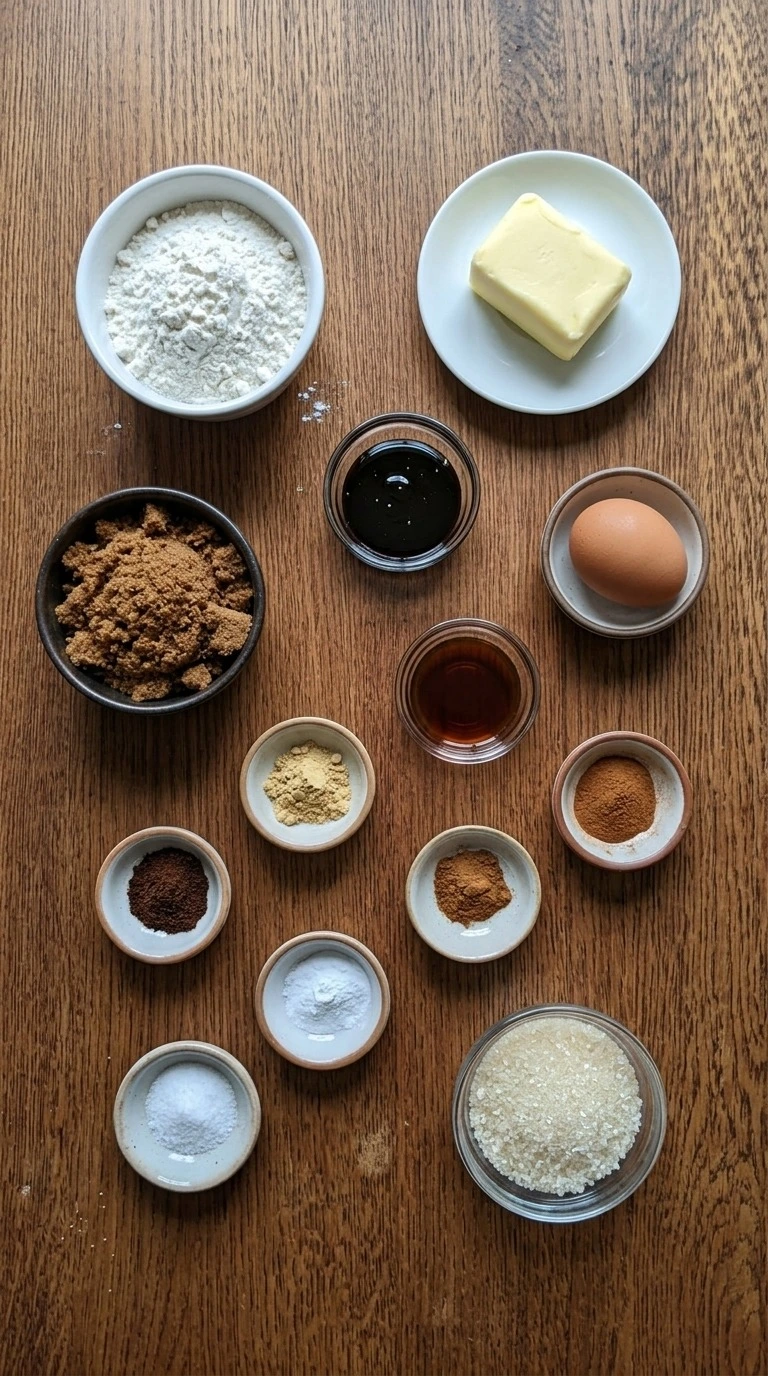
- Gluten-free 1-to-1 baking flour: Use a blend containing xanthan gum and measure by spooning into the cup and leveling. It provides the structure that replaces wheat flour.
- Unsalted butter: Soften to about 68°F before creaming. It adds richness and helps create tender cookie centers.
- Dark brown sugar: Pack firmly into the measuring cup. Its moisture and molasses notes keep the cookies soft and flavorful.
- Unsulphured molasses: Use regular unsulphured molasses rather than blackstrap. It gives the cookies their deep brown color and classic gingerbread taste.
- Large egg: Use at room temperature so it blends smoothly with the creamed butter and sugar. It helps bind the gluten-free dough.
- Pure vanilla extract: Add to the wet mixture to soften the sharp notes of ginger and molasses.
- Ground ginger: Use a fresh aromatic jar for the bold warm spice flavor that defines gingerbread.
- Ground cinnamon: Whisk into the flour blend to give the cookies a sweet and warming spice note.
- Ground cloves: Measure carefully because cloves are potent. A small amount adds depth without overpowering the ginger.
- Baking soda: Mix evenly into the flour to help the dough spread and create tender slightly raised centers.
- Fine sea salt: Distribute through the dry ingredients to balance the sweetness and sharpen the spice flavor.
- Coarse sparkling sugar: Roll the chilled dough balls in the crystals before baking for a delicate crunch and sparkling cracked tops.
Equipment
- Large mixing bowl: A 4-quart mixing bowl gives the dough enough room to fold without spilling, while a smaller bowl makes the thick mixture harder to combine evenly.
- Electric hand mixer: A hand mixer with at least five speed settings creams the butter and sugar evenly, while a sturdy whisk can work but takes longer and more effort.
- Rubber spatula: A flexible silicone spatula helps lift thick dough from the sides and bottom of the bowl, while a rigid spoon may leave pockets of dry flour.
- Measuring cups and spoons: A standard measuring set helps portion liquids and spices accurately, but a digital kitchen scale gives more reliable flour measurements and helps prevent dry cookies.
- Cookie scoop: A 1 1/2 tablespoon cookie scoop makes portions more consistent, while an ordinary tablespoon works if you measure each mound carefully.
- Rimmed baking sheets: Two standard 13 by 18-inch light-colored baking sheets provide room for 12 cookies each, while dark thin trays may brown the bottoms too quickly.
- Parchment paper: Two sheets of oven-safe parchment prevent sticking and make transfer easier, while a silicone baking mat may reduce bottom browning and slightly increase spreading.
- Wire cooling rack: A rack at least 12 inches wide allows air to move around the cookies, while leaving them on a hot tray too long can make the bottoms overly firm.
Instructions
Step 1: Cream the butter and brown sugar with molasses
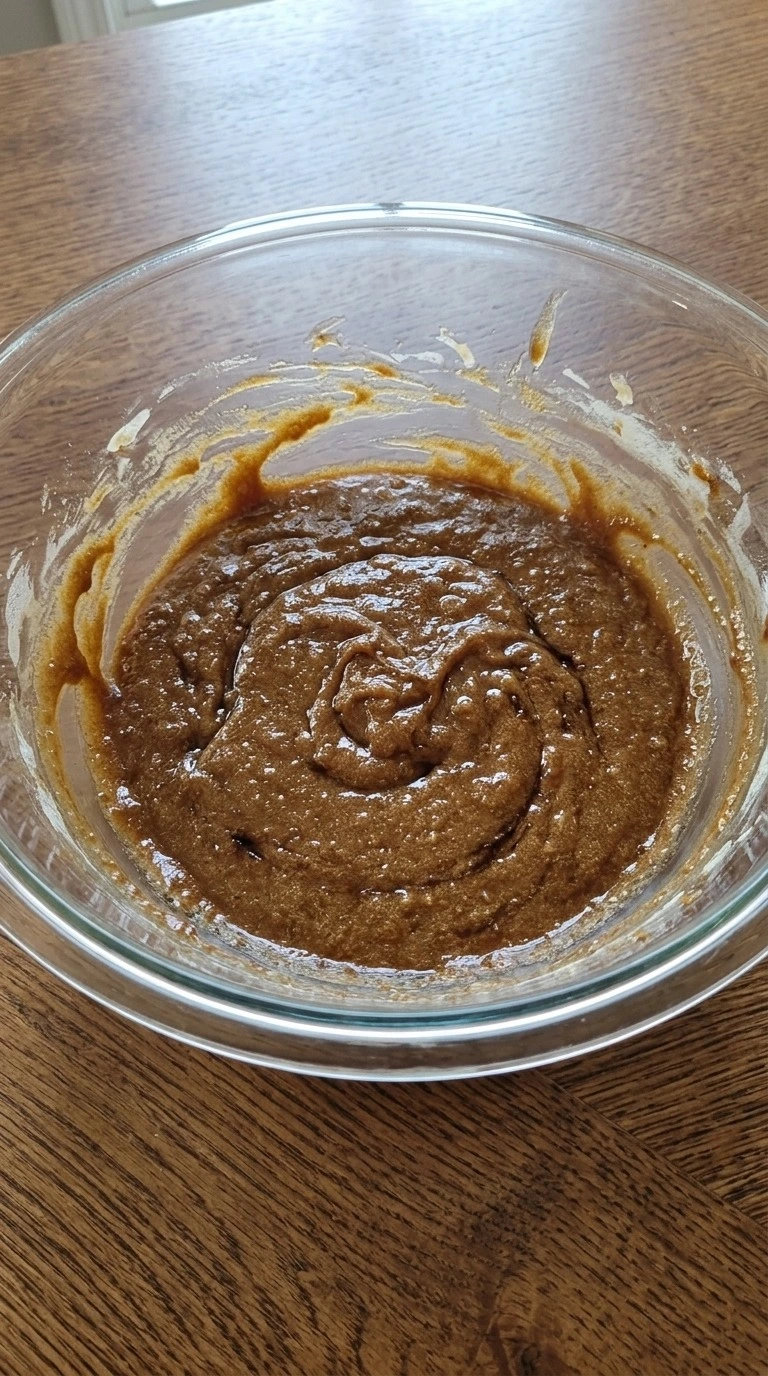
Place 1/2 cup softened unsalted butter and 3/4 cup packed dark brown sugar in a large mixing bowl. Beat them for 2 minutes at medium speed until the mix looks lighter and feels smooth. Then pour in 1/3 cup unsulphured molasses and beat for another 30 seconds. Scrape down the sides so no thick streaks stay behind.
Add 1 large egg and 1 teaspoon pure vanilla extract. Beat for 45 seconds until the mixture looks thick and glossy. Don’t worry if it seems a bit loose because the flour will give it more body. You’ll see a rich brown batter with a soft shine and a slight swirl where the molasses blends in.
The smell should be sweet and bold. If the butter is too warm and starts to melt, the dough can spread too much later. Keep the butter near 68°F for a stable base.
Tip: Use regular unsulphured molasses instead of blackstrap. Blackstrap has a much stronger bitter taste that can overpower the ginger and cinnamon.
Step 2: Fold the gluten-free flour and spices into the dough
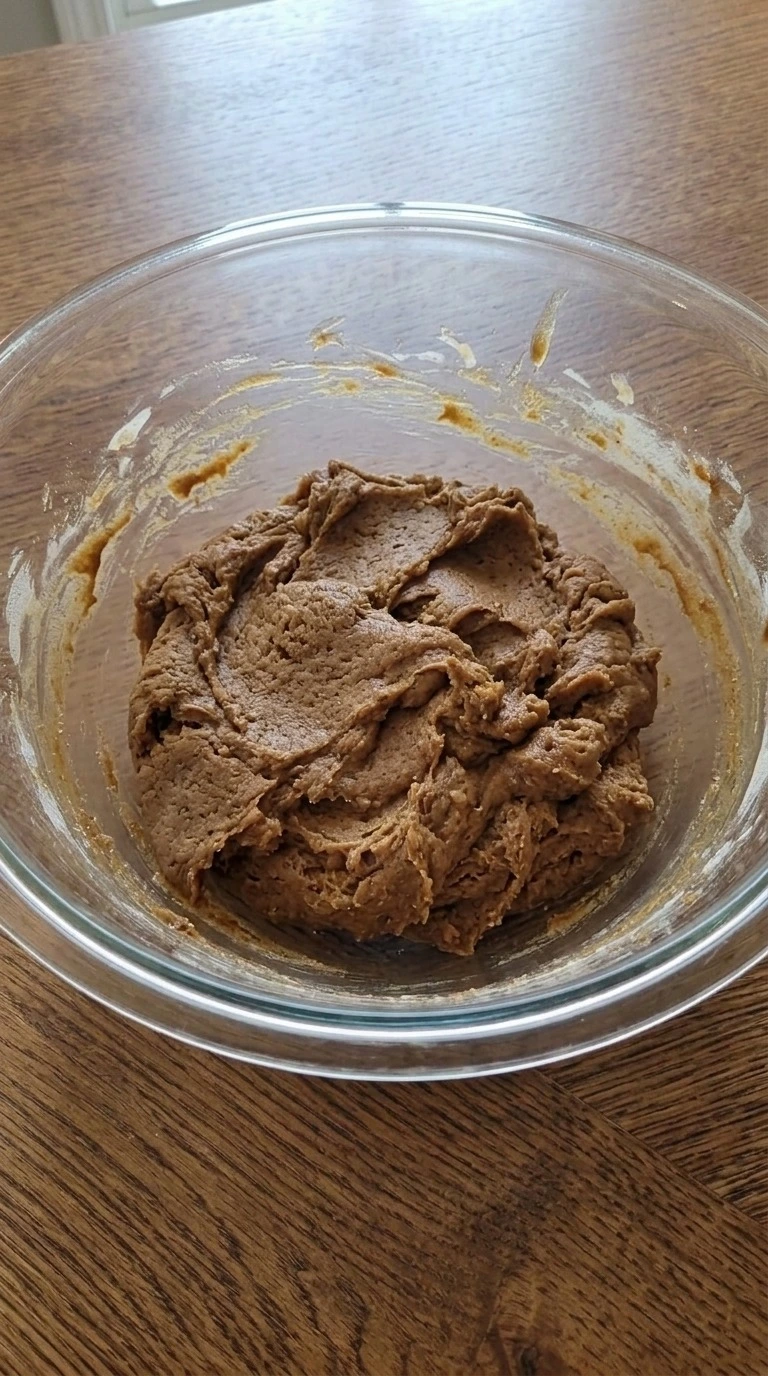
In a separate bowl whisk 2 1/4 cups gluten-free 1-to-1 baking flour with 2 teaspoons ground ginger and 1 1/2 teaspoons ground cinnamon. Add 1/4 teaspoon ground cloves and 1 teaspoon baking soda. Finish with 1/2 teaspoon fine sea salt. Whisk for 30 seconds so the small amounts of spice spread through the flour.
Next add the dry blend to the brown mixture in two batches. Fold with a rubber spatula after each addition and scrape along the bottom to lift any loose flour. Stop once the last pale streaks fade. The dough should look thick and slightly tacky with a deep caramel-brown color.
You’ll smell the spice as you fold. Don’t keep mixing once the flour disappears or the cookies may turn dense. A short mix keeps Gluten Free Gingerbread Cookies tender.
Tip: Choose a gluten-free 1-to-1 flour blend containing xanthan gum. If your blend lacks it, add 1/2 teaspoon xanthan gum to improve structure.
Step 3: Chill and roll the dough into sugar-coated balls
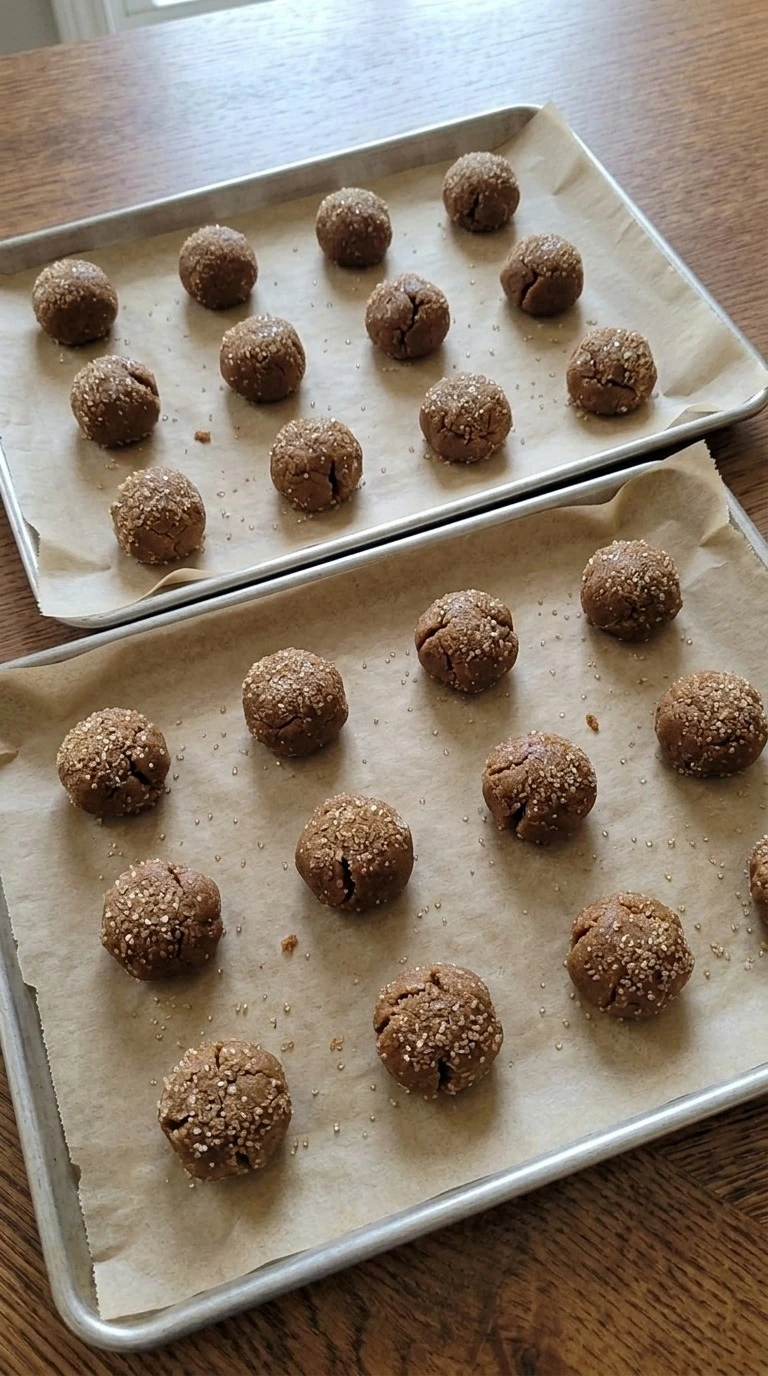
Cover the bowl and chill the dough at 38°F for 45 minutes. This gives the flour time to soak up moisture and makes the soft dough easier to shape. Then scoop 24 portions of about 1 1/2 tablespoons each. Roll each one gently between your palms to make a round ball.
Pour 1/4 cup coarse sparkling sugar into a shallow dish and roll every ball until its surface has an even coat. Set the balls on two parchment-lined baking sheets with about 2 inches between them. They should look firm enough to keep their round shape while the sugar clings to the outer layer. A little unevenness is fine.
If the dough feels too sticky after shaping, chill the filled trays for 10 more minutes. This helps limit spreading as the butter heats up.
Tip: For even portions, use a 1 1/2 tablespoon cookie scoop and check the first few portions for consistent size before rolling the rest.
Step 4: Bake until the edges set and the tops crackle
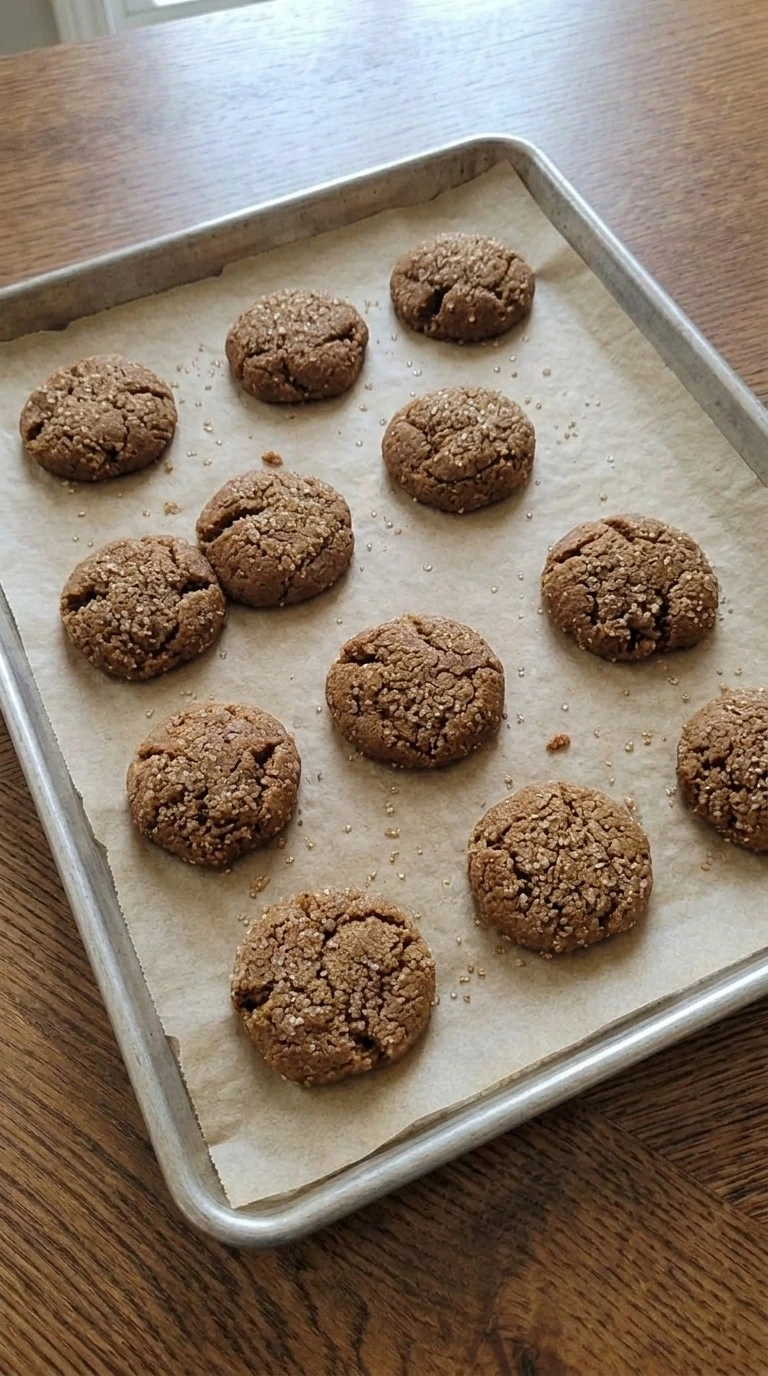
Heat the oven to 350°F and place a rack in the center. Bake one tray of 12 cookies for 10 to 12 minutes. Keep the second tray chilled while the first batch bakes. Around minute 9 the dough should start to spread and form small cracks through the sugar coating. Check the edges at minute 10.
They should look set while the centers still seem soft and slightly raised. Rotate the tray halfway through if your oven heats more on one side. Then bake the second tray the same way. You’ll notice a warm ginger smell and deep brown tops with pale sugar cracks. Don’t wait until every center feels firm or the cookies may dry out.
(A longer bake gave me crisp cookies instead of soft ones. ) Pull them when the rims hold their shape. Residual heat finishes the centers.
Tip: Use an oven thermometer to check that 350°F is accurate. An oven running 20°F hotter can darken the edges before the centers set.
Step 5: Cool and arrange the cookies for serving
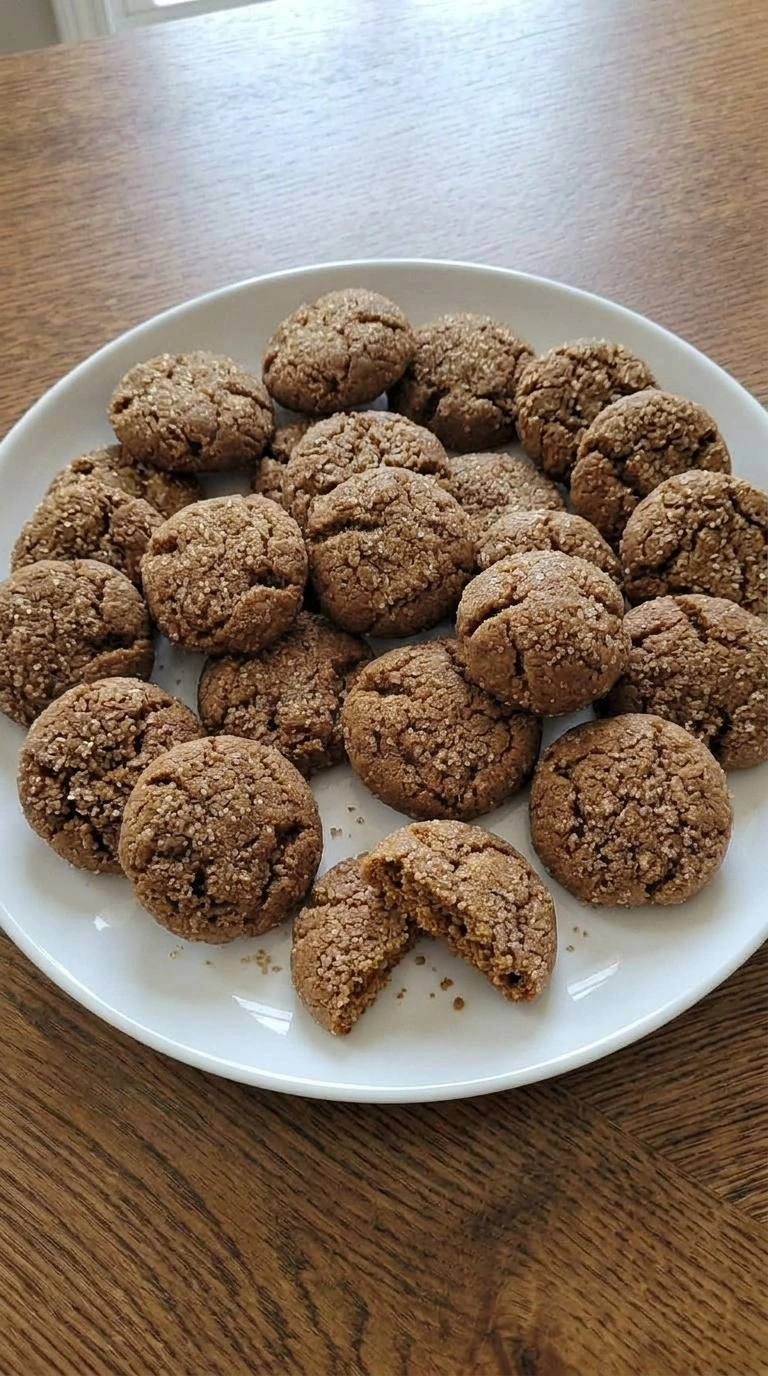
Let the first tray rest for 5 minutes after it leaves the oven. Then move the cookies to a wire cooling rack and leave them for another 15 minutes. Repeat with the second tray. The centers will firm up as they cool from oven heat toward room temperature.
Once they’re cool enough to handle, place the cookies on a large white serving plate. Arrange them in loose overlapping rows rather than a tight stack so their delicate tops stay intact. Break one cookie in half if you’d like to show the soft center. The finished cookies should have crisp edges and a tender brown middle with fine moist crumbs.
Don’t pile them up while they’re still warm or the sugar tops may turn damp. Cooling lets the crumb set without losing its soft bite.
Tip: For a holiday cookie plate, keep the cookies in a single layer until just before serving so the sparkling sugar stays visible.
Pro Tips
- Weigh your gluten-free flour whenever possible. Start with about 315 grams if your blend weighs 140 grams per cup, and follow your brand’s conversion.
- Keep the butter near 68°F before creaming. It should dent under gentle pressure but shouldn’t look oily or melted.
- Use fresh ground ginger and cinnamon. Replace jars that have lost their scent because old spices can make even a well-baked cookie taste flat.
- Chill the dough for the full 45 minutes at about 38°F. If it still clings heavily to your hands, give it another 10 minutes.
- Line two light-colored baking sheets with parchment and leave roughly 2 inches between dough balls. Crowding them can make neighboring cookies spread together.
- For Gluten Free Gingerbread Cookies with soft centers, check the edges at minute 10. Pull the tray once the rims hold their shape.
- For a stronger ginger flavor, add 1/4 teaspoon extra ground ginger to the dry mix. Don’t increase the cloves by the same amount.
- Let the cookies rest on their trays for 5 minutes before moving them. Their centers are fragile at first and firm as they cool.
- For gluten free dairy free gingerbread cookies, replace the 1/2 cup unsalted butter with 1/2 cup firm dairy-free baking butter and keep the same 350°F baking temperature.
- For gluten free gingerbread cutout cookies, chill the dough for 90 minutes and roll it between parchment sheets to 1/4-inch thickness. Cut into shapes and chill for 15 minutes before baking at 350°F for 8 to 11 minutes.
- For a citrus gingerbread variation, add 2 teaspoons finely grated orange zest with the vanilla extract. The bright citrus flavor balances the dark molasses without changing the baking time.
- For extra-spiced holiday cookies, add 1/4 teaspoon ground cardamom and 1/8 teaspoon ground nutmeg to the flour mixture. Keep the original ginger and cinnamon amounts for a warm layered flavor.
Substitutions
- Unsalted butter: Use 1/2 cup dairy-free baking butter in place of 1/2 cup unsalted butter. Choose a firm plant-based baking butter with around 80% fat. Softer spreads contain more water and may cause the cookies to flatten. This swap makes dairy and gluten free gingerbread cookies when all remaining ingredients are also certified suitable.
- Large egg: Replace 1 large egg with 1 tablespoon finely ground golden flaxseed mixed with 3 tablespoons water. Let the mixture thicken for 10 minutes before adding it to the dough. This makes gluten free egg free gingerbread cookies with a slightly denser texture and less lift. The centers may need 1 to 2 extra minutes in the oven.
- Gluten-free 1-to-1 baking flour: Use 2 1/4 cups of another gluten-free all-purpose baking blend designed for cup-for-cup substitution. Choose a blend containing rice flour and starches with xanthan gum for binding. If your blend lacks xanthan gum, add 1/2 teaspoon. Don’t replace the whole amount with almond flour because the dough will spread and crumble more easily. For a dessert developed around almond flour, try our Gluten Free Pumpkin Bread Almond Flour.
- Unsulphured molasses: Replace 1/3 cup unsulphured molasses with 1/3 cup dark treacle if regular molasses isn’t available. Dark treacle gives a similar deep sweetness but can taste slightly stronger. Avoid blackstrap molasses because its bitter flavor can overpower the spices. If the dough feels softer than usual, chill it for an extra 15 minutes.
- Coarse sparkling sugar: Use 1/4 cup granulated white sugar instead of 1/4 cup coarse sparkling sugar. Fine granulated sugar creates a thinner and more delicate crust. It won’t sparkle as much but can make the surface resemble gluten free gingerbread crinkle cookies. Roll each dough ball lightly to prevent an overly sweet coating.
Storage
Keep Gluten Free Gingerbread Cookies in an airtight container once they’ve cooled all the way through. They’ll stay at their best for about 4 to 5 days at a cool room temperature. If you prefer to refrigerate them, keep them sealed for up to 7 days so they don’t pick up moisture or fridge odors. For longer storage, arrange the cookies between sheets of parchment in a freezer-safe container and freeze for up to 2 months.
Freeze the unbaked dough balls for the same period if you’d rather bake smaller batches fresh. To bring back a little warmth, heat a cookie in a 275°F oven for 3 to 4 minutes. Let it rest briefly before eating because the center softens as it warms. You can also leave frozen baked cookies in their closed container until they thaw, usually 30 to 60 minutes.
Don’t keep cookies that show mold, smell strange or feel unusually wet and sticky. Fresh cookies should have a pleasant spice scent and a tender center.
FAQ
Yes. You can prepare the dough up to 48 hours before baking and keep it tightly covered in the refrigerator at 40°F or colder. Let it sit on the counter for 5 to 10 minutes if it feels too firm to scoop. Shape the chilled dough and bake at 350°F as directed.
Warm butter and dough that hasn’t chilled enough are common causes. Chill the mixture for at least 45 minutes and place each portion about 2 inches from its neighbors. Also check that your gluten-free flour blend contains a binder such as xanthan gum. Without enough structure, the cookies can spread into thin rounds.
Yes. Replace the butter with an equal amount of firm dairy-free baking butter and use a flax egg made with 1 tablespoon ground flaxseed and 3 tablespoons water. Let it thicken for 10 minutes before mixing. The cookies may be denser and less crisp, so start checking them after 11 minutes at 350°F.
Store fully cooled cookies in an airtight container for 4 to 5 days at a cool room temperature. If your kitchen is hot or humid, refrigerate them for up to 7 days. Keep parchment between layers so the crackled tops don’t rub together. Discard any cookies showing mold or an unusual smell.
Yes. Double every ingredient to make about 48 cookies and use two large mixing bowls if your mixer can’t handle the thicker dough. Divide the mixture before chilling so it cools evenly. Bake one 12-cookie tray at a time at 350°F for 10 to 12 minutes for more consistent results.
Both freeze well. Place shaped unbaked dough balls on a lined tray until solid and then seal them in a freezer bag for up to 2 months. Bake them from frozen at 350°F and allow about 2 extra minutes. Fully baked cookies can also be frozen for 2 months and thawed in their closed container.
Yes, but the dough needs a longer chill for clean shapes. Refrigerate it for 90 minutes and roll it to 1/4-inch thickness between parchment sheets. Cut your gingerbread figures and chill them again for 15 minutes. Bake at 350°F for 8 to 11 minutes depending on their size, and expect some puffing and spreading.
Gingerbread has been part of European holiday baking for centuries, but it hasn’t always looked like the cookies we know today. Early versions ranged from dense spiced cakes to decorated shapes. The gingerbread man became especially well known in England during the reign of Elizabeth I. Today’s gluten-free versions keep that familiar ginger and molasses flavor while using wheat-free flour blends.