

When the weather turns cool, a warm bowl of White Chicken Lasagna Soup brings together the flavors people love from classic lasagna in a spoonable meal. This white lasagna soup has tender chicken, soft noodles and a creamy broth that feels familiar while staying simple.
I created this white chicken lasagna soup for busy nights when you want comfort without building a full layered lasagna. If you enjoy hearty meals like Crockpot Ham and Potato Soup you’ll love how this recipe gives you rich flavor with fewer steps.
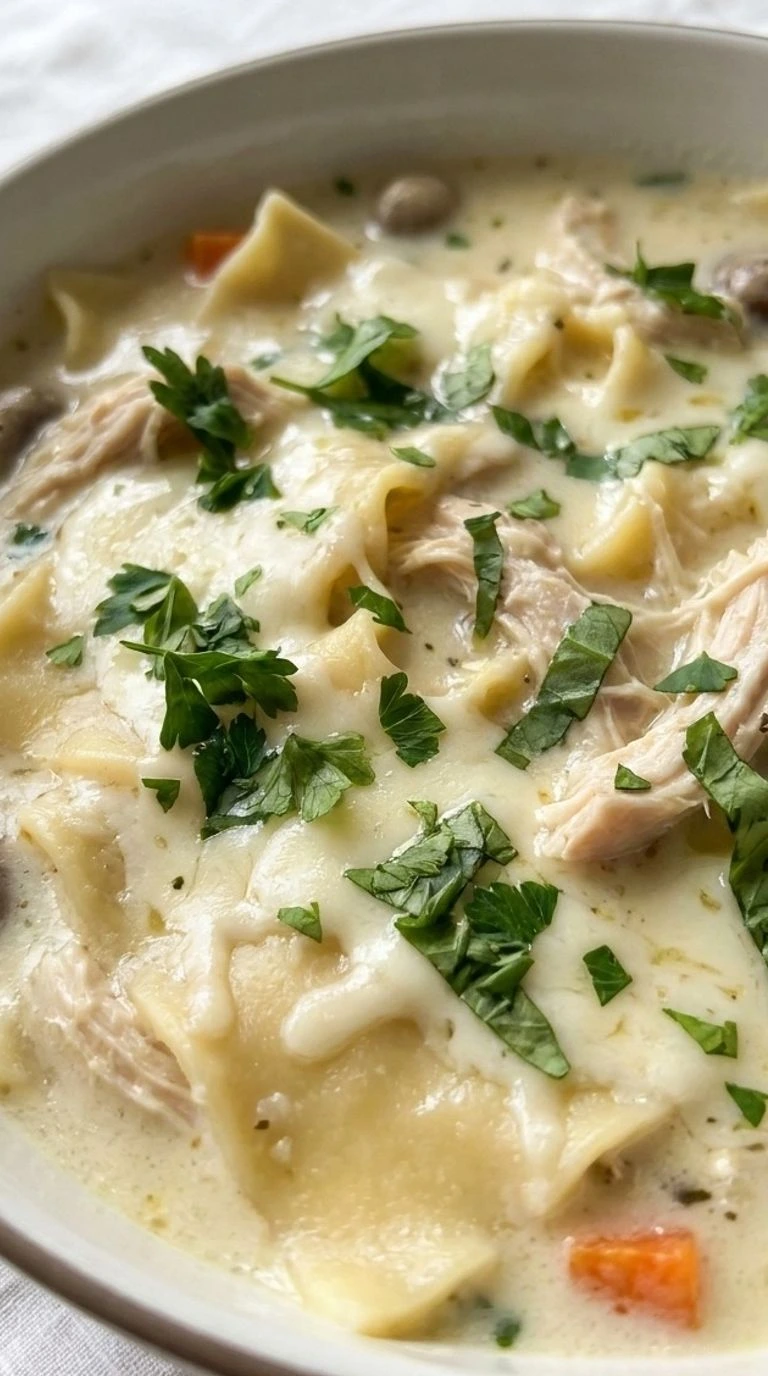
The creamy base makes this a special chicken lasagna soup because every bite has savory chicken, herbs and silky sauce. It’s also a great white lasagna soup recipe when you need a filling meal that works for family dinners and casual gatherings.
Why This Recipe Works
The thick, creamy texture comes from first cooking flour with butter, then adding the liquid. This simple step helps the broth blend with the dairy so it stays rich instead of turning watery.
Simmering the lasagna noodles right in the soup also releases starch, which naturally makes the soup thicker and more satisfying. Keeping the heat around 250°F while the noodles cook helps prevent the cream from separating, while the chicken stays soft and tender.
If you love cozy, creamy meals, try our Chicken Burrito Casserole for another family favorite.
Ingredients
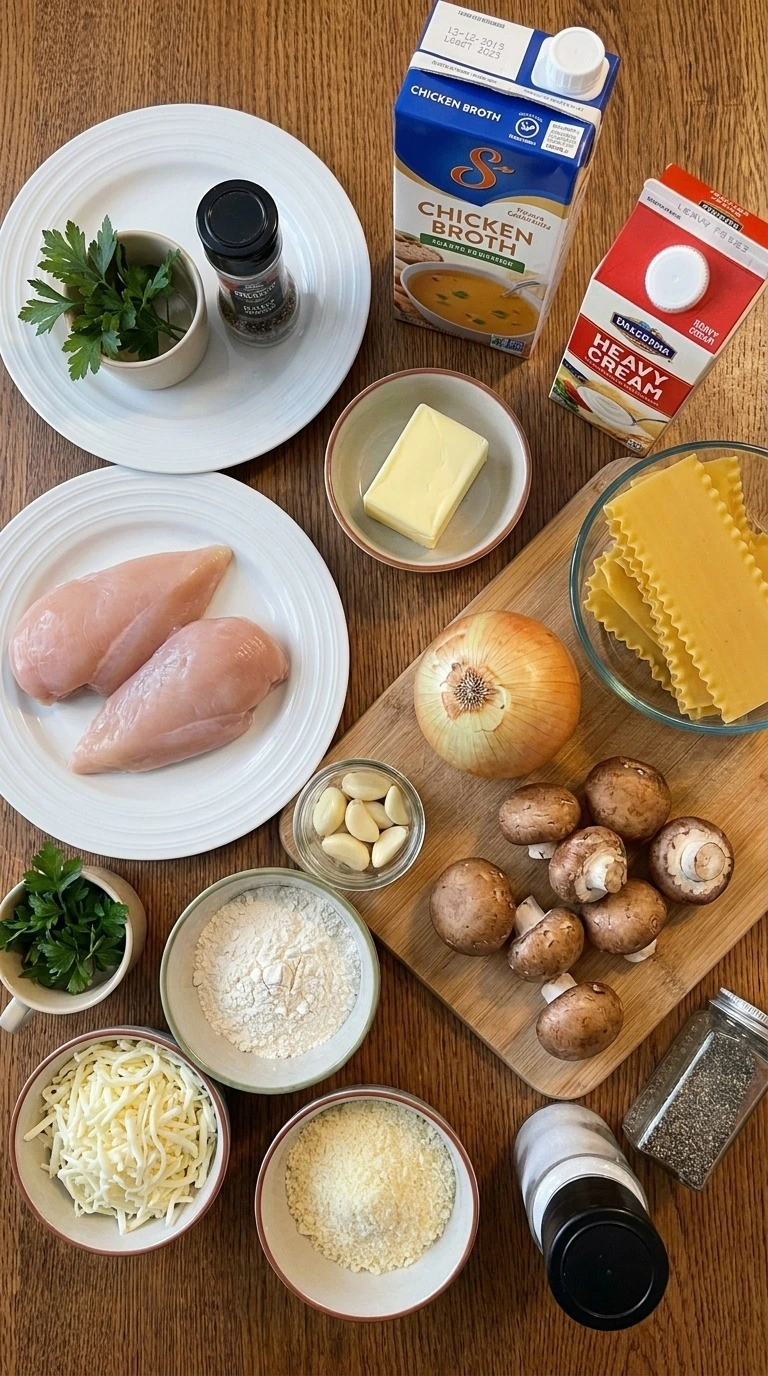
- boneless chicken breast: Simmered until tender and shredded into bite-size pieces for the protein base.
- chicken broth: Used to create the savory liquid base and cook the lasagna noodles.
- heavy cream: Adds richness and creates the creamy texture of the soup.
- lasagna noodles: Broken into pieces that soften while releasing starch into the broth.
- butter: Provides richness and helps soften the vegetables during cooking.
- yellow onion: Diced to build sweetness and depth in the soup base.
- cremini mushrooms: Sliced and softened to add earthy flavor.
- garlic cloves: Minced to bring a warm savory aroma.
- all-purpose flour: Used to lightly thicken the creamy broth.
- shredded mozzarella: Melted into the soup for creamy cheese texture.
- grated parmesan cheese: Adds salty flavor and a smooth finish.
- fresh parsley: Chopped and added at the end for fresh color and flavor.
- salt: Balances the flavors throughout the soup.
- black pepper: Adds gentle spice to the creamy base.
Equipment
- 6-quart heavy-bottomed pot: A 6-quart heavy-bottomed pot gives enough space for noodles and broth while spreading heat evenly so the soup base doesn’t scorch.
- wooden spoon: A sturdy wooden spoon helps stir thick soup without scratching the pot and lets you scrape flavorful bits from the bottom.
- ladle: A deep ladle makes serving portions easier and reduces spills when the creamy soup reaches the right thickness.
Instructions
Step 1: Cook and shred the chicken base
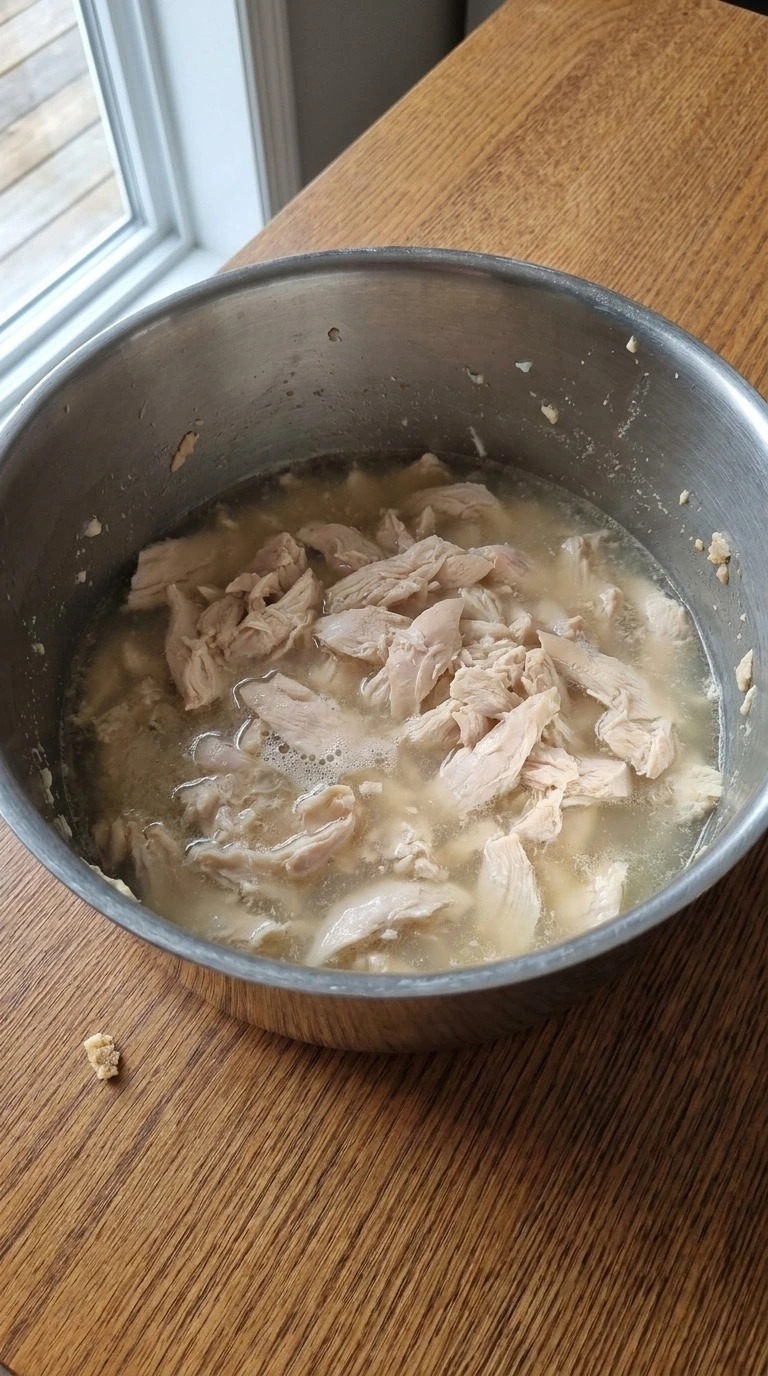
Season 1 pound boneless chicken breast and simmer it with chicken broth at medium heat about 200°F for 18 to 22 minutes until the center reaches 165°F. Use a fork to pull the meat into uneven strips after resting 5 minutes. (I tested shorter cooking first.
The chicken stayed firm instead of shredding well. ) The chicken turns opaque with juicy fibers and the broth smells savory. Don’t rush this part.
Missing the rest time can make the meat lose moisture. Keep the heat steady because gentle cooking protects the chicken texture.
Tip: Choose chicken breast pieces close in size so they reach 165°F at the same time without dry edges.
Step 2: Build the creamy soup base
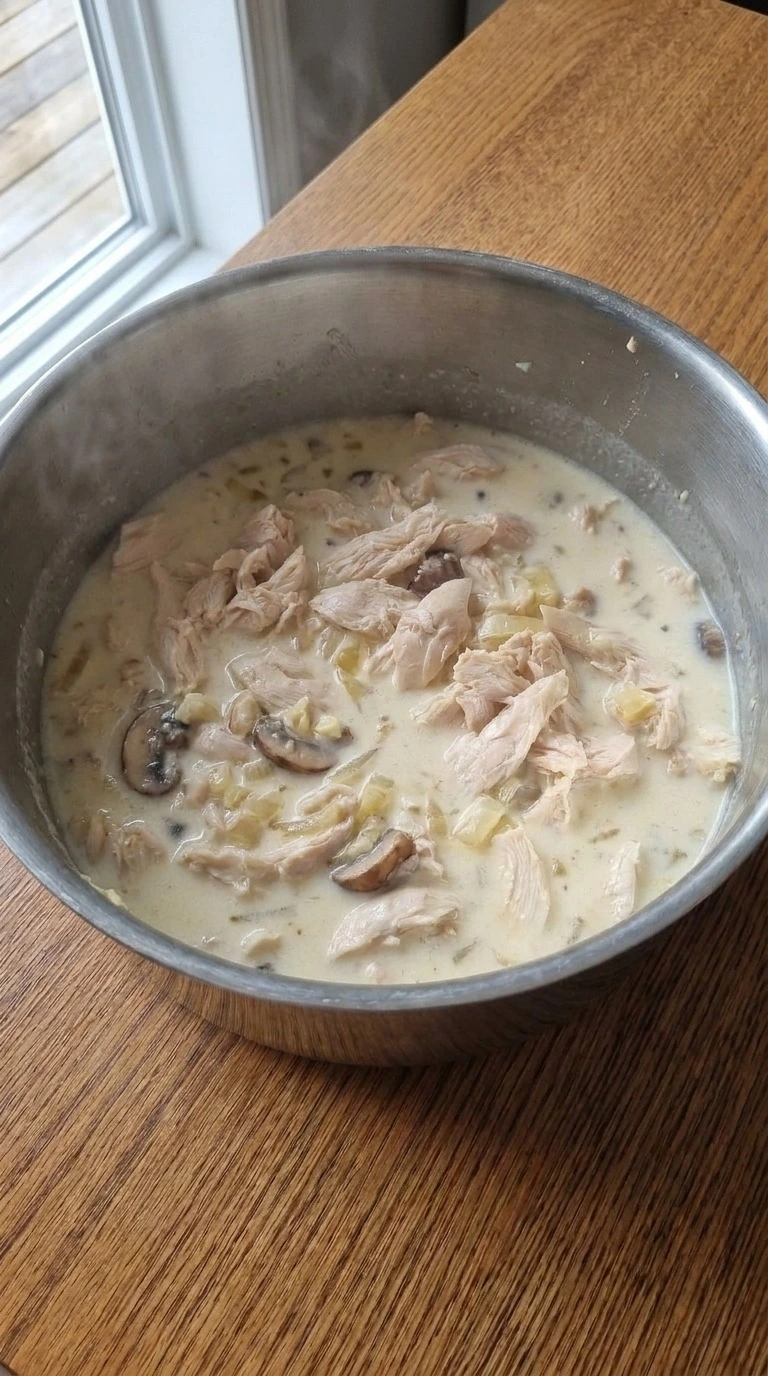
Add 2 tablespoons butter, minced garlic, diced yellow onion and sliced cremini mushrooms to the broth at medium-low heat around 300°F for 8 to 10 minutes. Stir with a wooden spoon and scrape the bottom gently until the onion softens and the mushrooms release moisture.
Add flour and blend until the mixture coats the ingredients. You’ll see the vegetables turn soft and slightly golden while the garlic aroma becomes stronger.
Stop before the onion browns too much because the base can taste bitter. This step creates the flavor structure for the soup.
Tip: Use fresh garlic cloves instead of jarred garlic when possible because 3 minutes of sautéing gives a brighter flavor.
Step 3: Combine noodles and creamy layers
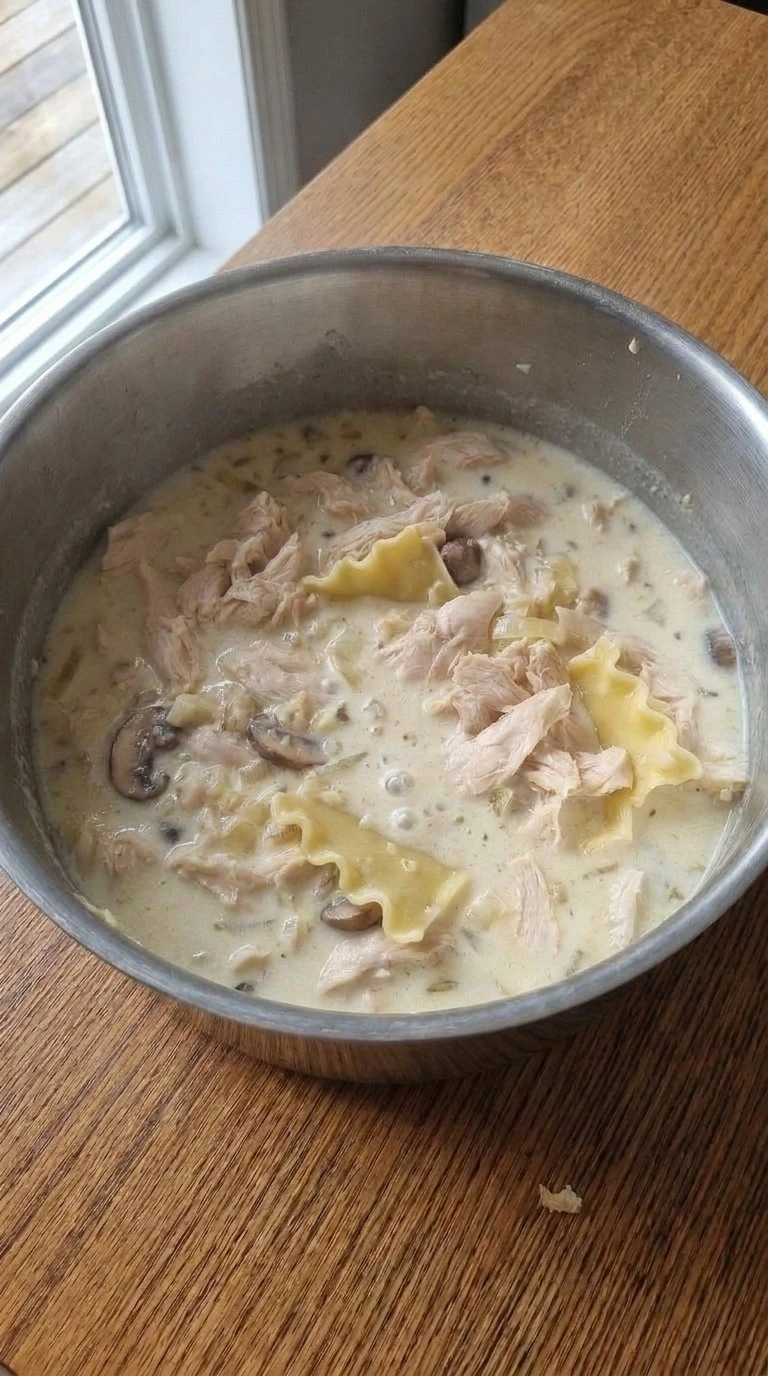
Pour in 4 cups chicken broth and 1 cup heavy cream, then add 8 ounces broken lasagna noodles and the shredded chicken. Simmer at medium-low heat around 250°F for 12 to 15 minutes while stirring every few minutes with slow circular motions so noodles cook evenly.
The noodles become tender and the broth turns creamy as the starch releases. You’ll notice the sauce coats the back of a spoon.
Skip the stirring and the pasta may stick together. The timing matters because starch controls the final soup thickness.
Tip: Break lasagna noodles into uneven pieces about 2 to 3 inches long for a more natural soup texture.
Step 4: Finish with cheese and serve
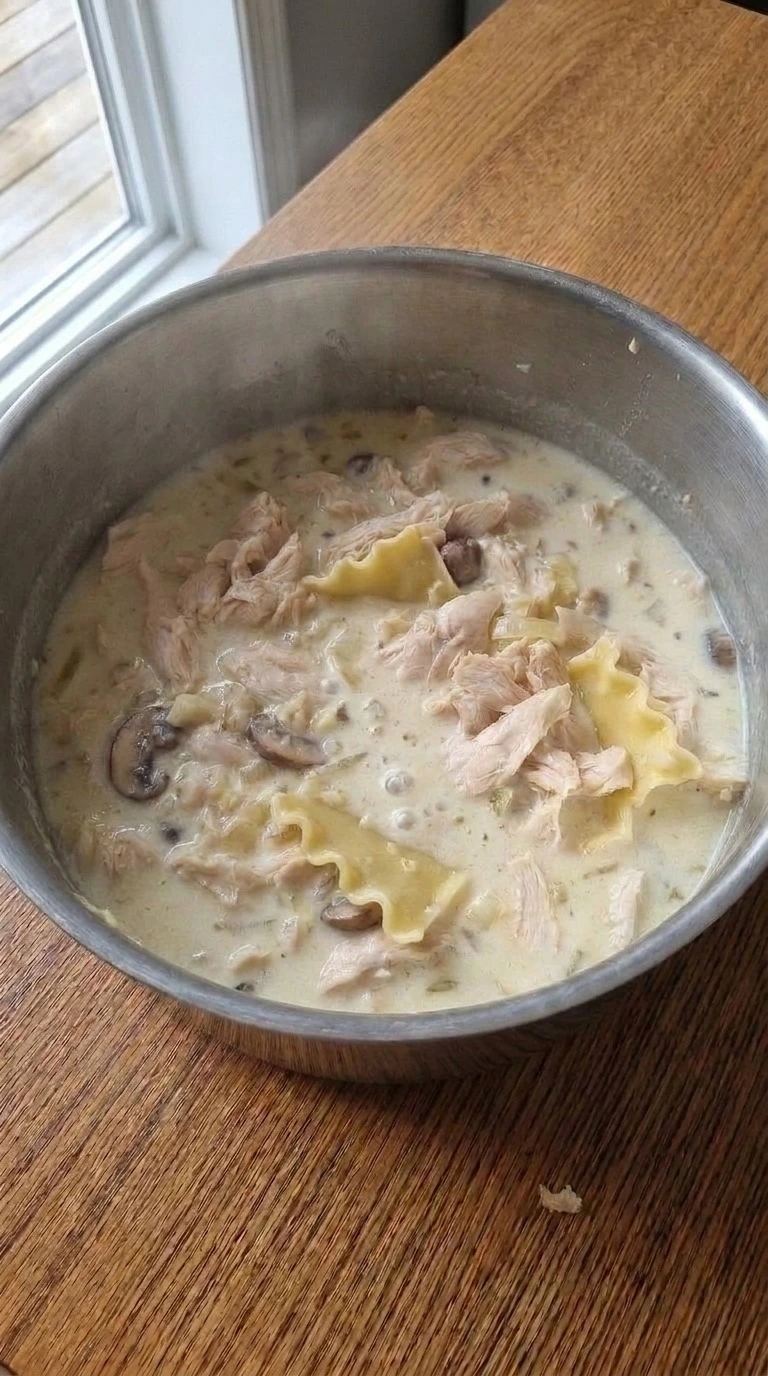
Stir in 1 cup shredded mozzarella and 1/2 cup grated parmesan cheese at low heat about 180°F for 3 to 5 minutes until melted. Fold gently with a spoon so the cheese blends through the soup without clumping. The surface becomes creamy with melted cheese strands and uneven noodle edges.
You’ll smell the parmesan as it melts. Overheating now can cause the dairy to separate. (I tried adding cheese on high heat once.
The soup became grainy, so low heat works better. ) Keep the gentle finish for a smooth texture.
Tip: Add fresh parsley after the soup leaves the heat so the herb keeps its bright color and fresh taste.
Step 5: Plate the soup portion
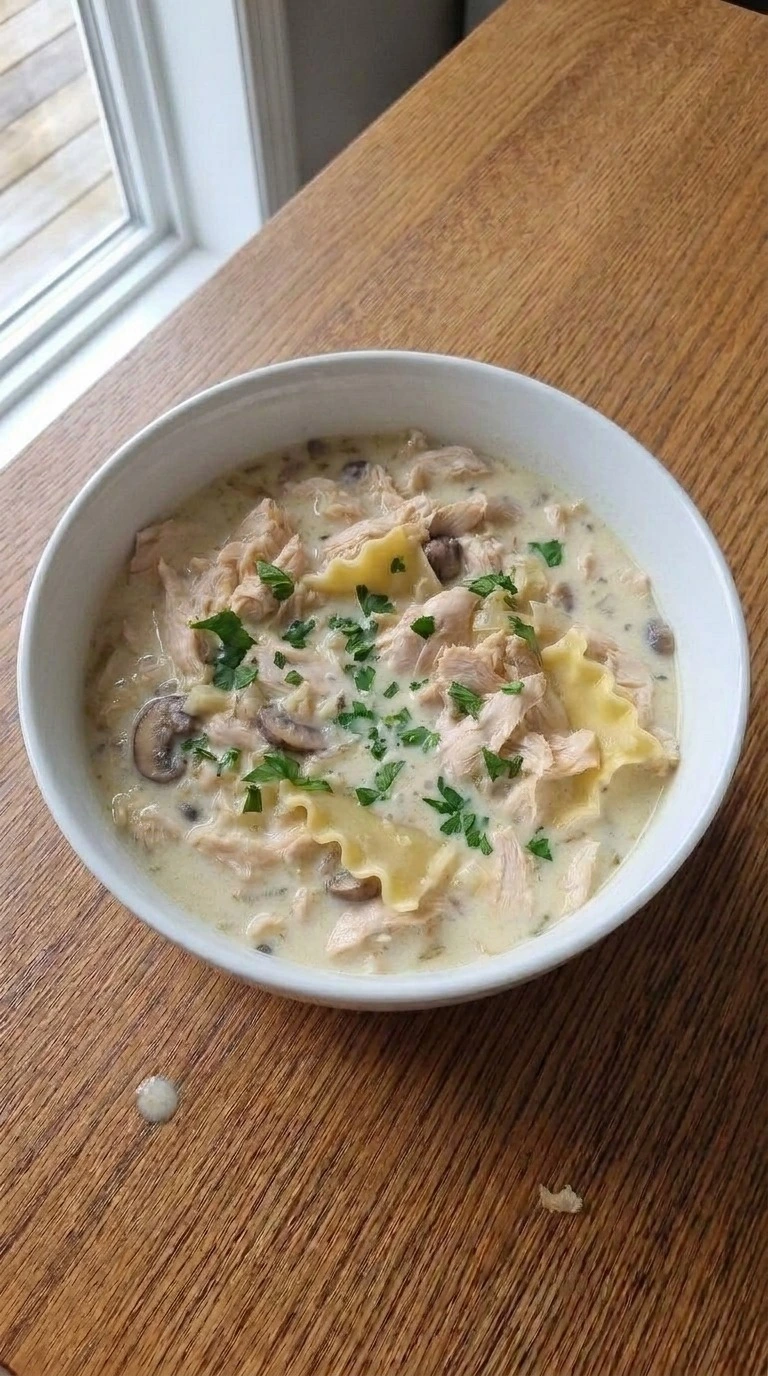
Ladle the finished soup into serving bowls and add 2 tablespoons chopped fresh parsley on top. Keep the portion warm at about 140°F and let it sit for 2 minutes before serving so flavors settle.
The bowl shows creamy broth, tender noodles and scattered herbs with natural uneven texture. Serve soon because waiting too long can thicken the soup too much.
This final rest keeps the soup balanced.
Tip: Add a splash of warm chicken broth if the soup thickens while sitting for more than 10 minutes.
Pro Tips
- Cook the noodles directly in the broth for 12 to 15 minutes because the released starch gives the soup a thicker texture without extra cream.
- Choose freshly grated parmesan instead of pre-shredded cheese because it melts smoother during the final 3 to 5 minutes at low heat.
- Keep the soup base below 200°F after adding dairy because gentle heat helps prevent separation and keeps the creamy texture stable.
- Use a 6-quart pot with tall sides so the 5 cups of broth and noodles have room to move without overflowing.
- Rest the soup for 2 minutes before serving because the broth thickens slightly and the flavors become more balanced.
- Avoid adding the cheese while the soup is boiling because high heat can create a grainy texture instead of a smooth finish.
- Add fresh parsley within 5 minutes of serving so the herb keeps its bright color and fresh taste.
- Taste the broth after the chicken cooks and adjust salt by 1/4 teaspoon increments because broth brands vary in sodium levels.
- Add 1 teaspoon Italian seasoning and 1 cup chopped spinach during the last 3 minutes of cooking for a vegetable-rich version with extra color.
- Replace half the chicken breast with cooked Italian sausage for a deeper savory flavor that creates a heartier winter variation.
- Stir in 1 cup roasted red peppers with the noodles for a sweeter white lasagna soup recipe twist with extra texture.
- Use 1/2 teaspoon crushed red pepper flakes with the garlic for a spicy creamy alfredo lasagna soup variation.
Substitutions
- heavy cream: full-fat coconut cream. Use the same 1 cup amount for a dairy-free option. The soup gets a mild coconut flavor and a slightly thinner finish, so add 1 extra tablespoon flour if you want more body.
- lasagna noodles: gluten-free lasagna noodles. Use 8 ounces of gluten-free noodles and watch the simmer time closely because some brands soften faster. The texture may be a little more delicate than wheat noodles.
- boneless chicken breast: boneless chicken thigh. Use 1 pound of chicken thigh for a richer flavor and juicier texture. The meat may need 3 to 5 extra minutes to reach 165°F because thighs are usually thicker.
- shredded mozzarella: dairy-free mozzarella shreds. Replace with the same 1 cup amount for a dairy-free version. Melting quality varies by brand, so the soup may have fewer cheese strands but stays creamy.
- all-purpose flour: cornstarch slurry. Mix 2 tablespoons cornstarch with 3 tablespoons cold broth before adding it near the end. The soup becomes glossy but loses some of the classic roux flavor. For another hearty meal idea, try our Healthy Enchilada Skillet.
Storage
Store leftovers in an airtight container in the refrigerator for up to 4 days. Freeze portions for up to 2 months by cooling fully and sealing in freezer-safe containers with space for expansion.
Reheat gently at 170°F to 180°F for 5 to 8 minutes and add 2 tablespoons of broth if the soup thickens too much. Discard it if you notice sour odors, mold, or a slimy texture.
FAQ
Yes, prepare the soup up to 2 days ahead and store it covered in the refrigerator. Reheat it slowly at medium-low heat around 180°F and add 2 tablespoons of broth if the noodles absorb too much liquid overnight.
Store White Chicken Lasagna Soup in an airtight container for up to 4 days. Keep it chilled below 40°F and check for sour smells or unusual texture before reheating portions.
You can freeze the soup for up to 2 months, but noodles may soften after thawing. Freeze in portions without extra garnish and thaw overnight before reheating gently at 170°F.
A watery soup usually happens when the noodles have not released enough starch or the broth ratio is too high. Simmer uncovered for 5 to 10 minutes and stir often until the sauce coats the spoon.
Yes, double all ingredients in a large 8-quart pot and keep the same cooking temperatures. Add the noodles in batches if needed so they cook evenly instead of clumping together.
Serve it with a simple salad or crusty bread for a complete meal. The rich broth pairs well with lighter sides because the creamy alfredo lasagna soup base already provides plenty of flavor.
Traditional lasagna layers inspired this soup version, but cooking the noodles directly in the broth creates a different texture. The starch from the pasta helps the creamy base become naturally thicker.