


When the weather turns cool or you need a warm meal after a busy day, Creamy Chicken Noodle Soup brings familiar flavors to the table. This chicken noodle soup recipe combines tender chicken, soft noodles and a rich broth that feels homemade without needing complicated steps. I love making chicken noodle soup homemade because small details change the whole bowl.
Adding the cream slowly and letting the vegetables soften first creates a smooth texture that feels special. If you enjoy comforting family meals, try our Crockpot Ham and Potato Soup for another filling soup idea. This easy chicken noodle soup recipe works for weeknight dinners and relaxed weekends.
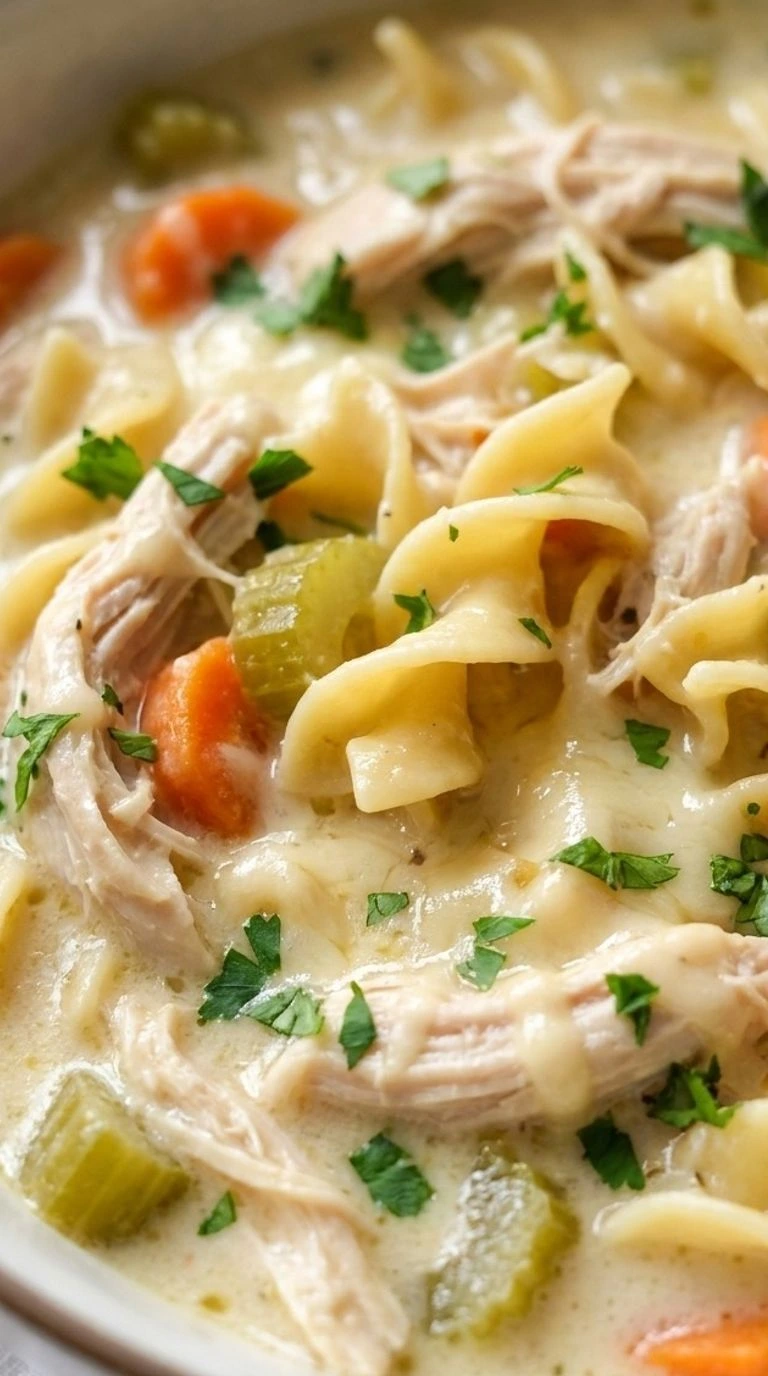
The method keeps the flavors balanced, so each spoonful has creamy broth, vegetables and noodles together.
Why This Recipe Works
Creamy Chicken Noodle Soup works because the flour and butter base thickens the broth before the cream arrives. Cooking the vegetables for 8 to 10 minutes releases their flavor without making them mushy.
Adding heavy cream over low heat keeps the texture smooth. This method is similar to the comfort found in our Crockpot Mac and Cheese because gentle heat helps dairy stay creamy.
Ingredients
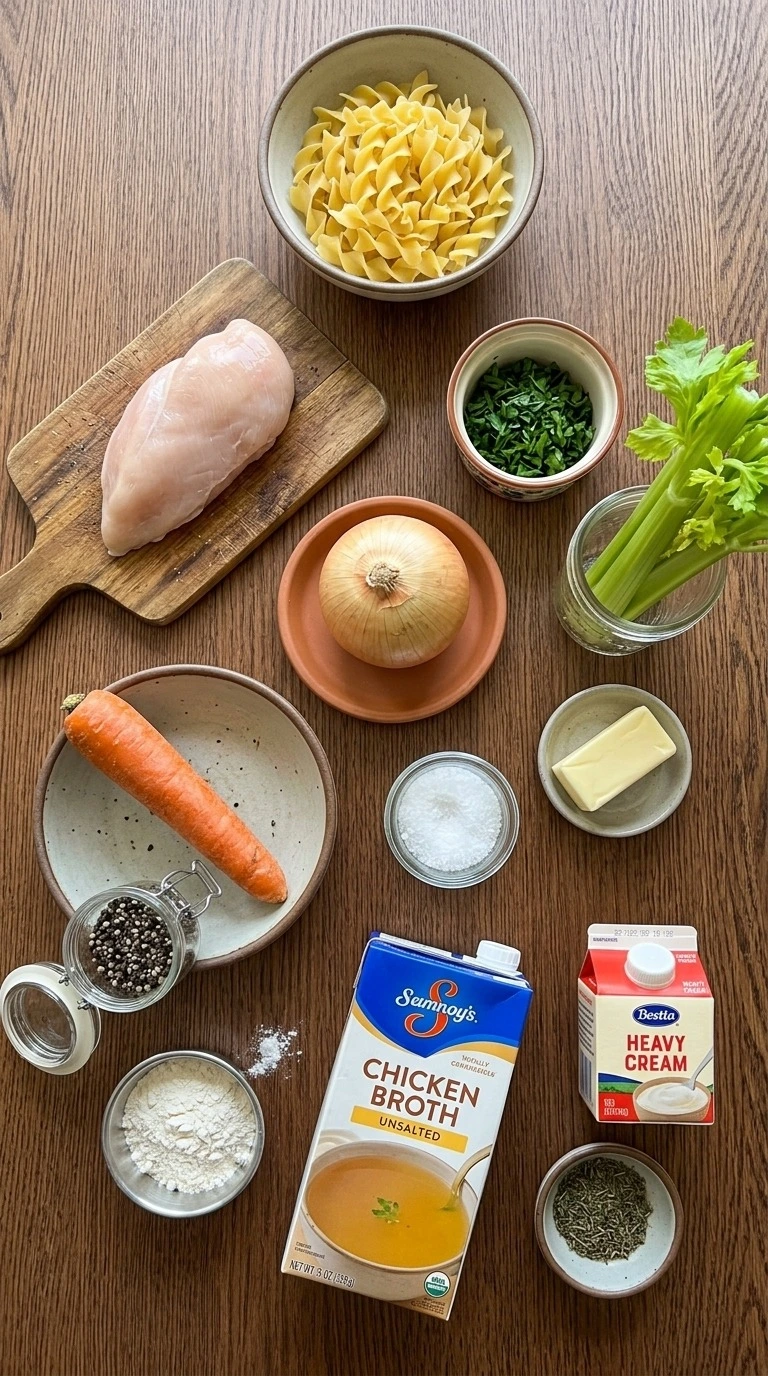
- boneless chicken breast: Cut into even strips to create tender pieces throughout the soup.
- wide egg noodles: Added to absorb the creamy broth while keeping a soft bite.
- carrot: Diced for sweetness and color in the soup base.
- celery stalk: Diced to add fresh savory flavor and texture.
- yellow onion: Diced and softened to build the aromatic base.
- unsalted butter: Used to cook vegetables and create the flour base.
- all-purpose flour: Mixed into the butter to thicken the creamy soup.
- chicken broth: Provides the main liquid and savory flavor.
- heavy cream: Added at low heat for a smooth creamy finish.
- fresh parsley: Chopped and added at the end for freshness.
- salt: Balances the flavors of the soup.
- black pepper: Adds mild warmth to the broth.
- dried thyme: Adds herbal depth to the chicken and broth.
Equipment
- 6-quart heavy-bottomed soup pot: A 6-quart heavy-bottomed soup pot gives enough space for broth and noodles while spreading heat evenly so the base doesn’t scorch.
- sharp chef knife: A sharp chef knife helps create even vegetable cuts for consistent cooking and prevents crushed pieces from releasing too much moisture.
- wooden spoon: A wooden spoon helps stir thick broth without scratching the pot and lets you feel when the base begins to thicken.
Instructions
Step 1: Chop the vegetables and season the chicken
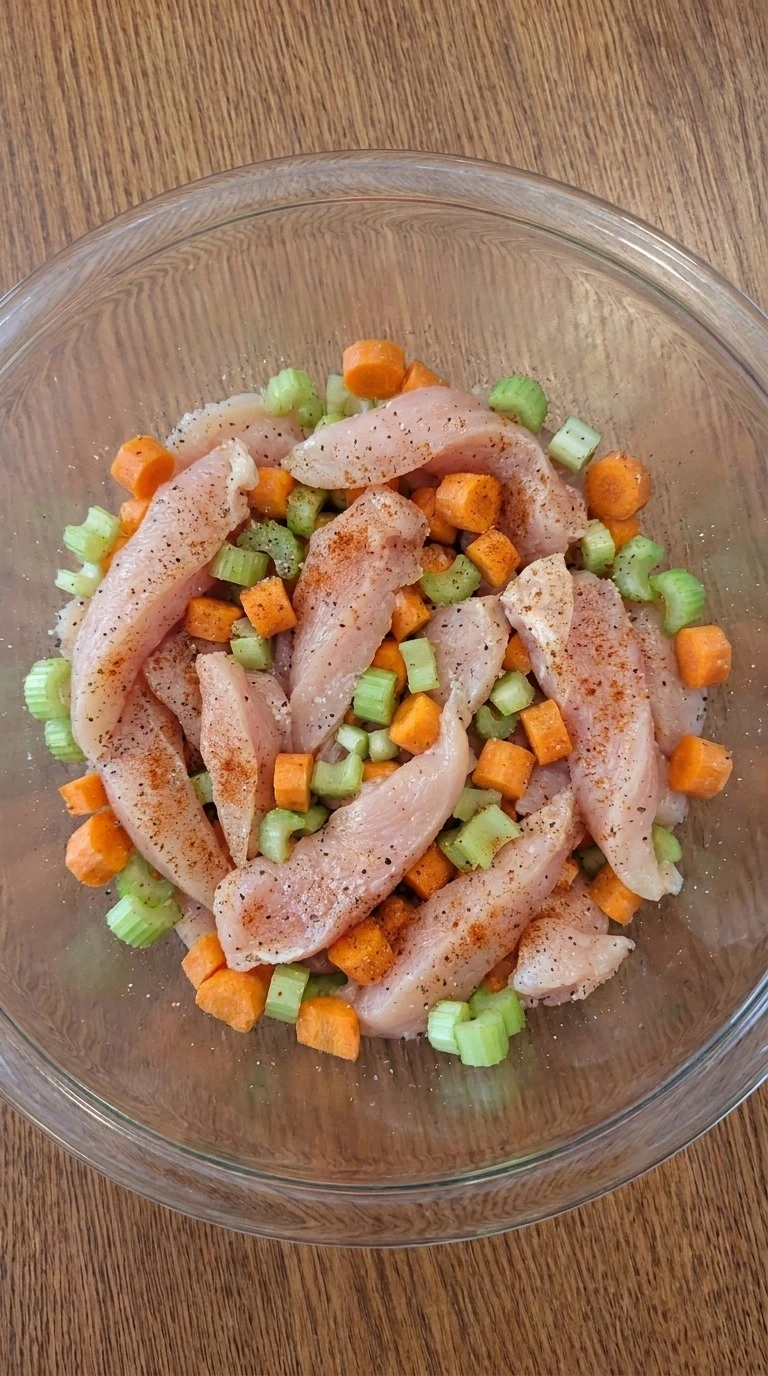
Cut 2 boneless chicken breasts into even strips and dice 2 medium carrots and 2 celery stalks while the ingredients are still fresh. Season with 1 teaspoon salt, 1/2 teaspoon black pepper and 1 teaspoon dried thyme, then rest everything for 10 minutes at room temperature. Use a sharp knife with steady downward cuts.
(I tested thicker chicken pieces first and they took too long to soften. ) The vegetables show clean edges and the seasoned chicken surface looks lightly coated. You’ll smell the thyme as it sits.
Miss this rest and the seasoning stays mostly on the outside. Rest 10 minutes before cooking because the flavors settle into the chicken.
Tip: Cut the vegetables close to the same size so they soften at the same rate during the 30 minute soup cook.
Step 2: Sauté the vegetables and build the soup base
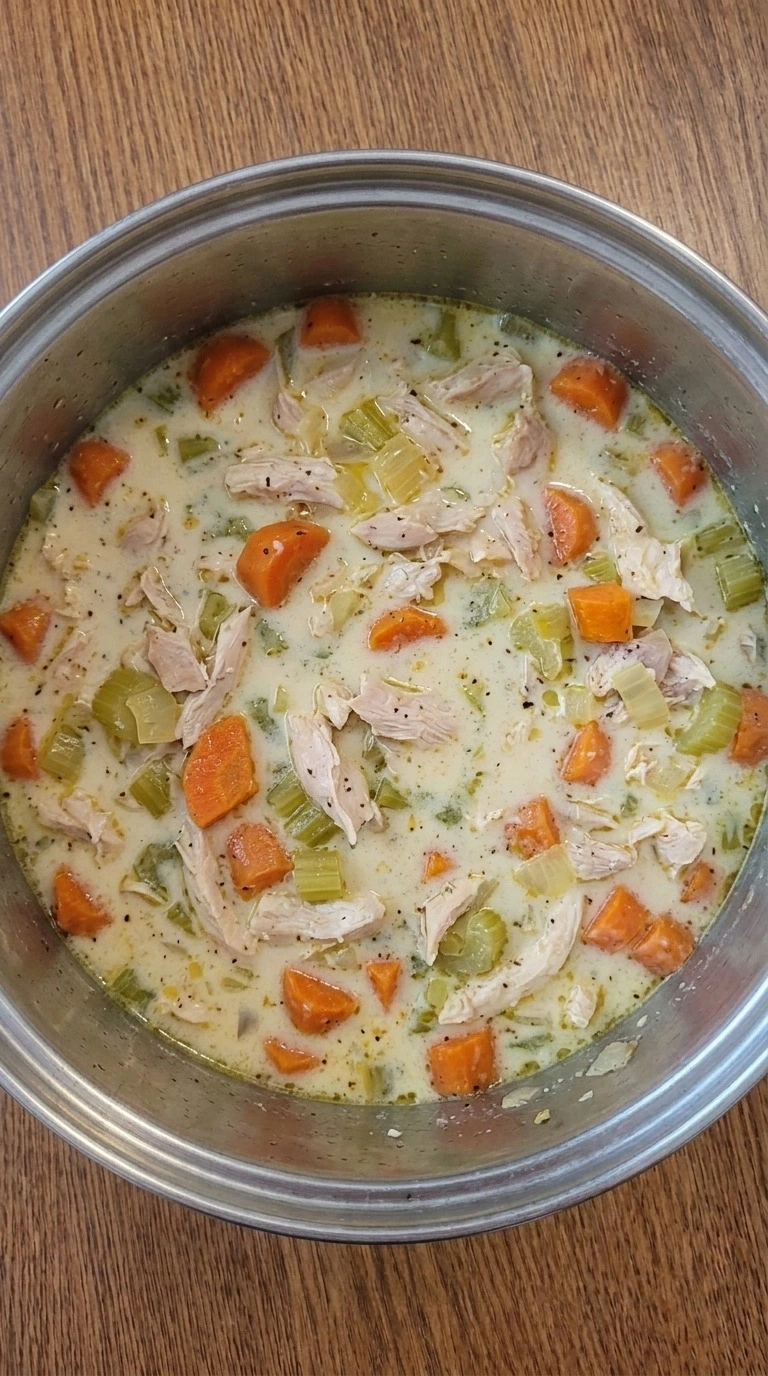
Cook 4 tablespoons unsalted butter with the diced carrots, diced celery and 1 medium yellow onion over medium heat about 5 on a 10-dial for 8 to 10 minutes. Stir with a wooden spoon in slow circles, then add 1/4 cup all-purpose flour and mix for 90 seconds until the flour coats the vegetables. Add 6 cups chicken broth gradually while scraping the bottom.
The broth turns smooth and slightly thick. Keep moving the mixture. Skip this step and the flour can clump later.
You’ll see the onions become translucent and the butter smell changes into a warm savory aroma. The base should coat the spoon lightly after 10 minutes. Cook this base at medium heat because the flour needs gentle browning without scorching.
Tip: Use low-sodium chicken broth when possible because the butter, chicken and seasoning already add natural flavor.
Step 3: Simmer the chicken and noodles into the soup
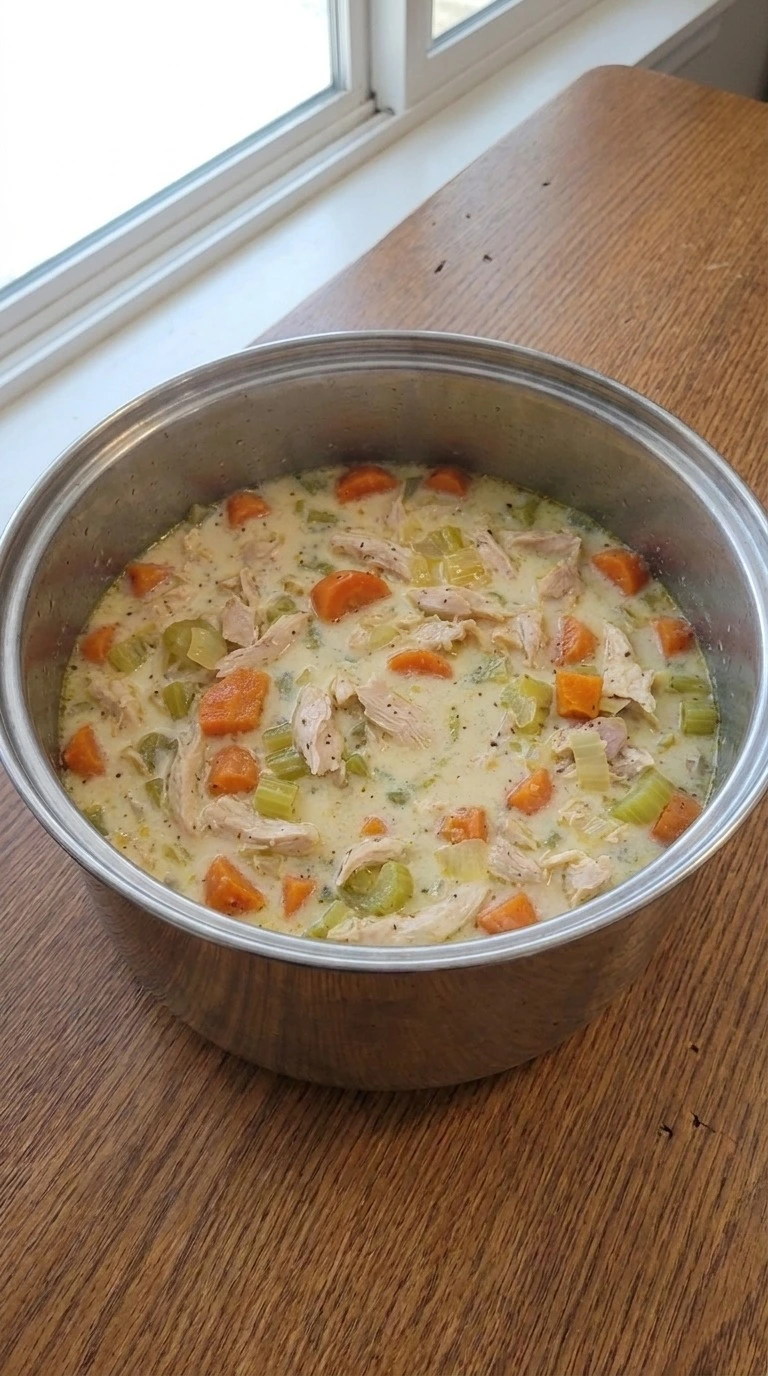
Add the seasoned chicken strips, 8 ounces wide egg noodles and the remaining 2 cups chicken broth to the thickened base. Simmer at medium-low heat about 4 on a 10-dial for 12 to 15 minutes while stirring gently every few minutes with a spoon. The chicken becomes opaque and the noodles soften while absorbing the creamy flavors.
(My first batch used high heat and the noodles became too soft. A slower simmer fixed the texture. ) The soup develops a fuller body and you’ll notice the noodles floating through the creamy liquid.
Listen for gentle bubbles, not a hard boil. Going too hot makes the chicken firm and the noodles break. A steady simmer protects the chicken texture and keeps the noodles intact.
Tip: Add noodles near the middle of cooking instead of early so they keep a pleasant bite in the final bowl.
Step 4: Finish the creamy broth and serve the soup
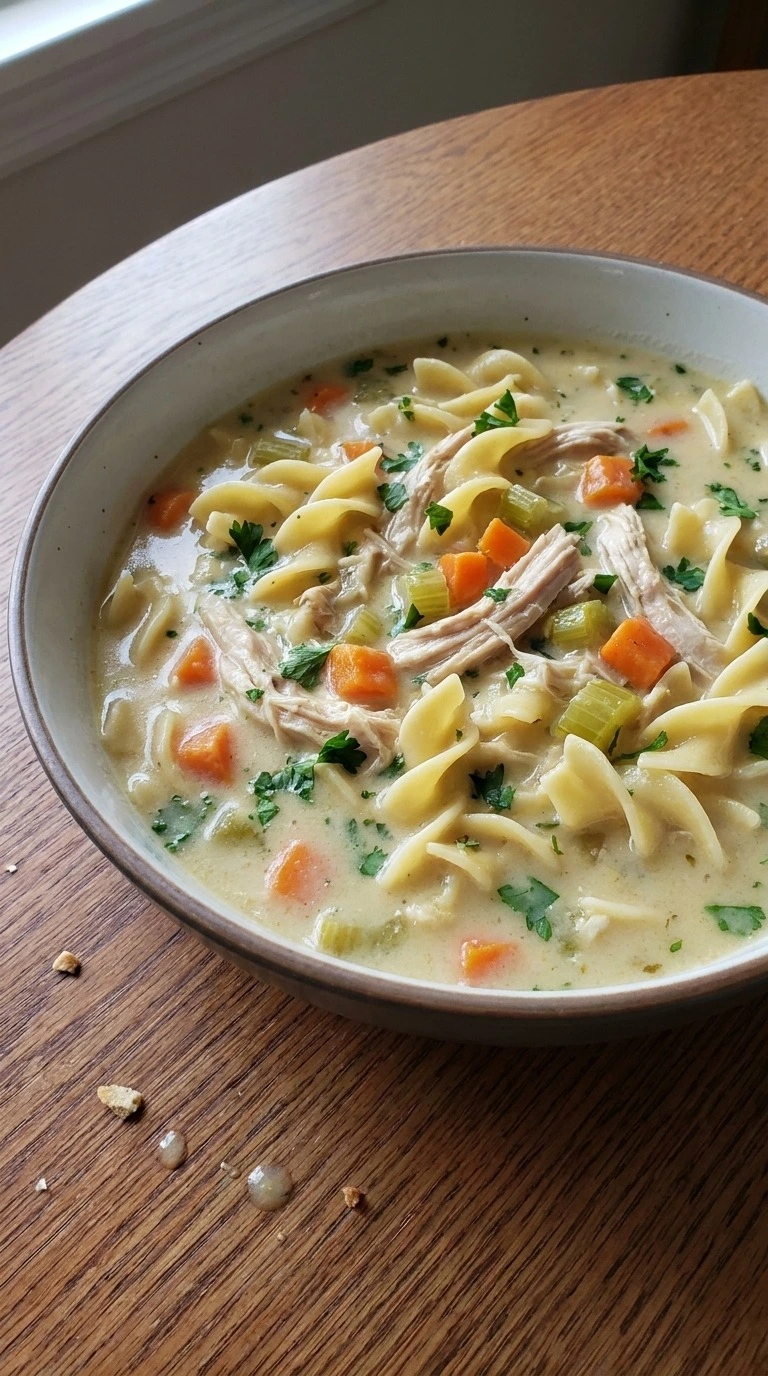
Reduce the heat to low and stir in 1 cup heavy cream slowly over 3 to 5 minutes until the soup becomes silky. Fold gently with a spoon using slow circles and add 2 tablespoons fresh parsley at the end. The broth should look smooth and lightly coat each noodle.
Don’t rush this step. The finished soup has a creamy texture with uneven noodles and vegetables throughout. You’ll smell fresh parsley and rich broth together.
Skip the slow cream addition and the soup may separate. Low heat keeps the cream stable while the broth blends smoothly.
Tip: Let the soup sit for 5 minutes before serving so the noodles absorb extra flavor without becoming mushy.
Pro Tips
- Cook the flour and butter base for exactly 90 seconds after adding flour so the raw flour taste disappears without darkening the soup.
- Choose low-sodium chicken broth with at least 6 cups available because you can adjust salt later while keeping the creamy flavor balanced.
- Keep the soup at medium-low heat around 4 on a 10-dial after adding cream because high heat can make dairy separate.
- Cut carrots and celery into similar 1/4-inch pieces so they soften evenly during the 8 to 10 minute vegetable stage.
- Avoid leaving noodles in the soup overnight because they absorb broth after 12 hours and can make the texture too thick.
- Add fresh parsley within 2 minutes of serving so the herb keeps its bright flavor and fresh smell.
- Warm leftovers slowly at 300°F on the stovetop equivalent or low heat for 8 minutes and add a splash of broth if needed.
- Add 1 cup sliced mushrooms with the vegetables for an earthy version that gives the broth a deeper savory taste.
- Stir in 1 teaspoon smoked paprika and 1/2 cup cooked bacon pieces for a smoky variation with extra richness.
- Replace fresh parsley with 2 tablespoons chopped dill for a brighter herb flavor that pairs well with creamy broth.
- Use 1 cup frozen peas during the final 5 minutes of cooking for a colorful spring style soup.
Substitutions
- heavy cream: evaporated milk. Use 3/4 cup evaporated milk for a lighter texture. The broth becomes less rich but still keeps a smooth finish.
- wide egg noodles: gluten-free rice noodles. Use the same weight of gluten-free rice noodles and add them later because they soften faster. The soup becomes gluten-free but slightly less hearty.
- all-purpose flour: cornstarch. Use 2 tablespoons cornstarch mixed with cold broth instead of flour. The soup thickens clearly but loses the buttery flavor from the flour base.
- chicken broth: vegetable broth. Vegetable broth works when needed but gives a lighter savory taste. Add extra thyme or pepper to deepen the flavor like our Healthy Enchilada Skillet.
- boneless chicken breast: boneless chicken thigh. Use the same amount of boneless chicken thigh for a juicier result. The darker meat needs a few extra minutes to reach a tender texture.
Storage
Keep Creamy Chicken Noodle Soup in an airtight glass or plastic container for up to 3 days in the refrigerator. Freeze portions without noodles when possible and wrap them tightly for up to 2 months.
Reheat gently over low heat for 8 to 10 minutes and add 2 tablespoons of broth if the soup becomes thick. Discard it if you notice sour smells, unusual separation or a slimy texture.
FAQ
Yes, prepare the soup base up to 2 days ahead and store it chilled in a sealed container. Add the noodles during reheating for 8 to 10 minutes so they keep their shape and don’t absorb all the broth before serving.
Store leftovers for up to 3 days in an airtight container kept below 40°F. Reheat small portions for 5 to 8 minutes over low heat while stirring gently to bring back the smooth texture.
You can freeze it for up to 2 months, but the noodles may become softer after thawing. For better results, freeze the creamy broth with chicken and vegetables, then add fresh noodles during a 12 minute reheating process.
A thin texture usually means the flour base did not cook long enough or the broth was added too quickly. Simmer the soup for another 5 minutes at medium-low heat and stir until the sauce coats the back of a spoon.
Yes, double the ingredients in an 8-quart pot and extend the simmer time by about 5 minutes. Stir the larger batch every few minutes so the flour mixture stays evenly blended.
Serve it with crusty bread or a simple salad for a balanced meal. The creamy broth pairs well with roasted vegetables because their texture adds contrast to the soft noodles.
Chicken noodle soup has been a comfort food favorite for generations because warm broth and tender noodles create a filling meal. The creamy version adds dairy for a richer texture.